Julius Erving
Julius Erving was inducted into the Naismith Memorial Basketball Hall of Fame on May 10, 1993, alongside Dick McGuire, Walt Bellamy, Ann Meyers-Drysdale, Calvin Murphy, Dan Issel, and coaches Uljana Semjonova and Bill Fitch. He was thirty-three weeks past his sixth retirement anniversary, which is the Hall’s minimum wait for a player; his candidacy had been discussed in advance for exactly as long as the rules required and not a minute longer. For a biography that covers the games themselves, see the main Julius Erving page. This entry covers what the Hall’s 1993 induction committee was actually voting on, what it said in the floor ceremony, and how Erving’s induction is understood, thirty-three years later, inside the Hall.
The case the Hall voted on
The 1993 committee had three categorically distinct parts of Erving’s career to weigh. One, his ABA years (1971–76), which the committee had to decide whether to treat as major-league play or as an adjacent second-tier professional experience; two, his NBA years (1976–87) in Philadelphia, which were uncontroversial on their own merits; and three, his cultural and stylistic influence on the sport, which the committee had historically been reluctant to weight heavily.
The ABA-vote question had been an active dispute inside the Hall since the 1976 merger. Before 1993 only two ABA-era players had been inducted for their ABA play specifically (Rick Barry, Connie Hawkins). The Erving induction is the one that settled the question, inside the Hall’s own historiography, that ABA regular-season and championship play would count on par with NBA performance. The ABA portion of his career (three MVPs, two championships, a scoring title, a rebounding title, 11,662 points in 407 games) was, by itself, a top-40 career in the history of the ABA and the NBA combined.
Shop Julius Erving memorabilia
As an Amazon Associate we earn from qualifying purchases.
The NBA portion (1981 MVP, 1983 championship, eleven All-Star selections, 18,364 points) was a top-15 case on its own. Combined, per Basketball-Reference’s career-value index, he is one of eight players in the combined ABA-NBA history with more than 30,000 total points. The induction speech, delivered by presenter Charlie Scott, opened on that combined-numbers case and moved immediately into the style argument.
The foul-line dunk, on the record
The January 27, 1976 ABA Slam Dunk Contest in Denver was referenced directly in the 1993 induction proceedings. The most-remembered dunk from that contest, Erving’s takeoff from the free-throw line, was the final dunk of the final round. His earlier dunks in the same contest included a windmill and a one-hand cradle. The competing finalists were David Thompson, Larry Kenon, George Gervin, and Artis Gilmore, all since inducted into the Hall themselves. The foul-line dunk was the exclamation point, not the argument. The argument was that he had several high-artistry dunks in the same evening, in the first organized professional basketball dunk contest.
The historiographical point the 1993 vote accepted was that the post-1984 explosion of dunk-centric NBA marketing (Jordan’s 1985 Nike contract, the 1984 relaunch of the NBA Slam Dunk Contest at the All-Star weekend, the 1988 All-Star foul-line dunk, the Vince Carter generation in the 1990s and 2000s) is traceable to that 1976 night in Denver. The Hall was, in effect, crediting Erving with having invented, as a performance category, what modern basketball made central to its commercial identity.
Where the historical consensus places him among small forwards
The consensus ranking of small forwards in the post-1970 NBA places Larry Bird and LeBron James in a top pair, and treats Erving, Elgin Baylor, and Kevin Durant as the next group. That ranking appears, with minor variation, in nearly every retrospective list published by major basketball outlets since 2000 (ESPN’s NBA’s 50 Greatest Players revisits, Sports Illustrated’s 2017 position-by-position rankings, the Ringer’s 2022 list). The standard case for placing Erving above the second group is the cultural-influence argument; the standard case for placing him below is the single NBA championship and the fact that his Philadelphia seasons produced four Finals appearances, one of which was won.
The 1993 Hall of Fame vote itself made no attempt to rank him within the position, because first-ballot induction at the Hall is a binary yes/no. The ranking arguments came later.
The 50th and 75th anniversary team ballots
Erving was named to the NBA’s 50th Anniversary Team in 1996. The 50th team was voted by a 50-person panel of media, coaches, and former players; Erving received votes from 47 of the 50, which at the time was the ninth-highest total on the ballot. He was named to the NBA’s 75th Anniversary Team in October 2021. The 75th-team ballot expanded from 50 to 76 names (the original 50 were essentially grandfathered, with 26 new additions). Erving received votes in the top-40 range of the expanded ballot, a consensus-placing result that did not reopen the tier-one/tier-two question but did confirm the Hall’s 1993 placement as historically stable. His combined ABA-NBA point total of 30,026 is one of eight such totals in professional basketball history above 30,000, a number that includes the ABA years at full weight.
The Philadelphia 76ers retired his number 6 on February 12, 1987. The Virginia Squires franchise, dissolved as part of the 1976 merger, does not retire numbers, but the ABA Players Association’s Memorial Jersey Retirement Program, a symbolic recognition created in 2000, listed his Squires jersey first. The New York Nets (now Brooklyn) retired his number 32 on March 1, 1988, a retirement that carried over when the franchise moved from New York to New Jersey in 1977 and from New Jersey to Brooklyn in 2012.
The Hall’s Erving exhibit
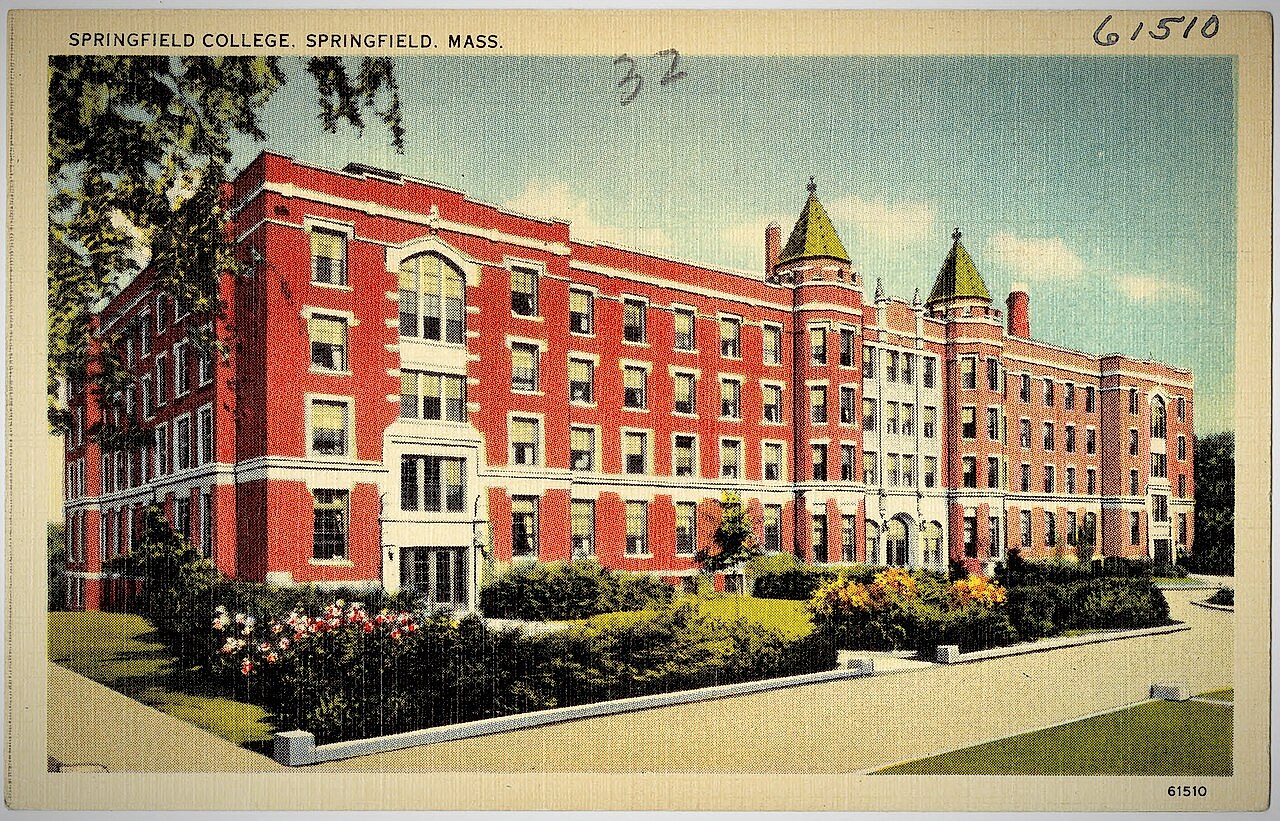
The 1993 induction ceremony took place at the Hall’s then-current building on West Columbus Avenue in Springfield, Massachusetts (the 1985-to-2002 Hall location). The Hall’s current building, opened in 2002 on the same street, includes Erving-specific exhibit material: an ABA Nets jersey from the mid-1970s, a Sixers jersey from the early 1980s, and photographic documentation of the 1976 ABA Slam Dunk Contest. Specific exhibit contents rotate. The best source for what is on display at any given visit is the Hall’s printed gallery guide.
The Dr. J nickname, on the record
The nickname predated the professional career. In Dr. J: The Autobiography (HarperCollins, 2013), Erving describes a high-school friend, Leon Saunders, whom he nicknamed “The Professor.” Saunders returned the favor by calling Erving “The Doctor.” The two nicknames stuck in reverse: Erving became “Dr. J” over the course of his UMass years, and the ABA’s Virginia Squires marketing staff picked up the nickname officially when he signed in 1971. The Hall’s 1993 induction lists the legal name on the plaque, per institutional convention.
Why the Hall’s Erving induction still matters to the institution
It is the induction against which the Hall’s subsequent ABA-era rulings (Artis Gilmore in 2011, Mel Daniels in 2012, Roger Brown in 2013, George McGinnis in 2017) have been measured. Each of those four inductees benefited from the fact that the 1993 Erving committee had already ruled that ABA regular-season and championship performance counted on a par with NBA performance. Without the Erving vote, the subsequent ABA-only inductions would have faced a harder committee argument, and some of them might not have cleared the bar.
That is the answer to the question, “Why was Julius Erving’s 1993 induction consequential beyond his own résumé?” It was the case that settled the ABA question for the Hall. The more specific reason he was the player the Hall used to settle that question is that no other ABA-era player had a Finals-era NBA follow-up of equivalent scale. He was the one player in the 1993 decision whose ABA and NBA records had to be weighed as a single combined career, because they were indistinguishable on the core basketball metrics. The Hall’s vote, in the end, was a vote to treat the two leagues as one.
Gear
Read Erving’s own account of the ABA years and the Sixers championship in Dr. J: The Autobiography.
Dr. J: The Autobiography on Amazon →
Sources
- Naismith Memorial Basketball Hall of Fame, Julius Erving induction file (1993)
- Basketball-Reference, Julius Erving career page (ABA and NBA totals, combined career-value index)
- Julius Erving and Karl Taro Greenfeld, Dr. J: The Autobiography (HarperCollins, 2013). Chapter coverage of the nickname’s origin and the 1976 merger and Sixers sale.
- NBA Communications, 50th Anniversary Team announcement (1996)
- NBA Communications, 75th Anniversary Team announcement (October 2021)
- Philadelphia 76ers press release, February 12, 1987 (retirement of number 6)
- New York Nets / New Jersey Nets press release, March 1, 1988 (retirement of number 32)
Shop NBA Gear at Fanatics
As a Fanatics affiliate, we may earn a commission from qualifying purchases.
Shop on Amazon
As an Amazon Associate, we earn from qualifying purchases.
Shop Sneakers & Apparel at JD Sports
We may earn a commission from qualifying purchases on JD Sports.