LeBron James
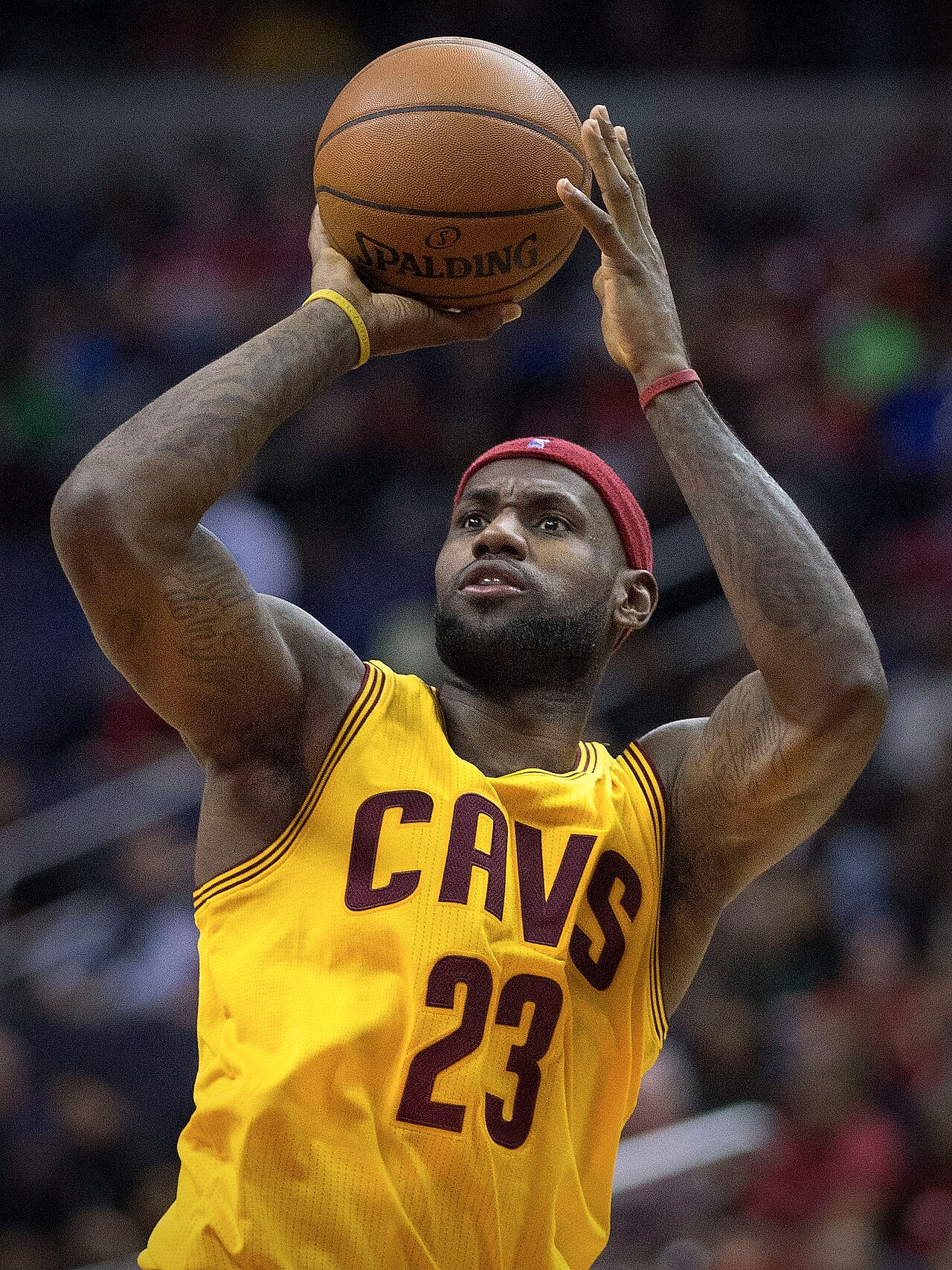
LeBron James is the NBA’s all-time leading scorer, a four-time champion, and a four-time Most Valuable Player. In February 2023 he passed Kareem Abdul-Jabbar’s career scoring mark, a record that had stood since 1984, and he has continued to add to it in every season since. He is the only player in league history to log 23 seasons, and in July 2026 he signed with the Philadelphia 76ers for a 24th. No player has carried this usage rate for this many seasons. The standard biography is by now a very public one, the Akron childhood, The Decision, the 2016 championship, the scoring record, but the specific reasons his career trajectory looks the way it does are less well-covered than the highlights are.
Akron, and the household the career was actually built in
He was born December 30, 1984, in Akron, Ohio, to Gloria James, a single mother who was sixteen at the time of his birth. By every on-the-record account, his own, his mother’s, and the long-form reporting by Buzz Bissinger and Jeff Benedict across two different books: Bissinger’s Shooting Stars (Penguin Press, 2009) and Benedict’s LeBron (Avid Reader, 2023), the first decade of his life was characterized by sustained housing instability, with Gloria and LeBron moving more than a dozen times before he was nine. The hinge point came in the fall of 1993, when a youth-league football coach named Frank Walker and his wife Pam offered to take LeBron into their household for the school year so he could attend one school the entire time. The stability that produced, regular school attendance, a consistent youth-basketball team, a regular bedtime, is the detail that gets elided in the “generational talent” narrative. He was unusually coachable because by sixth grade he was, to a degree that is not common in American basketball, already living a structured basketball life.
St. Vincent–St. Mary and the four-year takeover
He enrolled at St. Vincent–St. Mary High School in Akron in the fall of 1999, alongside middle-school teammates Dru Joyce III, Sian Cotton, and Willie McGee. The four of them, joined in the sophomore season by Romeo Travis, became the core of a team that won three state championships in four years and was by his junior year a genuine national story. Sports Illustrated put a seventeen-year-old LeBron on the February 2002 cover with the headline “The Chosen One”, the pre-internet apex of a player-scouting story that we now take for granted. His senior year, games at the University of Akron’s Rhodes Arena sold out every night and were televised nationally by ESPN2. No American high-school team before it had been given that kind of national television schedule.
Shop LeBron James jersey
As an Amazon Associate we earn from qualifying purchases.
The 2003 NBA Draft and the first Cleveland stint (2003–2010)

Cleveland picked him first overall in the 2003 NBA Draft. The Cavaliers had won the draft lottery for the first time in franchise history that May, twenty-five miles down the interstate from Akron, and the decision to take LeBron was less a decision than a logistical formality. He was Rookie of the Year in 2003–04 and was named an All-Star in his second season.
In seven seasons with Cleveland he won two regular-season MVP awards (2009 and 2010), led the Cavaliers to the 2007 NBA Finals, where they were swept by San Antonio, in a sweep, and built the offensive system that every subsequent team he played for would essentially import whole. The specific innovation, which is worth stating plainly because it has since become the league’s default offense, was to move the nominal point guard off the ball, run the half-court offense through a six-foot-nine facilitator at the top of the key, and surround him with shooters at the three other non-paint positions. The 2009–10 Cleveland team that went 61–21 was the most efficient version of the experiment; it lost in the second round to Boston and precipitated the decision that followed.
“The Decision,” 2010
On July 8, 2010, LeBron announced in a live, hour-long ESPN special, filmed at a Boys & Girls Club in Greenwich, Connecticut, that he was “taking his talents to South Beach” to sign with the Miami Heat. The special was the first of its kind, and both in its conception and its reception it changed the relationship between star athletes and broadcast media in ways that are now so normal they are hard to re-describe. In the moment, the backlash in Cleveland was immediate and severe (the famous Dan Gilbert open letter, the jersey-burnings, the regional sports-talk radio), and the backlash outside Cleveland was almost as severe for different reasons (the format, the perceived arrogance, the charity-branding of the reveal). The reputational damage took six years to work all the way out of the system. Some of it, arguably, never did.
Miami (2010–2014)
With Dwyane Wade and Chris Bosh, the Heat reached four consecutive NBA Finals, winning in 2012 and 2013. LeBron was Finals MVP both years and won two more regular-season MVPs (2012, 2013). The 2013 Finals against San Antonio, in which Miami recovered from down 3–2 and 94–89 with less than thirty seconds to play in Game 6, the Ray Allen corner three, is the most replayed game of that series and the one that, in his own later interviews, he cited as the moment he felt the “arc of everything else” had turned. He returned to Cleveland as a free agent in July 2014.
Second Cleveland stint and the 2016 championship
The second Cleveland run produced four consecutive Finals appearances against Golden State and, in the middle of that stretch, the single series most of his legacy rests on. The 2016 Finals, against the record-setting 73-win Warriors, opened with Cleveland down 3–1 after four games. No team in Finals history had ever come back from that deficit. Across the next three games LeBron averaged 36.3 points, 11.7 rebounds, and 9.7 assists per game, the Warriors’ Draymond Green was suspended for Game 5 on a retroactive flagrant-foul point, and Cleveland won Game 7 in Oakland behind LeBron’s block of Andre Iguodala in transition with 1:50 remaining. It was Cleveland’s first major professional sports championship in fifty-two years. The block is preserved on the banner now hanging from the rafters of Rocket Arena.
He returned to the Finals in 2017 and 2018 and lost both to the Kevin Durant Warriors. The 2018 Finals sweep, in which LeBron averaged 34 points, 8.5 rebounds, and 10 assists a game and shot 52 percent, is one of the great individual Finals performances in NBA history. It also ended his second Cleveland run; he signed with the Lakers in July 2018.
Lakers and the scoring record
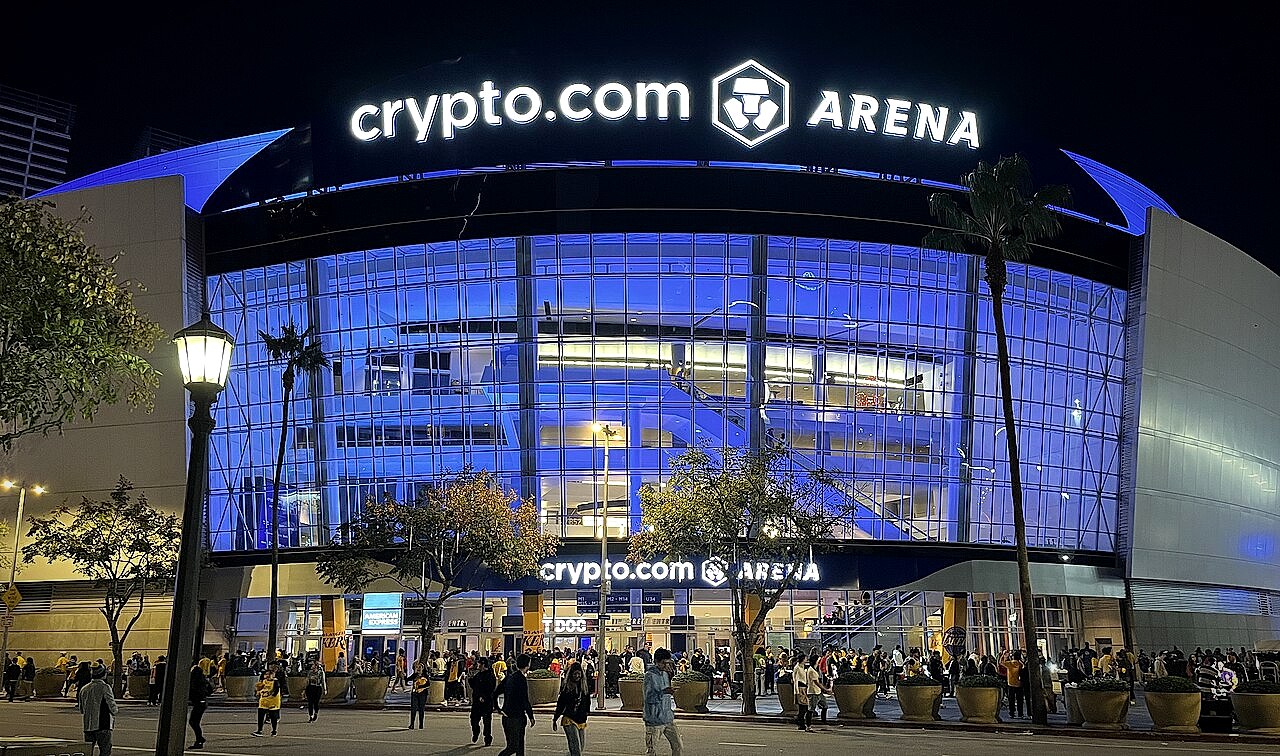
The first Los Angeles season (2018–19) ended outside the playoffs, the one missed postseason of his career. The second (2019–20) was interrupted by the COVID-19 shutdown in March 2020 and completed inside the “bubble” restart at Walt Disney World, which the Lakers won, LeBron’s fourth championship and his fourth Finals MVP, in a series against the Jimmy Butler Miami Heat.
On February 7, 2023, against the Oklahoma City Thunder at Crypto.com Arena, he broke Kareem Abdul-Jabbar’s career scoring record, 38,388 points at the time of the record, by a step-back twenty-footer over OKC’s Kenrich Williams late in the third quarter. The ceremonial timeout ran roughly fifteen minutes, with Abdul-Jabbar himself on the floor for the trophy exchange. It is the most significant in-game record break the league has staged, and it was staged as one.
Philadelphia, and the last decision (2026)
The Lakers run ended after eight seasons. Los Angeles was eliminated by Oklahoma City in the Western Conference semifinals, and at the press conference afterward he said he needed to work out whether he still loved the game. He later wrote that he was fairly sure he had already played his last one.
He told the Lakers on June 30, 2026 that he was not coming back, and on July 24 he announced on his own accounts that he was signing with the Philadelphia 76ers. The reported terms were two years and $8 million, against the roughly $53 million he earned in 2025-26. Philadelphia was the fourth franchise of his career, and he framed the move as the end of the sequence: “This is my last decision. I’m not going for money. I’m not going for family.”
He joins Joel Embiid, Tyrese Maxey and Jaylen Brown on a team that has not won a title since 1983. The full account of the move, including the teams he turned down and how the announcement compared with 2010, 2014 and 2018, is covered separately.
Longevity, and how it is actually happening
The longevity is the part of the career that will eventually be the hardest to replicate. It is worth saying what the conventional wisdom gets wrong about it. The publicly reported figure for LeBron’s yearly body-maintenance budget, consistent across multiple long-form features, sometimes cited at around $1.5 million a year, is not obviously higher than what other top-ten-paid stars are reported to spend. The differentiator is not the money. It is the sustained discipline with which he treats the off-season as an engineering problem rather than as a recovery window, plus an unusually disciplined approach to in-game minute management that he himself lobbied the Lakers medical staff for in the back half of his thirties. He has, in effect, engineered his own decline curve to bend later than the league average. The engineering is the story.
Off-court: SpringHill, Fenway, and a media portfolio
Off the court, his production company SpringHill Entertainment, co-founded in 2020 with his high-school friend and longtime business partner Maverick Carter, valued itself at roughly $725 million in a 2021 capital raise that included Nike and Epic Games among its investors. His stake in Fenway Sports Group, the parent of the Boston Red Sox and Liverpool FC, was purchased for approximately $1 million in 2011 and had appreciated by an order of magnitude by the time he and Carter increased the stake in 2021. By the financial-press consensus he became the NBA’s first active billionaire in early 2022.
Legacy and the GOAT argument
The GOAT argument, at this point, is mostly a scaffolding for discussing which facets of basketball the arguer cares about most. Longevity and total production favor LeBron. Per-game playoff peaks and finish-at-the-rim late-game possessions favor Jordan. The defensive metrics are close and most honest analysts treat them as a draw. The more useful and maybe more honest thing to say, in 2026, is that the two of them are each the best player of their respective NBA eras by margins that are not controversial. That is by itself a historical rarity. A generation ago the league had four candidates in a room. The current candidates run through those two, and the longer LeBron keeps playing, the longer the argument stays open.
Signature Shoes
LeBron’s Nike signature line has run from the LeBron 1 (2003) through the LeBron 22 (current), making it one of the longest continuously active signature lines in the sport. The LeBron 10 Elite, worn during the 2012-13 Heat season, and the LeBron 15 remain the most critically praised performance models for court feel and support; the LeBron 19 through 22 generation has been the most commercially successful.
Shop LeBron signature shoes at JD Sports →
Gear
Pick up Jeff Benedict’s LeBron (2023).
Shop Jerseys & Fan Gear at Fanatics
As a Fanatics affiliate, we may earn a commission from qualifying purchases.
Shop on Amazon
As an Amazon Associate, we earn from qualifying purchases.
Shop Sneakers & Gear at JD Sports
We may earn a commission from qualifying purchases on JD Sports.