Michael Jordan
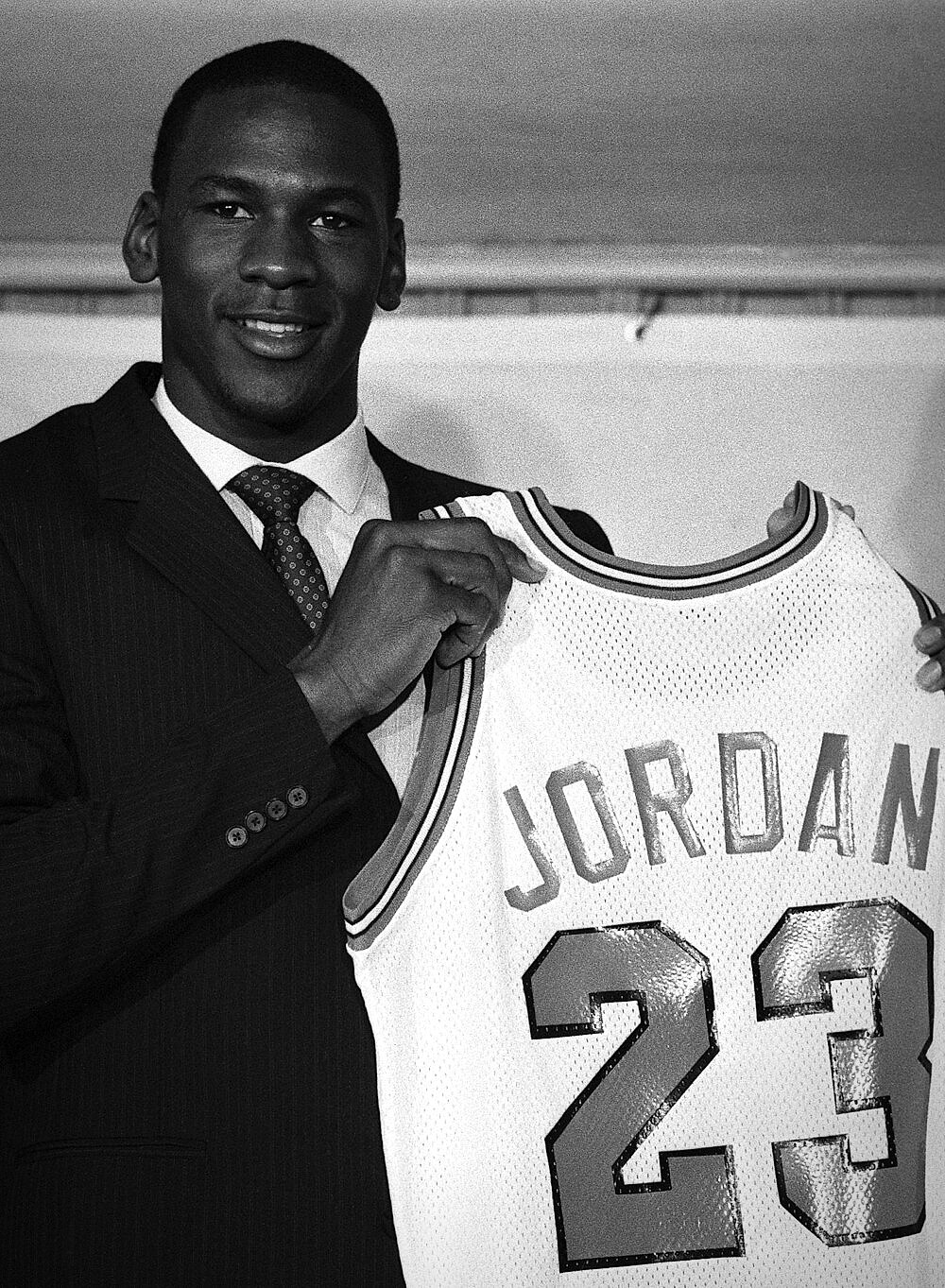
Most basketball arguments, greatest of all time, greatest of his era, greatest on a given possession, eventually come back to Michael Jordan. Over fifteen NBA seasons, thirteen with the Chicago Bulls and two with the Washington Wizards, he won six championships, five regular-season Most Valuable Player awards, ten scoring titles, and was named Finals MVP in every one of the six Finals he played in. His career playoff scoring average of 33.4 points per game is still the highest ever recorded, and it is not in immediate danger from any active player. That is the public résumé. The more interesting conversation, because it has not been settled even now, is about the specific cultural moment he arrived in and what he did with it.
Wilmington, not Brooklyn, a note on origins
The official record lists Jordan’s birthplace as Brooklyn, New York, on February 17, 1963. The more honest statement is that his family left New York when he was a toddler and he was raised entirely in Wilmington, North Carolina, where his father James worked at General Electric and his mother Deloris was a bank teller. The Wilmington detail matters for two reasons. One, the now-famous high-school story, cut from the Laney High varsity team as a sophomore in favor of a taller teammate named Leroy Smith, added back to the varsity the following season, happened in a specific coastal-Carolina gym that Jordan has referenced, on the record, at every stage of his career since. Two, his college recruitment, the point at which his life turns, was essentially a North Carolina story: Dean Smith at UNC had him in his sophomore-year AAU tape, tracked him through the rest of high school, and signed him to a scholarship letter in the fall of 1980.
North Carolina and the 1982 national championship
At Chapel Hill, Jordan walked into a program coming off a national-runner-up season (1981) and into a starting lineup with James Worthy and Sam Perkins. As a freshman he did the freshman things the Smith system asks freshmen to do, take whatever scoring is left over after the upperclassmen eat, defend every possession, and do not turn the ball over, and on March 29, 1982, with seventeen seconds left in the national championship game against Georgetown, he took a pass from Jimmy Black in the left corner and hit the jumper that won it. The shot is now arguably the most frequently replayed clip in college basketball history. It also remains, even in Jordan’s telling, the shot around which he organized the rest of his competitive life, the proof, for him, that the guy on the line at the end was supposed to be him.
Shop Michael Jordan jersey
As an Amazon Associate we earn from qualifying purchases.
He returned to UNC for his sophomore and junior seasons, was named the Naismith College Player of the Year in 1984, and left for the NBA Draft that June, one year early.
The 1984 NBA Draft, and the first Chicago seasons
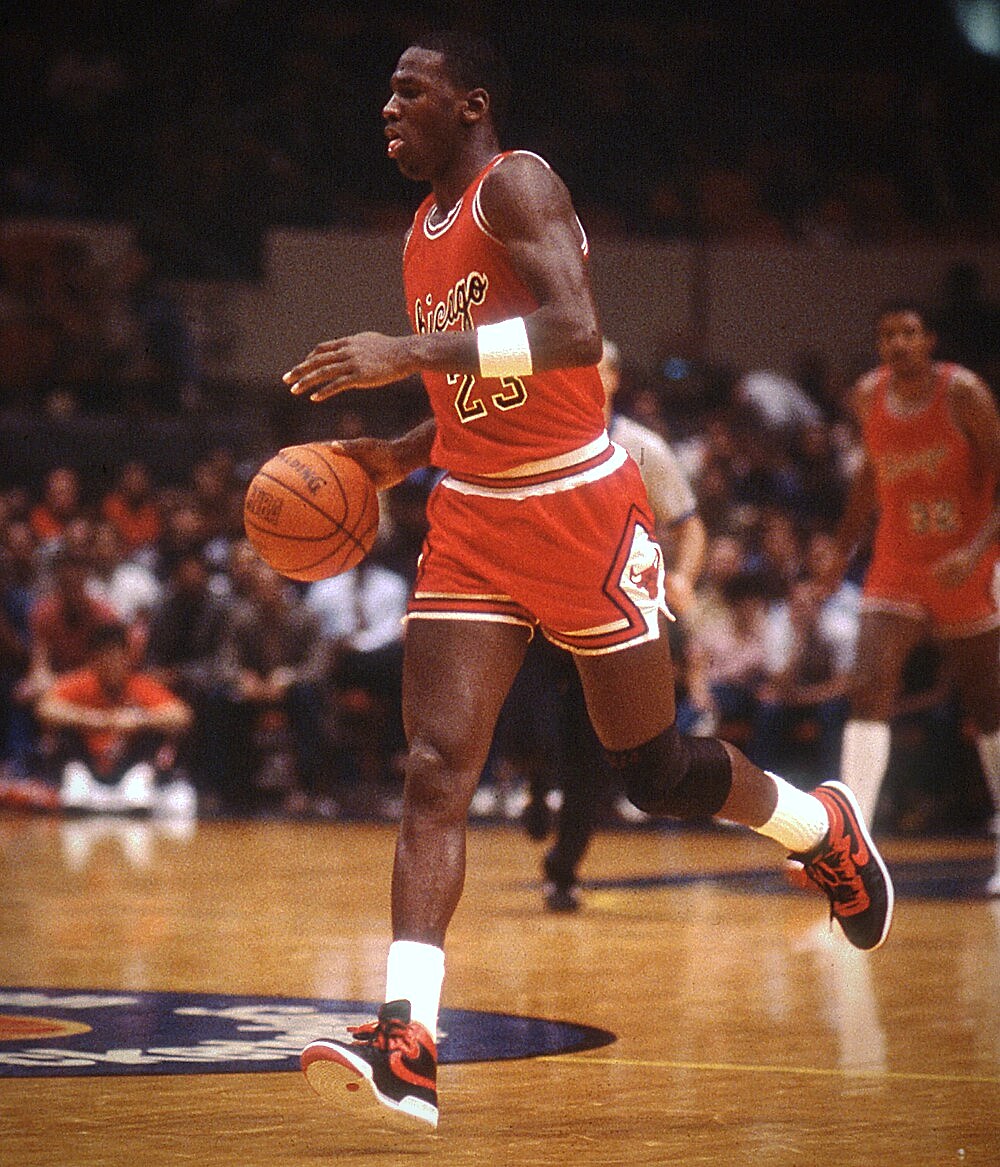
Houston picked Hakeem Olajuwon first. Portland, owning the second pick and already loaded with Clyde Drexler at shooting guard, used it on the Kentucky center Sam Bowie. Chicago, picking third and unable to believe its good fortune, took Jordan. The draft has become an American shorthand for the difference between a general manager who prioritizes positional need and a general manager who takes the best player available; it is worth saying, because the record tends not to, that Portland’s decision was defensible on the information available in June 1984 and that Bowie, when healthy, was an excellent center. The thing that was not knowable in June 1984 was what Jordan was going to be, because no one in the NBA had ever been quite what Jordan was about to be.
He was Rookie of the Year in 1984–85. He averaged 28.2 points a game and scored fifty-plus six times in the second half of the season. In the two seasons that followed, 1985–86 through 1986–87, the Bulls lost in the first round of the playoffs twice to the Boston Celtics, and the Celtics series is where Larry Bird, after Game 2, gave the quote that is still on nearly every poster in the Jordan section of the Hall of Fame gift shop: “God disguised as Michael Jordan.” Jordan had scored 63 points in that second game. Boston still won in two overtimes.
The Pistons wall, and the decision to change
Between 1987 and 1990 the Detroit Pistons won two championships and eliminated the Bulls three years in a row. Chuck Daly’s staff had built what the NBA now calls, as a generic term, the “Jordan Rules”, a specific set of defensive rotations designed to bracket Jordan on every possession, force the ball out of his hands, and dare the rest of the Chicago roster to beat them. For a four-year stretch, the rest of the Chicago roster did not.
The Pistons era gets glossed over in the standard narrative, but it is the decisive chapter of Jordan’s career, and the part of the career he himself returned to most often in later interviews. Sam Smith’s 1992 book The Jordan Rules remains the best account. Two specific things changed out of those years. First, Jordan added weight in the summer of 1989, fifteen pounds of upper-body strength, by his own accounting, and the post-up midrange game that later defined the second three-peat dates entirely to that offseason. Second, Phil Jackson, promoted to head coach in the summer of 1989 to replace Doug Collins, brought Tex Winter’s triangle offense to Chicago and persuaded Jordan, whose individual scoring system had been carrying the franchise, to play inside an ensemble structure instead.
The first three-peat (1991–1993)
Chicago broke through in 1991. The playoff road ran through the Knicks, the 76ers, and, finally, the Pistons, whom Chicago swept in four games in the Eastern Conference Finals, with the Bulls walking off the floor in Game 4 without shaking hands. The Finals, against Magic Johnson’s Lakers, ended in five games. Jordan was Finals MVP. The 1992 Finals, against Portland, went six; Jordan opened with thirty-five first-half points in Game 1, including six made three-pointers, after which he famously shrugged toward the Chicago bench. The 1993 Finals, against Phoenix, went six again, ending on a John Paxson three with 3.9 seconds remaining.
That is the first three-peat. Each one was won against a different conference champion with a different scheme, which is a detail that does not get cited as often as it should in the Jordan-vs.-LeBron argument.
The retirement, baseball, and “I’m back”
Jordan retired for the first time on October 6, 1993, three months after his father James was murdered during a robbery off Interstate 95 in North Carolina. He spent most of 1994 playing minor-league baseball for the Birmingham Barons, a Double-A affiliate of the Chicago White Sox owned, as it happened, by the same Jerry Reinsdorf who owned the Bulls. He was a below-league-average hitter for that class of baseball and, by the consensus of the Barons’ coaching staff in later interviews, a genuinely improving one; the most credible account is that a second summer of professional at-bats would have pushed him toward Triple-A. The 1994–95 baseball strike intervened. He returned to the Bulls in March 1995 with a two-word press release, “I’m back”, and the 1995 playoff run, though it ended in six games against Orlando, reset the league’s expectations for the fall.
The second three-peat and 72–10
The 1995–96 Bulls went 72–10, the best regular-season record in NBA history at the time, since broken only by the 2015–16 Warriors, and won the 1996 NBA championship in six games over the Seattle SuperSonics. Jordan swept the regular-season MVP, Finals MVP, and All-Star Game MVP that year, and the three-part hardware sweep has been replicated, in full, by only one other player (Shaquille O’Neal in 2000). The 1997 and 1998 Finals were both against the Utah Jazz, and both went six games. The 1998 Finals Game 6, Jordan’s steal off Karl Malone and the pull-up twenty-footer over Bryon Russell with 5.2 seconds left, is the shot that closes The Last Dance and most career-retrospective montages.
The Wizards years and the second retirement
Jordan retired a second time in January 1999 and, after a sustained detour running basketball operations for the Washington Wizards, returned as a player for the 2001–02 and 2002–03 seasons. The first Washington year he averaged 22.9 points as a thirty-eight-year-old on a losing team, and the second year he started every game and led the team in scoring at 20.0 a night. He retired permanently on April 16, 2003.
Charlotte ownership, and the sidelines years
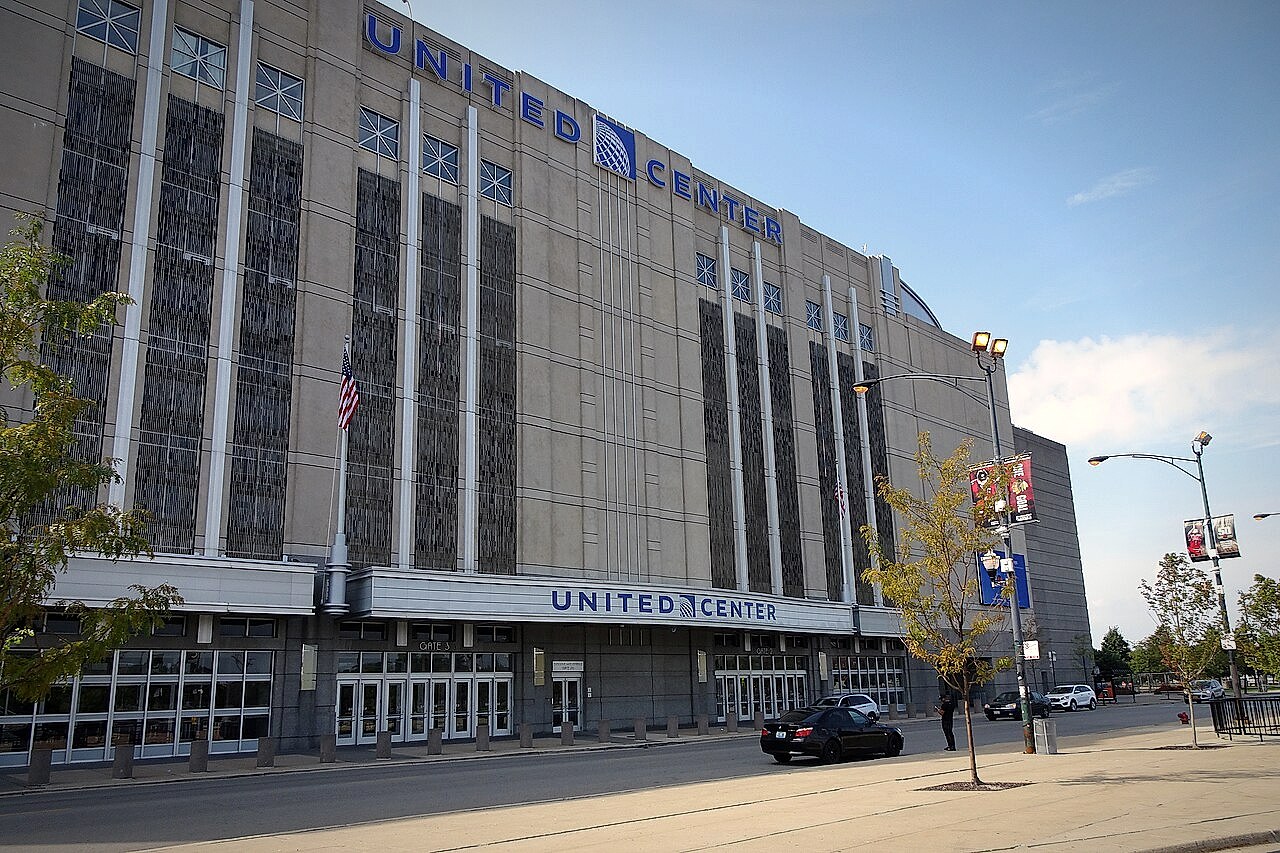
He was inducted into the Naismith Memorial Basketball Hall of Fame in September 2009. In March 2010 he became the majority owner of the Charlotte Bobcats (renamed Hornets in 2014), the first former NBA player to buy a controlling stake in a franchise. The ownership years were mostly an argument about whether Jordan’s famously competitive instincts translated to the general-manager’s chair. The weight of the evidence says no, the Bobcats-era Charlotte teams never won a playoff series under his ownership and the 2011–12 team went 7–59, the worst winning percentage in league history, but in 2023 he sold the controlling interest at a roughly $3 billion valuation, more than tenfold his purchase price, while retaining a minority share and a seat on the board. By the financial metric, the ownership years were a triumph; by the basketball metric, they were the first chapter of his career that was not.
Jordan Brand, and the business part of the legacy
The 1984 Nike contract that produced the Air Jordan 1 is, on nearly every commercial measure, the most valuable athlete endorsement deal in American sports history. Jordan Brand, split out from Nike’s main line in 1997 as a standalone subsidiary, generated over $7 billion in global wholesale revenue for fiscal 2024, by Nike’s own disclosed reporting, and its margins are better than the parent brand’s. Jordan himself receives a royalty stream from the brand that has, in several recent years, exceeded his peak playing salary by more than a factor of ten. The relevant detail, for a biography of the player, is that the shoe business was itself a basketball story: the 1984 NBA memo banning Jordan from wearing the red-and-black prototype, which Nike paid the fines for, all season, remains one of the great advertising accidents of the twentieth century. The business did not just coincide with the playing career. It was the playing career, commercialized.
Legacy, and the argument that never ends
The standard case for Jordan as greatest of all time runs on the trophy shelf: six rings in six tries, ten scoring titles, five MVPs, two defensive player of the year nominations (he won it once), and the sustained second peak after the baseball year. The standard counter-case, which has gained some ground in the LeBron era, runs on longevity and on the quality of the competition he faced in the 1991 and 1992 Finals in particular. There is no final answer. The more specific and maybe more honest thing to say is that Jordan built the model the modern NBA star competes against, the individual-performance-plus-closing-possession model, finish it yourself, never defer, and every player since who has been measured against him has been measured by his rubric, not theirs. That is what it means to have changed a sport. The championship count will eventually be matched or passed; the rubric is the permanent part.
Signature Shoes
The Air Jordan line launched in 1985 with the Jordan 1, banned by the NBA for its colorway before Jordan ever laced it up in a regular-season game. Nike paid the fines. By 2026 the numbered series stands at 39 models, with the Jordan 3 (1988, the first Tinker Hatfield design and the shoe that introduced the Jumpman logo) and the Jordan 11 (1995, worn for his comeback season) ranking alongside the 1 as the three most culturally significant models in the line.
Shop Air Jordan at JD Sports →
Gear
Read Lazenby’s definitive biography Michael Jordan: The Life.
Shop Jerseys & Fan Gear at Fanatics
As a Fanatics affiliate, we may earn a commission from qualifying purchases.
Shop on Amazon
As an Amazon Associate, we earn from qualifying purchases.
Shop Sneakers & Gear at JD Sports
We may earn a commission from qualifying purchases on JD Sports.