Chicago Bulls
The Chicago Bulls won six NBA championships in eight years, between 1991 and 1998. Michael Jordan was the leading scorer on every one of those teams. Scottie Pippen was on every one. Phil Jackson coached every one. No franchise in the modern NBA era has concentrated its championship output into a narrower window with a narrower core. The Bulls also have a pre-Jordan history and a post-Jordan history, and both are, by comparison, short on championships and long on rebuilding arcs. The 1984 draft, which produced Jordan third overall after Houston took Hakeem Olajuwon and Portland took Sam Bowie, is the single event that produced the franchise’s identity. Everything the Bulls have done since, including the 2008 Derrick Rose draft pick and the current Billy Donovan-era roster, has been measured against the 1991–98 run.
The 1966 founding, and the expansion draft
The Bulls joined the NBA as an expansion team for the 1966–67 season. They were the league’s third Chicago franchise (after the Stags, 1946–50, and the Packers/Zephyrs, 1961–63) and the first to sustain. The expansion-draft roster was built around Guy Rodgers (acquired from San Francisco), Don Kojis, and Jerry Sloan. The first head coach was Johnny Kerr. The 1966–67 Bulls went 33–48, the best first-season record by any expansion team in NBA history. They reached the playoffs, were swept in the first round, and lost head coach Kerr to the Phoenix Suns expansion in 1968.
The team was named for the Chicago stockyard industry that had been the city’s signature economic feature for most of the late nineteenth and twentieth centuries. The Bull logo, a red-eyed frontal-view head designed by Dick Klein (the team’s founding general manager) in 1966, has not been changed in the fifty-plus years since, a rarity among NBA franchises.
Shop Chicago Bulls merchandise
As an Amazon Associate we earn from qualifying purchases.
The Jerry Sloan and Chet Walker 1970s
The 1970s Bulls, under head coaches Dick Motta (1968–76) and then Ed Badger, were a competent and occasionally excellent team that could not break through to the Finals. Jerry Sloan at shooting guard, Chet Walker at forward, Bob Love at small forward, Tom Boerwinkle at center, and Norm Van Lier at point guard formed the core of a team that made the playoffs eight times and reached the Western Conference Finals once (1975). Love averaged over 21 points per game for six consecutive seasons. Sloan’s defensive intensity, two-time NBA All-Defensive First Team selection, became the franchise’s early identity.
The 1970s Bulls won no championships. They came closest in 1974–75, when they reached the Western Conference Finals and lost to Golden State in seven games. The 1976–77 team finished 44–38 and made the playoffs but was eliminated in the first round. Motta was fired in 1976 after a dispute with ownership. The franchise entered a five-year competitive decline that lasted until the 1984 Jordan draft.
The Arthur Wirtz and Jerry Reinsdorf ownership transition
The Bulls’ ownership history is two distinct eras. The 1966–1972 era was led by Dick Klein and a rotating investment group. The 1972–1985 era was led by Arthur Wirtz, owner of the Chicago Blackhawks, who bought controlling interest in 1972. The 1985–present era is led by Jerry Reinsdorf, who acquired majority ownership in March 1985 from Wirtz’s estate shortly after Wirtz’s death in 1983. Reinsdorf paid $9.2 million for the team.
Reinsdorf’s tenure produced six championships in his first thirteen years as owner. The franchise valuation, per Forbes’s annual rankings, stood at $4.1 billion as of the 2024–25 season, with Reinsdorf retaining controlling interest at age eighty-eight. He also owns the Chicago White Sox.
The 1984 draft
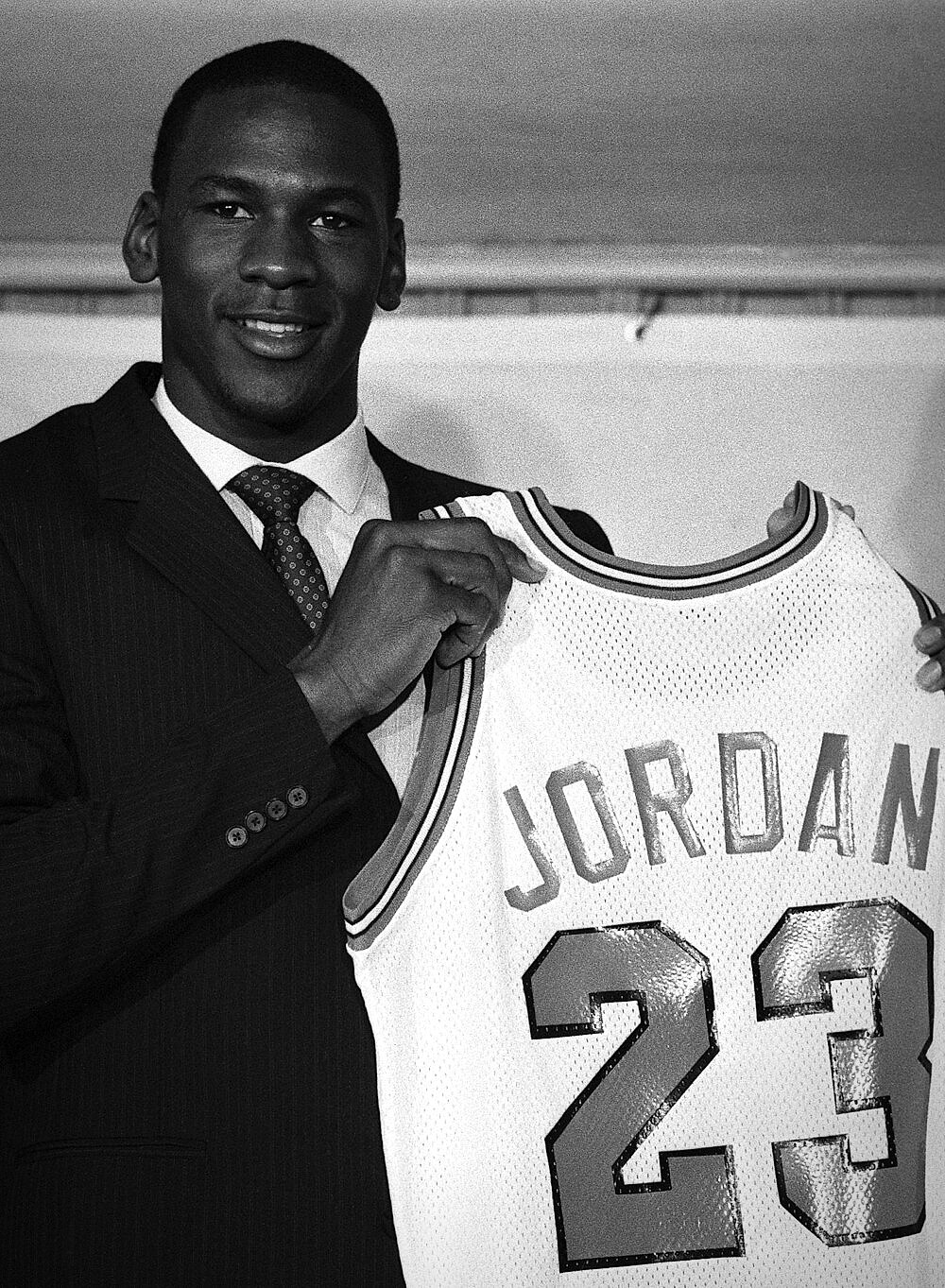
Houston selected Hakeem Olajuwon first overall in the 1984 NBA Draft. Portland, owning the second pick and already loaded with Clyde Drexler at shooting guard, used it on Kentucky center Sam Bowie. Chicago, picking third, took Jordan. General manager Rod Thorn’s press-conference comment at the time (“We wish he were seven feet, but he isn’t”) is the most-replayed draft-night quotation in NBA history. Jordan signed a five-year, $6.3 million contract that August, the largest rookie deal in the league.
The 1984–85 Bulls finished 38–44. Jordan averaged 28.2 points and won Rookie of the Year. He was named to the 1985 All-Star Game, in which a group of Eastern Conference veterans, led by Isiah Thomas and Magic Johnson, reportedly conspired to freeze Jordan out of the offense. Jordan scored only seven points. The “freeze-out” incident, much-discussed since, is covered in the opening chapters of Sam Smith’s The Jordan Rules (1992).
The Pistons wall, 1987–1990
Between 1987 and 1990, the Detroit Pistons won two championships and eliminated the Bulls three consecutive years in the playoffs. Chuck Daly’s Pistons staff had devised the “Jordan Rules,” a specific set of defensive schemes designed to bracket Jordan on every possession, force the ball out of his hands, and dare the rest of the Chicago roster to beat them. For three seasons, Detroit’s game-planning worked.
The response came in the summer of 1989. Jordan added fifteen pounds of upper-body strength via a private offseason conditioning program. Phil Jackson, promoted from assistant to head coach in the summer of 1989, brought Tex Winter’s triangle offense to the team and persuaded Jordan, whose individual scoring had been carrying the franchise, to play inside an ensemble structure. The 1990–91 Bulls went 61–21. They beat the Pistons in four games in the Eastern Conference Finals. Detroit, swept, walked off the floor without shaking hands.
The first three-peat, 1991–1993
The 1991 NBA Finals went five games. Chicago beat the Lakers, led by Magic Johnson in what would turn out to be his final Finals appearance before the HIV announcement that November. Jordan was Finals MVP. The 1992 NBA Finals went six games against Portland. Jordan opened with thirty-five first-half points in Game 1, including a six-made-three-point stretch that ended with him shrugging toward the Chicago bench. The 1993 NBA Finals went six games against Phoenix. Game 6 ended on a John Paxson three with 3.9 seconds remaining. Each of the three championship opponents had reached the Finals with a different offensive system. The Bulls’ three-peat ran over three different conference champions.
Jordan retired on October 6, 1993, three months after his father James was murdered during a robbery off Interstate 95 in North Carolina. He spent the 1993–94 season playing minor-league baseball for the Birmingham Barons. The 1993–94 Bulls finished 55–27 and lost in the second round to the New York Knicks.
The 1995 return, the 72-10 season, and the second three-peat
Jordan returned in March 1995 with a two-word press release: “I’m back.” The 1994–95 Bulls went 34–12 after his return, won the first round, and lost in the second round to the Orlando Magic. The offseason acquisition of Dennis Rodman from San Antonio (for Will Perdue) gave the team its final missing piece.
The 1995–96 Bulls went 72–10, the best regular-season record in NBA history at the time (since surpassed by the 73-9 Golden State Warriors of 2015–16). They won the championship in six games over the Seattle SuperSonics. Jordan was the regular-season MVP, Finals MVP, and All-Star Game MVP, the triple-sweep later matched only by Shaquille O’Neal in 2000. The 1996–97 Bulls went 69–13 and beat Utah in six in the Finals. The 1997–98 Bulls went 62–20 and beat Utah in six again; Jordan’s Game 6 pull-up jumper over Bryon Russell with 5.2 seconds left, after stripping Karl Malone at the other end, is the shot that closes The Last Dance and every Jordan career retrospective.
Jackson left after the 1997–98 season. Jordan retired for a second time in January 1999. Pippen was traded to Houston in October 1998. Rodman was released. The dynasty ended in the summer of 1998.
The post-Jordan rebuild and the Derrick Rose era
The 1998–99 through 2003–04 Bulls averaged roughly twenty wins a season. The 2007–08 team, coached by Jim Boylan, finished 33–49. The Bulls won the 2008 NBA Draft Lottery despite having the ninth-worst record, and selected Derrick Rose, a local Chicago native out of Memphis, with the first overall pick.
Rose was Rookie of the Year in 2008–09 and NBA MVP in 2010–11 at age twenty-two, the youngest MVP in the history of the award. The 2010–11 Bulls went 62–20, reached the Eastern Conference Finals, and lost to Miami in five games. On April 28, 2012, Rose tore his left ACL in the first quarter of Game 1 of the first round against Philadelphia. He missed the entire 2012–13 season. He played through recurring knee injuries for the following three seasons before being traded to the New York Knicks in June 2016.
The Rose era is the most-referenced “what if” in post-Jordan franchise history. The 2010–11 team, per every retrospective analysis, had a realistic Finals ceiling; the ACL injury closed it.
Current era, 2017–present
The Bulls have made the playoffs in only two of the eight seasons since the Rose era (2016–17 and 2021–22). Billy Donovan was hired as head coach in September 2020 after his tenure at Oklahoma City ended. The Zach LaVine and DeMar DeRozan years produced the 2021–22 playoff team that lost in the first round to Milwaukee. The 2024–25 roster, featuring LaVine, Coby White, Josh Giddey (acquired from Oklahoma City in June 2024), and center Nikola Vučević, entered the season with an expected-wins projection in the mid-thirties.
Arenas and the parquet
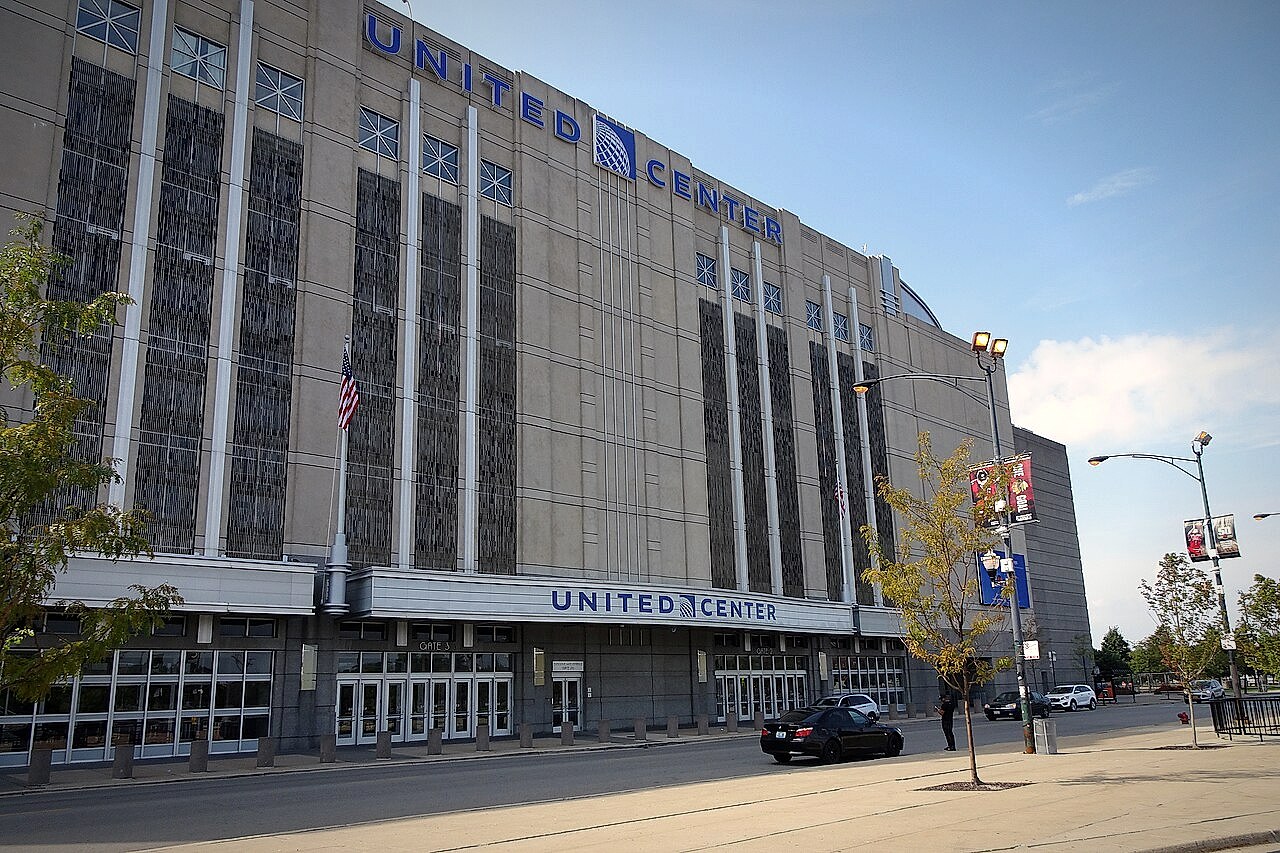
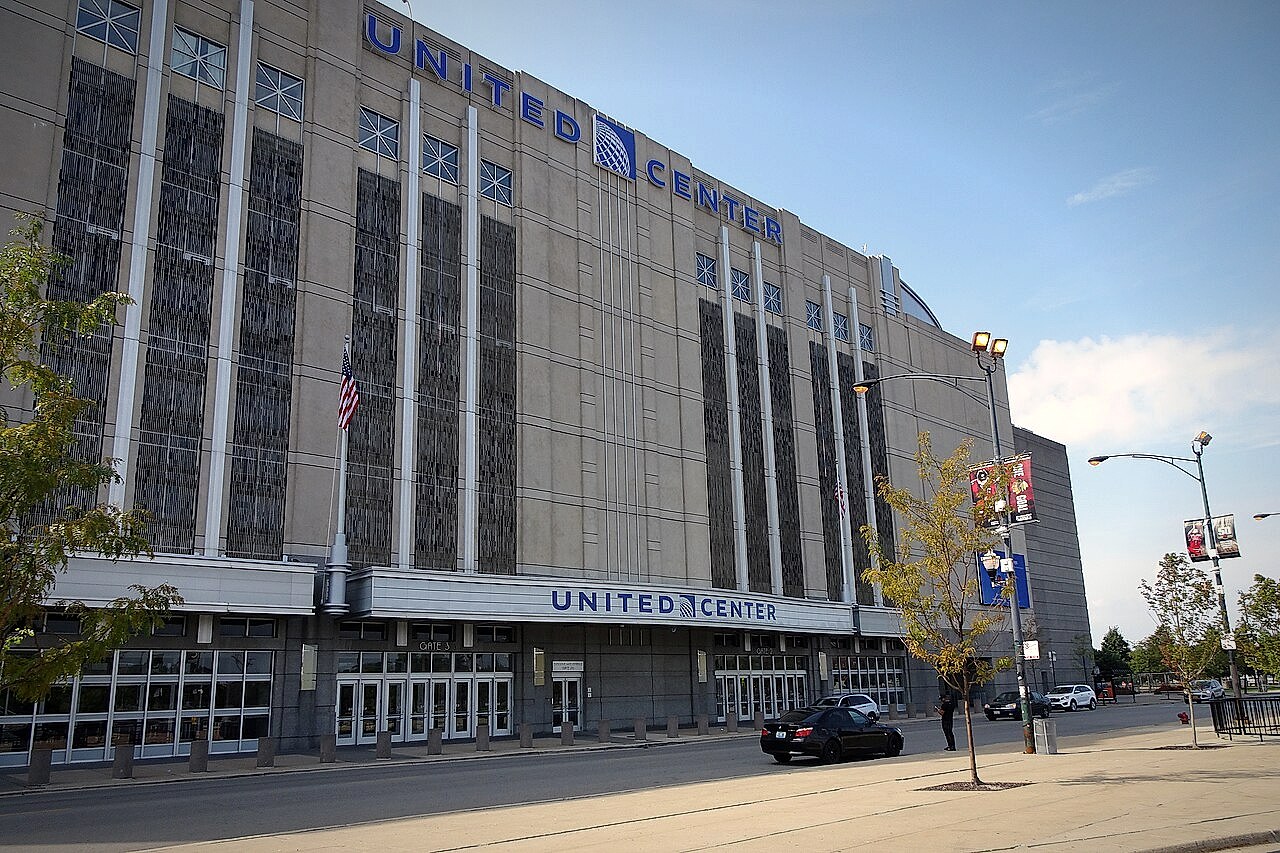
The Bulls played at Chicago Stadium from 1967 to 1994. They moved to the United Center across Madison Street in September 1994. The United Center has capacity approximately 20,917 and is the largest arena in the NBA by capacity. Five of the six Bulls championship banners hang here; the sixth (1991) was won during the Chicago Stadium era.
Retired numbers
Four jersey numbers have been retired to the United Center rafters, plus a banner for Phil Jackson:
- Jerry Sloan (4), retired February 17, 1978
- Bob Love (10), retired January 14, 1994
- Michael Jordan (23), retired November 1, 1994 (during his first retirement) and re-retired after his 1999 final retirement
- Scottie Pippen (33), retired December 9, 2005
- Phil Jackson banner with “1996” (representing the 1,996 regular-season coaching wins by Jackson across his career) hangs at the United Center
Sources
- Basketball-Reference, Chicago Bulls franchise page (regular-season records, playoff results, draft picks)
- Sam Smith, The Jordan Rules: The Inside Story of a Turbulent Season with Michael Jordan and the Chicago Bulls (Simon & Schuster, 1992)
- ESPN, The Last Dance, ten-part documentary (April–May 2020), directed by Jason Hehir
- Chicago Bulls media guides, 1984–85 through 2024–25 (roster transactions, championship chronology)
- NBA Finals box scores: 1991, 1992, 1993, 1996, 1997, 1998 (Basketball-Reference)
- Roland Lazenby, Blood on the Horns: The Long Strange Ride of Michael Jordan’s Chicago Bulls (Addax Publishing Group, 1998)
- 2008 NBA Draft Lottery records (Chicago selects Derrick Rose first overall with the ninth-worst record probability)
- Derrick Rose medical records, April 28, 2012 ACL injury (public reporting via ESPN)
Shop Official Chicago Bulls Gear at Fanatics
As a Fanatics affiliate, we may earn a commission from qualifying purchases.
Shop on Amazon
As an Amazon Associate, we earn from qualifying purchases.
Shop NBA Gear at JD Sports
We may earn a commission from qualifying purchases on JD Sports.