Dennis Rodman
Dennis Rodman is the greatest rebounder of the post-merger NBA era. He led the league in rebounds per game for seven consecutive seasons (1991-92 through 1997-98). He is one of only six players in history to win five or more NBA championships; his five (1989 and 1990 with the Detroit Pistons, 1996, 1997, and 1998 with the Chicago Bulls) are distributed across two distinct dynasties separated by five seasons, a unique achievement in modern basketball history. He is a two-time Defensive Player of the Year (1990, 1991), a two-time All-Star, a seven-time All-Defensive First Team selection, an eight-time All-Defensive Team selection total, a 2011 Hall of Famer, and arguably the single most culturally disruptive athlete of the 1990s. The dyed hair, the cross-dressing for publicity, the professional-wrestling cameos, the 1997 book Bad As I Wanna Be (number one on The New York Times bestseller list), the marriage to Carmen Electra in 1998 (annulled nine days later), and the cross-border diplomacy with North Korean leader Kim Jong Un in the 2010s are separate cultural footprints. The basketball one is that he rebounded at approximately 25% above the NBA’s career average rate for his size.

Trenton, Dallas, and the post-high-school growth (1961–1983)
He was born May 13, 1961 in Trenton, New Jersey. His father Philander Rodman Jr. left the family when Dennis was three. (Philander later relocated to the Philippines, where he opened a bar named “Rodman’s Cafe” and had approximately 29 children with different women; Dennis met him for the first time at age 31, in 1992.) His mother Shirley Rodman moved the family to Dallas, Texas when Dennis was 12.
He was 5’9” when he graduated from South Oak Cliff High School in 1979. He had not played varsity basketball. He worked as a janitor at the Dallas-Fort Worth International Airport. He was arrested in 1980 for stealing 50 wristwatches from an airport gift shop; he was charged but not convicted. He grew eight inches between 1980 and 1981. He enrolled at Cooke County Junior College in Gainesville, Texas, where he played one season and averaged 17.6 points and 13.3 rebounds. He transferred to Southeastern Oklahoma State University, an NAIA school, where he was a three-time NAIA All-American across 1983-86.
Shop Dennis Rodman jersey
As an Amazon Associate we earn from qualifying purchases.
The 1986 draft and the Detroit Pistons Bad Boys (1986–1993)
The Detroit Pistons held the 27th pick in the 1986 NBA Draft. They took Rodman. He averaged 6.5 points and 4.3 rebounds as a rookie off the bench. He started at power forward by his third year. The 1988-89 and 1989-90 Pistons (the “Bad Boys” era, coached by Chuck Daly) won back-to-back NBA championships. Rodman was the defensive anchor of the power-forward position. He was Defensive Player of the Year in 1989-90 and 1990-91. He averaged 8.8 rebounds as a starter.
He led the league in rebounds per game for the first time in 1991-92 at 18.7, the highest single-season rebound average since Wilt Chamberlain in 1968-69. He was an All-Star in 1990 and 1992.
The 1992 death of head coach Chuck Daly’s successor, the 1993 breakup of the Bad Boys core, and Rodman’s own mental-health crisis (which he has documented in detail in Bad As I Wanna Be) led to a declining trajectory. On October 2, 1993, the Pistons traded him to the San Antonio Spurs for Sean Elliott and David Wood.
San Antonio (1993–1995)
He played two seasons for the Spurs under head coach John Lucas. He led the league in rebounds both years (17.3 and 16.8 per game). The 1993-94 Spurs reached the Western Conference Semifinals. The 1994-95 Spurs reached the Western Conference Finals (against Olajuwon’s Rockets) and lost in six. Rodman was erratic in San Antonio; he was suspended for multiple games across both seasons for conduct-related issues. On October 2, 1995, the Spurs traded him to the Chicago Bulls for Will Perdue.
The second Bulls three-peat (1995–1998)
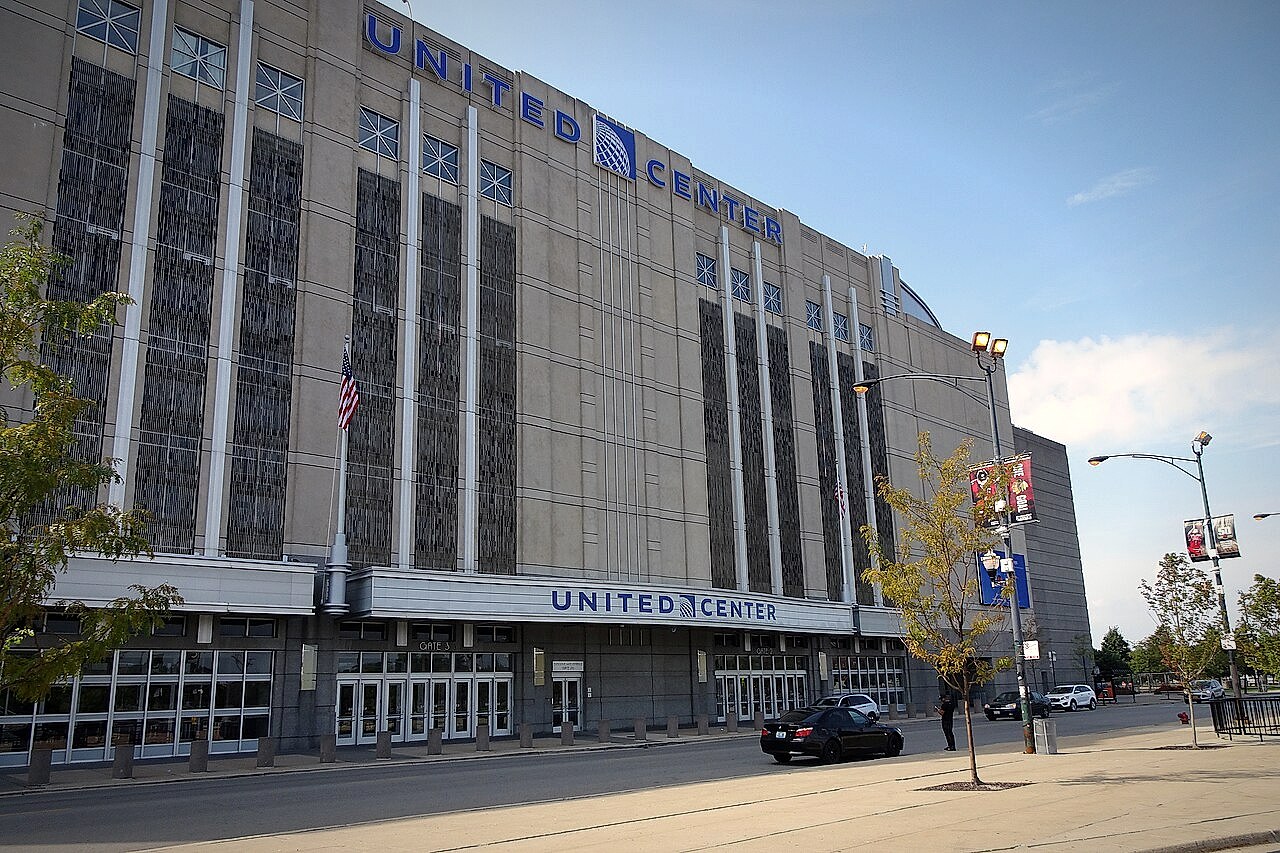
He joined a Bulls roster that had returned Michael Jordan from baseball in March 1995 and had added Ron Harper and Toni Kukoč. Phil Jackson was head coach. The 1995-96 Bulls went 72-10, the best regular-season record in NBA history at that point (since broken only by the 2015-16 Warriors). Rodman averaged 14.9 rebounds. The Bulls beat the Seattle SuperSonics in six in the 1996 NBA Finals. Rodman averaged 14.7 rebounds in the series.
The 1996-97 Bulls went 69-13 and beat the Utah Jazz in six in the 1997 NBA Finals. Rodman averaged 7.5 rebounds in the Finals, his lowest of the three-peat but still the highest rebounder on either team.
The 1997-98 Bulls went 62-20 and beat the Utah Jazz in six in the 1998 NBA Finals. Rodman averaged 13.2 rebounds in the Finals. Jordan scored the famous game-winning shot in Game 6 with Rodman on the floor.
The Bulls released Rodman in July 1999. He was briefly with the Los Angeles Lakers (12 games) and the Dallas Mavericks (12 games) in 1999 and 2000 before retiring.
Hall of Fame and the 2019 diplomatic work
He was inducted into the Naismith Memorial Basketball Hall of Fame on August 12, 2011, presented by Phil Jackson. The Bulls retired his #91 on January 11, 2020. He wore #10 with Detroit and San Antonio (the Bulls had retired #10 for Bob Love, forcing him to change; he picked #91 because its digits sum to 10), #73 with the Lakers, and #70 with Dallas (he requested #69; the league declined). Detroit retired his #10 on April 1, 2011.
His Hall of Fame induction speech, which ran for more than 30 minutes, was unusual in the way most things Rodman does are unusual. He addressed his mother directly and at length, thanked Phil Jackson and Michael Jordan by name, and spent several minutes discussing his mental-health struggles in the years between the Pistons and the Bulls, which had included a night in which he showed up in his truck at the Palace of Auburn Hills with a loaded rifle and sat there until, as he has described it, he decided to keep living. He did not shy from those details at the podium. It was, by the accounts of people in the room, one of the most honest Hall of Fame speeches in recent memory.
The statistical case for his Hall inclusion is not complicated. Seven consecutive rebounding titles, no other player in the shot-clock era comes close. Two Defensive Player of the Year awards. Five championships across two dynasties. His career win-share contribution, by multiple post-hoc analytics frameworks, ranks him as one of the 40 most valuable players of the three-point-era NBA. The selection was not controversial when it came. The only real debate was whether 2011 was too late.
Between 2013 and 2019 Rodman made four trips to North Korea and developed a public friendship with Kim Jong Un. The visits were controversial; the State Department publicly called them “not in line with U.S. policy” during the first trip in 2013. Rodman has said the trips were attempts at citizen diplomacy; he coordinated basketball-exhibition matches between American and North Korean teams and has credited the visits with producing informal backchannel communication during the Obama administration. The visits were, independent of their diplomatic merits, the most-covered North Korea-related American news story of the 2013-2019 period.
Legacy
Rodman’s career rebounding rate (13.1 per game) is, for his height of 6’7”, the most statistically anomalous rate in NBA history. Centers his size have not, before or since, produced rebounding lines of his magnitude. His per-36-minute rebound rate of 16.1 is the highest of any player in the 1980-present era excluding Wilt Chamberlain. The technique he developed (studying missed-shot spin trajectories and positioning to the weakside of the ball) has been, in the 2000s and 2010s, directly referenced by Kevin Garnett, Dwight Howard, and Tim Duncan as the model they studied.
The cultural footprint is, by most modern sports-sociology analysis, the most polarizing of any NBA player from the 1990s. The Athletic’s 2022 NBA 75 ranking placed him 57th, which is one of the more-debated rankings on the list. Whether Rodman is, on aggregate, a top-30 NBA player (his advocates argue) or a top-60 NBA player (his critics argue) depends almost entirely on how you weight defensive value and championship impact relative to volume offense.
He has continued, in the 2020s, to make sporadic cultural appearances. He is, in 2026, a minority investor in a basketball-specific footwear startup and a frequent guest on podcasts. His 2019 ESPN 30 for 30 documentary Rodman: For Better or Worse, directed by Todd Kapostasy, is still one of the most-watched basketball documentaries of the late-2010s ESPN docudrama run.
Gear
Pick up his autobiography Bad As I Wanna Be.
Sources
The Dallas-Fort Worth airport janitor period is from Rodman’s 1996 memoir Bad As I Wanna Be (Delacorte Press, co-authored with Tim Keown). The 1996-98 Bulls chapter is cross-referenced against Jason Hehir’s 2020 The Last Dance documentary. The 2013-2019 North Korea visits are documented in the State Department’s public statements archive and in Todd Kapostasy’s 2019 ESPN 30 for 30 film.
Shop Jerseys & Fan Gear at Fanatics
As a Fanatics affiliate, we may earn a commission from qualifying purchases.
Shop on Amazon
As an Amazon Associate, we earn from qualifying purchases.
Shop Sneakers & Gear at JD Sports
We may earn a commission from qualifying purchases on JD Sports.