Scottie Pippen
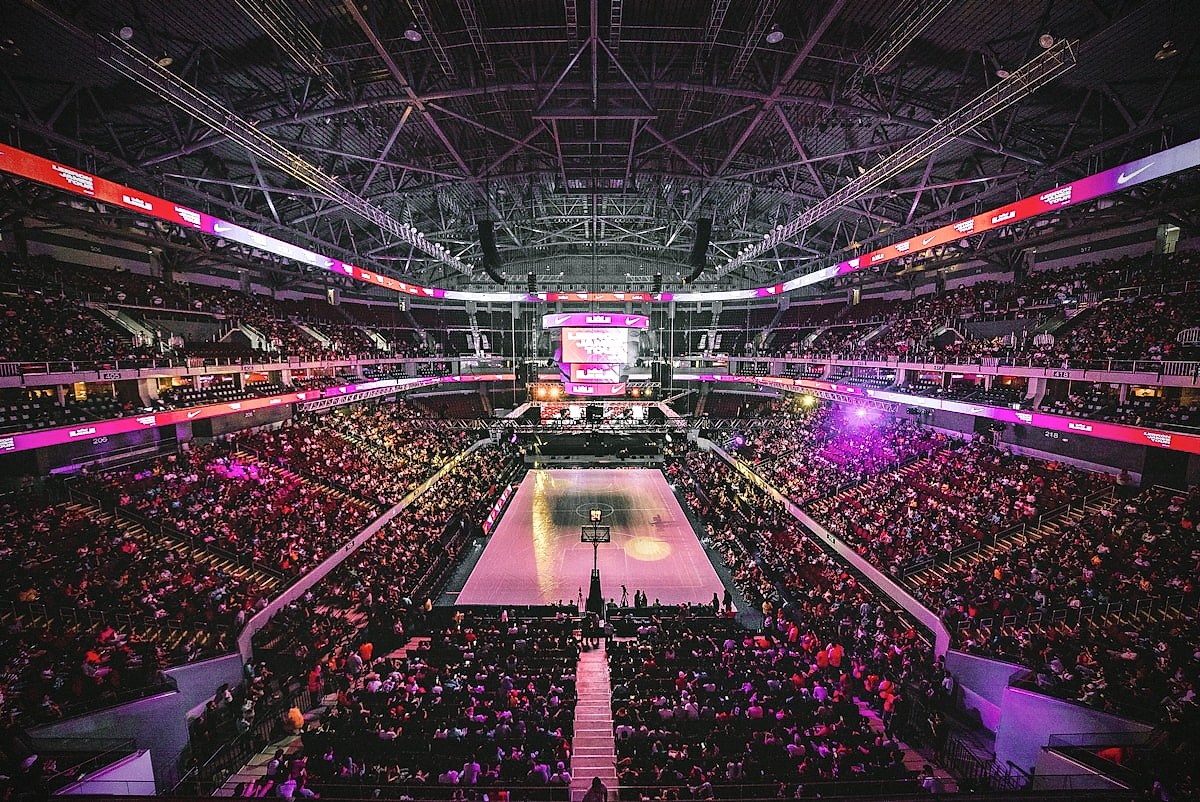
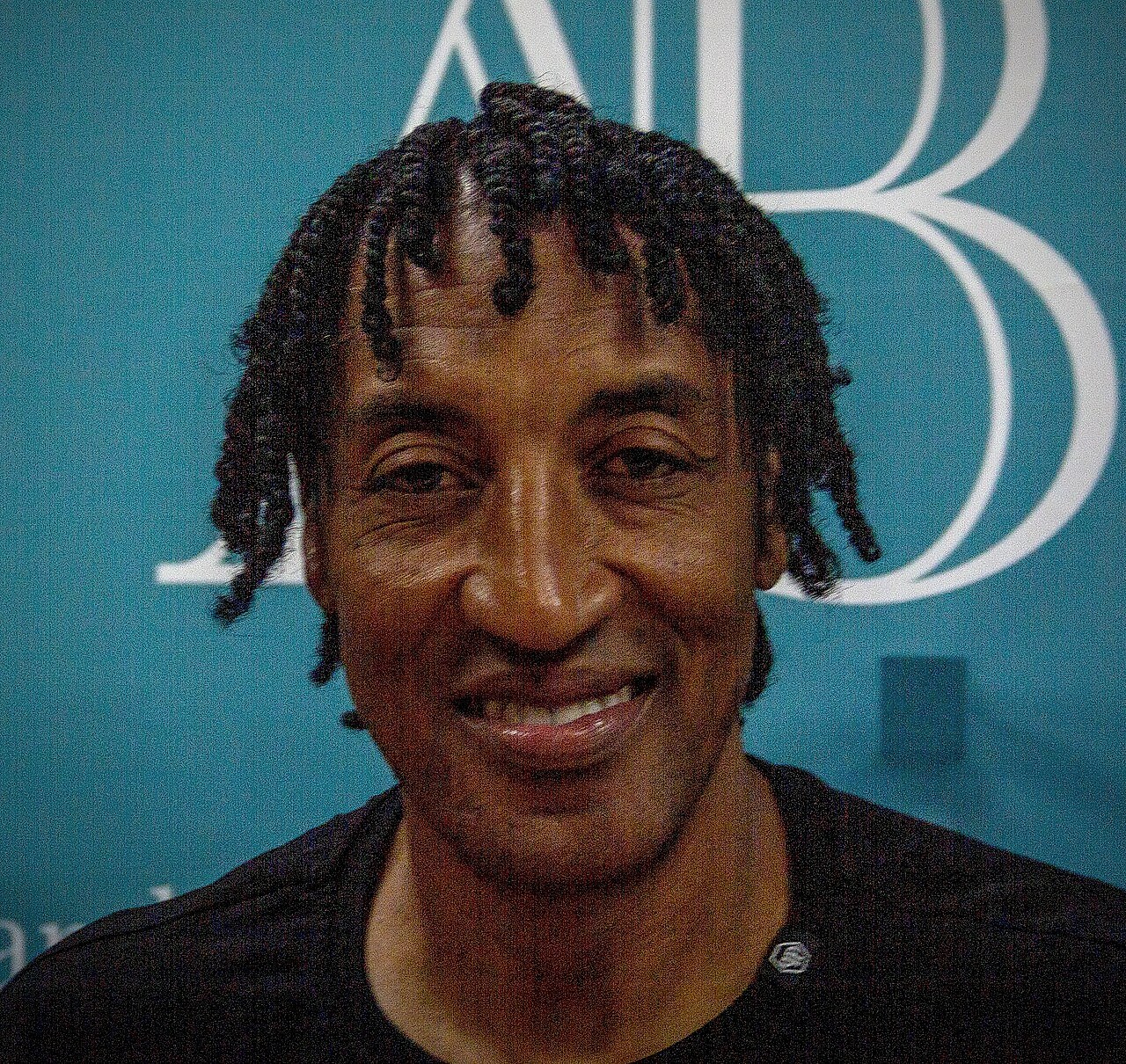
Scottie Pippen is the second-most-important player on the six Bulls championship teams and, by most analytic reviews, one of the three or four most-undervalued players in NBA history. He has six rings, seven All-Star selections, eight first-team All-Defensive selections, the 1994 All-Star Game MVP, a 1995 steals title, a 1996 and 1992 Olympic gold, and a Hall of Fame induction in 2010 both as an individual player and as a member of the Dream Team. He never won a regular-season MVP. He finished third in the 1993-94 voting. He is the only six-time champion of the post-merger era without an MVP trophy. The 11 seasons he played next to Michael Jordan define both of their résumés, and Jordan has publicly said, multiple times, including in Jason Hehir’s 2020 The Last Dance, that he would not have won a single championship without him. That statement is unchallenged. The argument about Pippen, then and now, is how much of his career was constructed by his partnership with Jordan and how much Pippen constructed Jordan’s. Both things are true at once. Both things are also, by Pippen’s own 2021 memoir Unguarded, a source of ongoing tension that has shaped every post-career conversation he has given.
Hamburg, Arkansas
He was born September 25, 1965 in Hamburg, a small timber town in southeast Arkansas with a population under 3,000. He was the youngest of twelve children. His father, Preston Pippen, worked at a paper mill in nearby Warren; his mother, Ethel Pippen, managed the household. Preston suffered a stroke at 47 and was confined to a wheelchair for most of Scottie’s teenage years; his older brother Ronnie suffered a spinal injury in a high-school wrestling match and was paralyzed from the waist down at 14. Two of his brothers, including Ronnie, predeceased him by the time he entered the NBA. The Pippen household, across his childhood, was almost always supporting a family member in medical recovery.
He was 6’1” at his high-school graduation from Hamburg High in 1983. He was not recruited by any Division I program. He walked on at the University of Central Arkansas (an NAIA school about three hours north) under coach Don Dyer, who had seen him play at a summer camp. He worked as the team equipment manager his freshman year.
Shop Scottie Pippen jersey
As an Amazon Associate we earn from qualifying purchases.
University of Central Arkansas (1983–1987)
He grew seven inches between 1983 and 1986, from 6’1” at graduation to 6’8” by his senior year. He averaged 23.6 points and 10 rebounds as a senior, was a consensus NAIA first-team All-American, and was named the 1987 NAIA Player of the Year. Marty Blake, the NBA’s director of scouting, flew to Conway, Arkansas that spring to watch him play specifically because the school had sent the league a scouting tape it had produced in-house. Blake’s report to every team in the league described him as “the best senior nobody has seen.” The Seattle SuperSonics, holding the fifth pick of the 1987 NBA Draft, took Pippen. Within minutes, Seattle traded him to the Chicago Bulls for Olden Polynice, who had been the eighth overall pick, and a future first-round swap. The Bulls front office, under general manager Jerry Krause, had targeted him for three months. Polynice played 15 NBA seasons. He never made an All-Star team.
The rookie years and the rise (1987–1991)
He averaged 7.9 points as a rookie, 14.4 as a sophomore, and 16.5 in his third year. By 1989-90 he was a first-time All-Star and the league’s third-leading shot-blocker at his position. The 1990-91 Bulls, under second-year head coach Phil Jackson running the triangle offense Tex Winter had taught him, went 61-21, beat the Knicks, Philadelphia, and Detroit (the four-year playoff-tormentor Bad Boy Pistons) in the Eastern playoffs, and reached the NBA Finals. Pippen’s primary defensive assignment across the playoffs was Magic Johnson. In Game 2 of the Finals Pippen held Magic to 10 points on 4-of-13 shooting. The Bulls beat the Lakers in five. It was the first of six championships.
The first three-peat (1991–1993)
He was a first-team All-NBA selection in 1992. He was one of the original twelve members of the 1992 Barcelona Olympic Dream Team, alongside Jordan, Magic, Larry Bird, and others. The 1992 and 1993 Bulls repeated: Portland in six, then Phoenix in six. Jordan won all three Finals MVP awards.
1993–94, Jordan’s first retirement, and the 1.8 seconds
Michael Jordan retired in October 1993 to play minor-league baseball. The 1993-94 Bulls were Pippen’s team. He averaged 22.0 points, 8.7 rebounds, and 5.6 assists, made the All-NBA first team for the first time, and finished third in the MVP voting behind Hakeem Olajuwon and David Robinson. The Bulls went 55-27, the second-best record in the East.
In Game 3 of the 1994 Eastern Conference Semifinals against the New York Knicks, with the score tied at 102 and 1.8 seconds remaining, Phil Jackson drew up the final play for Toni Kukoč instead of Pippen. Pippen, who was the team’s scoring leader and who had been the primary creator on every late-game possession of the season, refused to check back in for the inbounds pass. Kukoč hit the shot anyway. The Bulls won 104-102. But the 1.8 seconds has defined Pippen’s career retrospective ever since. He has acknowledged in subsequent interviews and in Unguarded that the moment was the single decision he most regrets. He has also said publicly that in his view Jackson made a coaching choice he should not have made, and that the frustration was with the coach’s play call and not with Kukoč.
The Bulls lost the series in seven. In Game 5 at Madison Square Garden, referee Hue Hollins called a phantom foul on Pippen against Hubert Davis with 2.1 seconds left. Replays showed the contact occurred after Davis released the ball. Davis hit both free throws. The Knicks won 87-86. Phil Jackson was fined $10,000 that summer for publicly calling the Hollins call “the worst call in NBA playoff history.” The fine has not been reversed.
The contract
Pippen’s 1991 extension with the Bulls was structured as a seven-year, $18 million deal that, by the mid-1990s, was dramatically below the market rate for a player of his caliber. By 1997-98, when the Bulls were paying Jordan $33 million a year, Pippen was earning $2.8 million. He was the sixth-highest-paid player on his own team. Jerry Krause had refused to renegotiate during the mid-1990s on the stated principle that the contract had been signed voluntarily.
Pippen delayed foot surgery scheduled for June 1997 until October 1997, which he later acknowledged in Unguarded was a deliberate protest against Krause. He missed the first 35 games of the 1997-98 season. He requested a trade on December 29, 1997. He rescinded the request in February 1998. He went on to win a sixth ring that June.
The second three-peat (1995–1998)
Jordan returned from baseball in March 1995. The 1995-96 Bulls went 72-10, the best regular-season record in league history to that point (broken in 2015-16 by Golden State). Pippen averaged 19.4, 6.4, 5.9, and 2.0 on .463/.374/.679 splits. He was the Bulls’ leading rebounder and assist-maker. He was a first-team All-NBA selection and first-team All-Defense.
The 1996-97 Bulls went 69-13 and won the championship again. In a February 1997 game against Denver, Pippen scored his career-high of 47 points on 19-of-27 shooting. In Game 6 of the 1997 Finals against Utah, with the Bulls leading by two in the final minute, Pippen deflected an inbounds pass intended for Shandon Anderson and redirected it to Kukoč, who dunked to seal the championship. It is the single most-replayed off-ball defensive play of Pippen’s career.
The 1997-98 Bulls, despite the Krause turbulence and the injury-delayed start, finished 62-20. They won their sixth and final championship in June 1998 against Utah. The organization broke up the roster that summer. Jordan retired for a second time. Phil Jackson was not offered a new contract. Pippen was dealt to Houston in a sign-and-trade on January 22, 1999 for Roy Rogers and a second-round pick. Dennis Rodman was released. The six-ring Bulls roster was gone.
Houston (1999) and Portland (1999–2003)
The Houston experiment with Pippen, Charles Barkley, and Hakeem Olajuwon at 36, 35, and 36 years old respectively, lasted one lockout-shortened season. Pippen averaged 14.5 points. The Rockets lost in the first round to the Lakers. He requested a trade before the summer was over. On October 2, 1999 he was sent to the Portland Trail Blazers in a seven-player package.
Portland was where his career had its longest post-Bulls chapter. He started all 82 games in 1999-2000. The Trail Blazers went 59-23 and reached the Western Conference Finals, where they led Kobe Bryant and Shaquille O’Neal’s Lakers 3-2 and lost Game 6 after leading by 15 with eleven minutes to play. Game 7 at the Staples Center went to the Lakers 89-84 after Portland blew a fourth-quarter 15-point lead (the Lakers outscored the Blazers 31-13 in the final twelve minutes). It remains the single most-discussed collapse of the Bryant-O’Neal era. Pippen had 20 and 9 in Game 7. He was 34 years old.
He played three more seasons for Portland. He averaged double-figures every year. He never reached another conference final.
The 2003–04 Bulls return and retirement
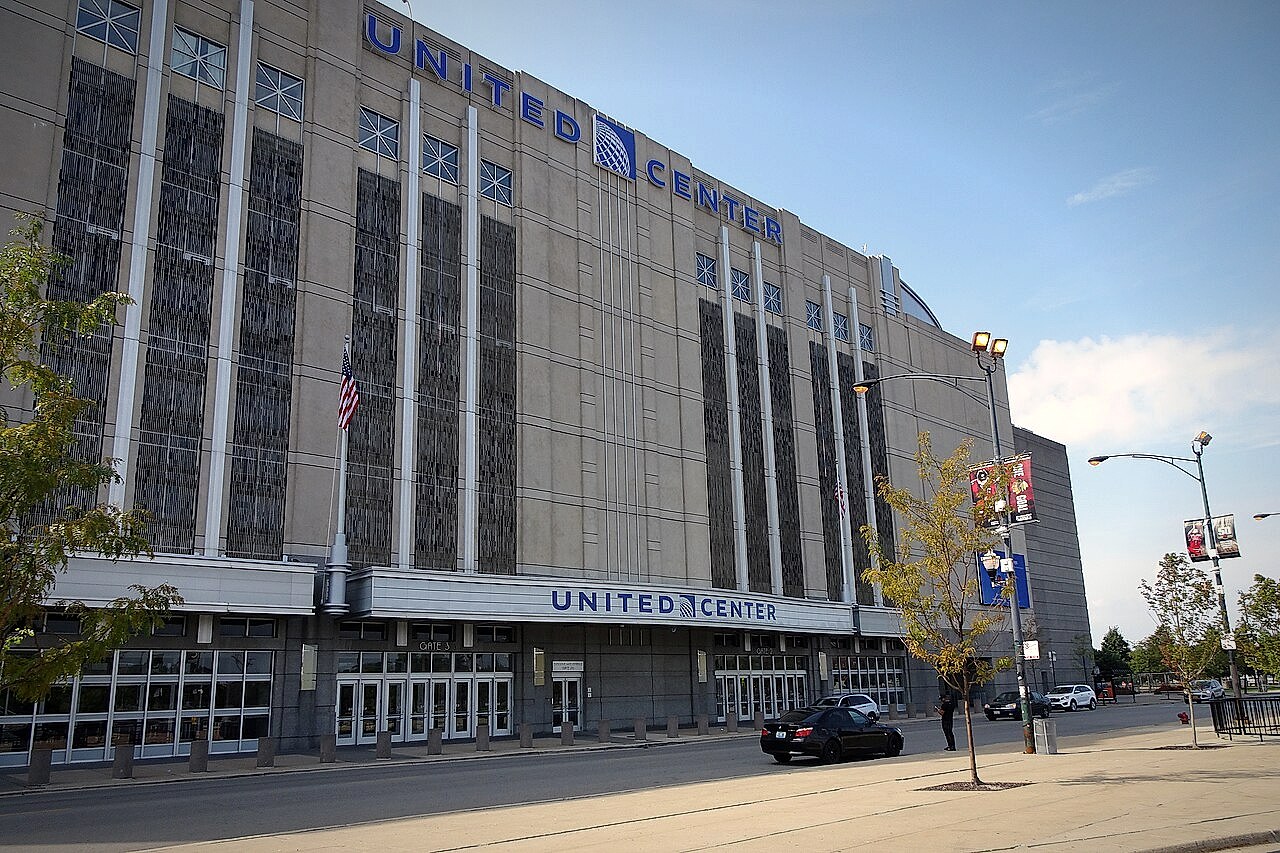
He signed a two-year, $10 million deal with Chicago on July 20, 2003 to return to the franchise where his career had been built. Injuries limited him to 23 games. He averaged 5.9 points. His final NBA game was February 2, 2004 against Seattle (2 points, 3 assists, in 8 minutes). The Bulls finished 23-59 that year, the first time in his 16-year NBA playoff streak (1988 through 2003) his team had missed the postseason. He announced his retirement on October 5, 2004. The Bulls retired his #33 on December 9, 2005.
Hall of Fame and The Last Dance aftermath
He was inducted into the Naismith Memorial Basketball Hall of Fame on August 13, 2010, as an individual player and as a member of the 1992 Dream Team. His presenter was Michael Jordan.
The 2020 ESPN documentary The Last Dance, directed by Jason Hehir, centered on the 1997-98 Bulls and is widely considered the most-watched NBA documentary ever produced. Pippen has said, in every interview he has given since the series aired, that his portrayal in it was, in his words, “wounded and disappointing.” His 2021 memoir Unguarded was the response; it runs 280 pages and is the most detailed on-record accounting of the Krause era and the contract-dispute years by any Bulls-era player. It did not repair the post-Last Dance relationship with Jordan. He has said he is not in regular contact with Jordan as of 2024.
Legacy
He is the rare defensive wing whose box-score numbers undersold his actual impact. He ranks second in career playoff steals in league history (395, behind only LeBron James’s 445). He is one of only four players in NBA history with career totals of 15,000 points, 6,000 rebounds, 5,000 assists, 2,000 steals, and 1,000 blocks; the other three are LeBron James, Kevin Garnett, and Magic Johnson. His 15 career triple-doubles as a non-primary ball-handler, in the pre-triple-double-inflation era, put him at a rate of versatile production that most of the players on that short list were asked to produce from the point. He played the one, two, three, and sometimes four on any given Bulls possession.
The argument for Pippen as a top-fifty player ever rests on the defensive record, the six championships, the lack of any MVP (which in his case is a roster-construction accident rather than a career ceiling), and the raw fact that Jordan has publicly acknowledged that his résumé would not exist without Pippen’s. The Athletic’s 2022 NBA 75 ranking placed Pippen at 32nd. Most retrospective surveys since place him higher. He has, in the 22 years since his retirement, been the active-argument player most frequently cited as “underrated” by both basketball-focused podcasts and analytics publications.
Gear
Read Phil Jackson’s 11 Rings for the full Bulls dynasty account.
Sources
The Hamburg, Arkansas childhood and family detail are documented in Pippen’s 2021 memoir Unguarded (Atria Books). The 1987 draft-night trade with Seattle is cross-referenced against the NBA’s 1987 draft archive and Marty Blake’s scouting-department records. The 1994 Game 3 “1.8 seconds” incident and the Hue Hollins Game 5 foul call are from Jack McCallum’s Sports Illustrated coverage of the 1994 Eastern Conference Semifinals. The 2020 Last Dance controversy and its aftermath are covered in Jackie MacMullan’s 2021 ESPN feature on the post-Last Dance reception, in Pippen’s memoir, and in subsequent podcast interviews including All the Smoke (2021).
Shop Jerseys & Fan Gear at Fanatics
As a Fanatics affiliate, we may earn a commission from qualifying purchases.
Shop on Amazon
As an Amazon Associate, we earn from qualifying purchases.
Shop Sneakers & Gear at JD Sports
We may earn a commission from qualifying purchases on JD Sports.