The 1992 Dream Team: The Greatest Basketball Team Ever Assembled
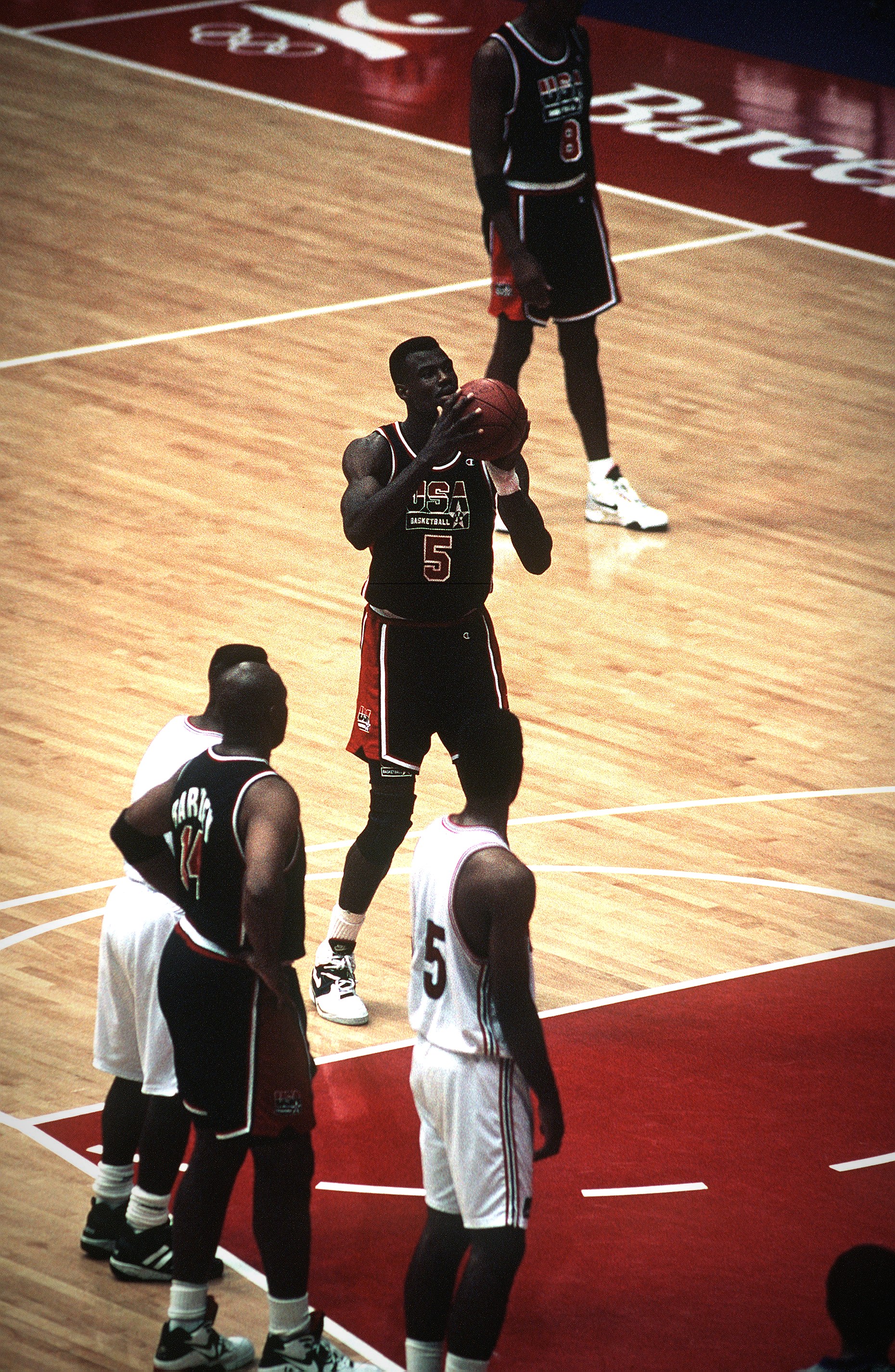
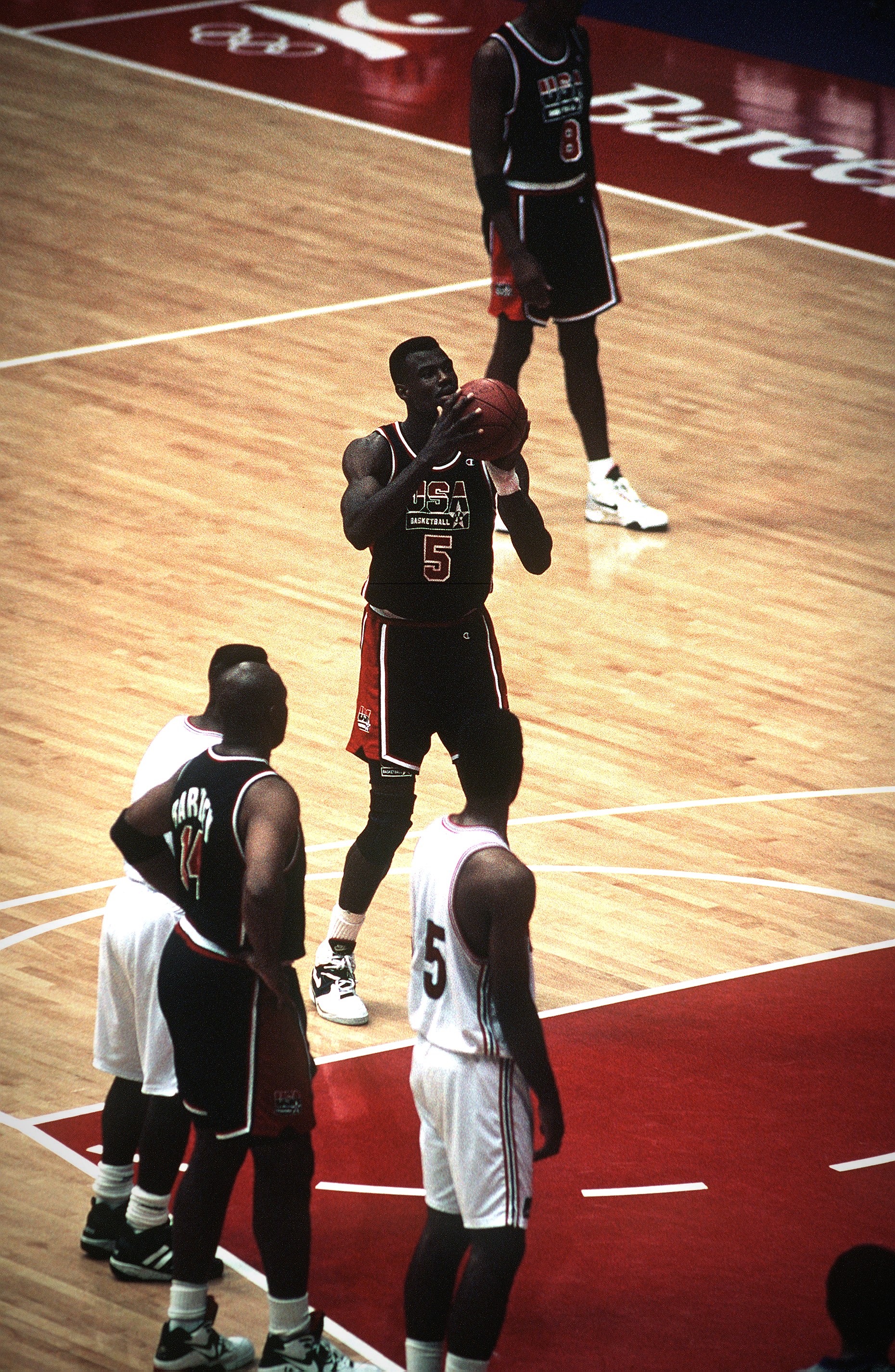
The 1992 United States men’s Olympic basketball team, universally known as the Dream Team, went 8–0 at the Barcelona Games and won the gold medal by an average of 43.8 points per game. It was the first Olympic basketball team in history permitted to include NBA players. Every member of the roster except for the college-aged Christian Laettner was inducted, eventually, into the Naismith Memorial Basketball Hall of Fame. The team itself was inducted as a single unit in 2010, the first time the Hall had inducted a team. The argument that it is the greatest roster ever assembled in any American team sport is not, by 2026, much contested.
How the rule changed, April 1989
Olympic basketball, from its 1936 inclusion through the 1988 Games, had been restricted to amateurs. FIBA, the international basketball federation, held the line on the amateur rule through three decades of public NBA interest in sending professional players. The United States had won every Olympic men’s basketball gold medal from 1936 through 1968, then lost the disputed 1972 final to the Soviet Union (the three-seconds-twice ending, a referee ruling the crowd still debates), regained gold in 1976, did not send a team in 1980 (the U.S. boycott), won gold again in 1984, and took bronze behind the Soviets and Yugoslavia in 1988.
The 1988 bronze, combined with the concurrent political collapse of amateur distinction in international sport, changed the FIBA calculation. At FIBA’s Munich Congress on April 7, 1989, the delegates voted 56–13 to allow players of any professional status to compete in the Olympics, with the specific Olympic-year version of the rule taking effect for the 1992 Games. Borislav Stanković, FIBA’s secretary-general, had pushed the vote internally for a decade. Dave Gavitt, the chair of the USA Basketball Men’s Olympic Selection Committee, had lobbied Stanković and the FIBA executive committee for the previous three years. The vote was the single biggest rule change in the history of international basketball.
Shop NBA Gear
As an Amazon Associate we earn from qualifying purchases.
The roster
The twelve-man roster, announced between September 1991 and May 1992, was:
- Charles Barkley (Philadelphia 76ers, then Phoenix Suns)
- Larry Bird (Boston Celtics)
- Clyde Drexler (Portland Trail Blazers)
- Patrick Ewing (New York Knicks)
- Magic Johnson (Los Angeles Lakers, retired from NBA play as of November 1991 due to HIV diagnosis)
- Michael Jordan (Chicago Bulls)
- Christian Laettner (Duke University, NCAA champion 1991 and 1992)
- Karl Malone (Utah Jazz)
- Chris Mullin (Golden State Warriors)
- Scottie Pippen (Chicago Bulls)
- David Robinson (San Antonio Spurs)
- John Stockton (Utah Jazz)
The head coach was Chuck Daly of the Detroit Pistons, fresh off back-to-back NBA championships in 1989 and 1990. Assistant coaches were Lenny Wilkens (Seattle SuperSonics), P. J. Carlesimo (Seton Hall), and Mike Krzyzewski (Duke).
The two absences discussed most since: Isiah Thomas and Shaquille O’Neal. Thomas, a Pistons guard who had been the reigning Finals MVP of the 1989 and 1990 championships, was left off in part because of a reported veto from Jordan, a story Jack McCallum’s 2012 book Dream Team corroborates from multiple committee sources. The Shaq question is simpler: he was a nineteen-year-old entering his NBA rookie year in the fall of 1992, and the committee’s stated reason was age. Shaq has said, in later interviews, that he was told he would be on the 1996 Atlanta team instead, which he was. Laettner, the college spot, was chosen over Shaq for a combination of age and fit; the committee’s on-the-record public explanation emphasized Laettner’s two NCAA championships at Duke.
Tournament of the Americas, Portland, June–July 1992
Before Barcelona, the Dream Team played in the 1992 Tournament of the Americas at the Rose Garden in Portland, Oregon, the FIBA-Americas qualifying event for Olympic berths. The United States went 6–0, beat Venezuela by 47 in the opener, Argentina by 48, Canada by 46, Uruguay by 68 (the largest margin of any Dream Team game, ever), Panama by 47, and Brazil by 59 in the gold-medal game. The Tournament of the Americas was, in effect, an American-hemisphere shakedown cruise, and the point was partly to give Daly a full cycle of international refereeing and FIBA-rules play before the Barcelona opener.
The margins in Portland were so large that FIBA, the following year, adopted a mercy-rule review that was never formally implemented but that shaped the structure of later international events.
The Monte Carlo scrimmage, July 22, 1992
The Dream Team flew to Monte Carlo on July 18 for a final week of training before the opening ceremony on July 25. On July 22, at the Monte Carlo Sporting Club gym, Daly held what has become the single most-referenced practice in basketball history: a full intra-squad scrimmage, forty minutes of live play, split into two teams of six.
Magic Johnson captained the “Blue” team. Michael Jordan captained the “White” team. The Blue team jumped to a 14–2 lead in the first few minutes behind Johnson and Barkley. Jordan, reportedly furious at the early margin, took over the second half of the scrimmage, and the White team won the forty-minute session 40–36. Daly, in an interview with NBC’s Hannah Storm that ran during the Olympic broadcast, called it “the greatest game nobody’s ever seen.” No camera operator was in the gym. McCallum’s 2012 Dream Team book includes a minute-by-minute reconstruction from Daly’s contemporaneous notes, Johnson’s memory, and interviews with eight of the twelve players. It is the closest thing to a primary source on the scrimmage.
The eight games at Barcelona
The Dream Team opened the Barcelona tournament on July 26, 1992, against Angola at the Palau Municipal d’Esports de Badalona. The game ended 116–48. Barkley, on his way to leading the team in scoring for the tournament, elbowed the Angolan forward Herlander Coimbra in the chest during the fourth quarter, a foul that has been dissected at length in later Olympic-behavior reviews. Barkley apologized publicly the following day.
The tournament results, all at Palau Municipal d’Esports de Badalona:
- vs Angola: 116–48, margin 68 (largest of the tournament)
- vs Croatia: 103–70, margin 33
- vs Germany: 111–68, margin 43
- vs Brazil: 127–83, margin 44
- vs Spain: 122–81, margin 41
- Quarterfinal vs Puerto Rico: 115–77, margin 38
- Semifinal vs Lithuania: 127–76, margin 51
- Gold-medal final vs Croatia: 117–85, margin 32
Average margin of victory: 43.8 points. The United States never called a timeout for any reason other than a nonplayable-clock-stopped reset. The Lithuania semifinal was, for Lithuanian head coach Donn Nelson and his father Don, an explicitly friendly opponent in a game that mattered for the bronze (which Lithuania won over the CIS “Unified Team” in the third-place game, 82–78, two days later). The Croatia final was the most competitive game the Dream Team played; Croatia trailed by 26 at the half and closed to within 15 in the fourth quarter before the U.S. pulled away.
The opposing-players photograph ritual
A recurring image of the 1992 tournament is opposing players asking Jordan, Johnson, Bird, Barkley, Ewing, and Robinson for autographs and photographs immediately after Dream Team victories. The most-cited single instance is Argentina’s Marcelo Milanesio holding up a Polaroid camera and asking Magic Johnson to pose with him on the Badalona court after the Tournament of the Americas gold medal game. Photograph rituals continued in Barcelona. Angolan center Jean Jacques Conceição posed with Barkley. Spanish forward Jordi Villacampa asked for an Ewing autograph between the third and fourth quarters of the Spain game.
The ritual was unusual in an Olympic basketball context, where opposing teams typically exchange small gifts in a private ceremony. The Dream Team’s status as both competitor and celebrity was the factor that changed the practice. The photographs are, by the unanimous accounting of the opposing-team players interviewed in McCallum’s 2012 Dream Team book, some of the most-prized artifacts of their own careers.
The Hall of Fame induction, as a unit, 2010
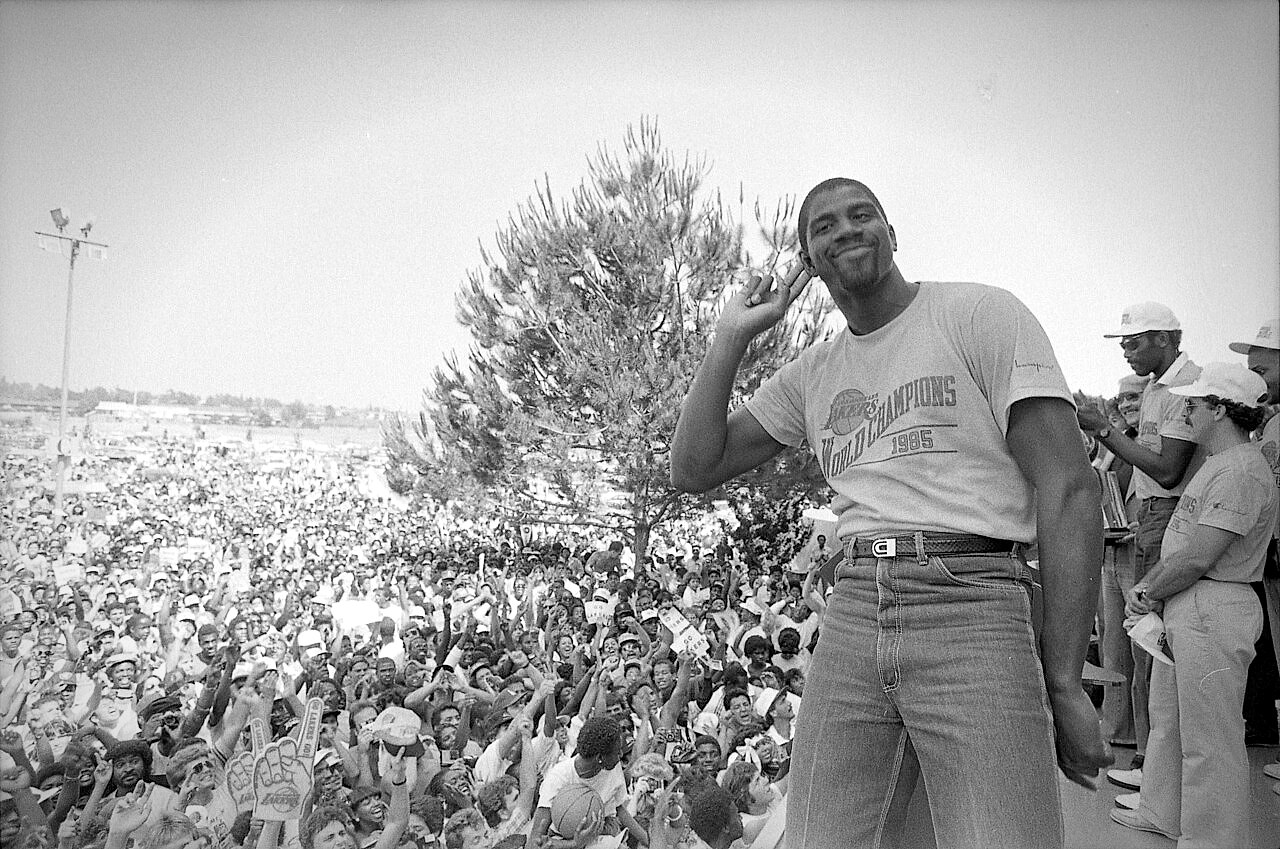
The Naismith Memorial Basketball Hall of Fame inducted the entire 1992 U.S. Olympic roster as a single unit in its 2010 class. It was the first time the Hall had inducted a team. The class was announced in April 2010 and inducted at the Springfield ceremony on August 13, 2010. The presenter for the team was NBA Commissioner David Stern. The twelve-minute team-induction speech, delivered by Jordan on behalf of the roster, is the Hall’s most-viewed induction-speech clip on its official YouTube channel.
The team induction was the Hall’s resolution to a procedural question about what to do with Laettner. Every other member of the roster had an individual case for induction on NBA or coaching grounds; Laettner’s individual NBA career (13 seasons, one All-Star selection) was not itself a Hall-worthy case. The team induction allowed the Hall to include him alongside the Hall of Fame ten others without requiring a separate individual vote.
The international legacy
Players who grew up in Europe, South America, and Asia watching the 1992 Games account for a disproportionate share of the NBA’s international talent base over the following three decades. The specific list: Dirk Nowitzki (Germany, watched at age fourteen), Manu Ginóbili (Argentina, age fifteen), Tony Parker (France, age ten), Pau Gasol (Spain, age twelve, in the stands at the Spain vs U.S. game in Badalona), Yao Ming (China, age twelve), Steve Nash (Canada, age eighteen, already playing at Santa Clara University), Dražen Petrović (Croatia, the opposing-team point guard in the gold-medal game, who had already been playing in the NBA but whose 1993 car-crash death foreclosed his American NBA arc), and Vlade Divac (Yugoslavia, already in the NBA).
The pipeline is the part of the 1992 Olympics that most directly shaped the NBA’s next twenty-five years. It is also the reason the 1992 Dream Team’s most durable competitive legacy is not the gold medal or the 43.8-point average margin, but the rise of non-American NBA Finals MVPs from zero in the decade before the team (1982–91) to a steady cadence afterward: Hakeem Olajuwon (Nigeria-born) in 1994 and 1995, Tim Duncan (U.S. Virgin Islands) in 1999, 2003, and 2005, Tony Parker (France) in 2007, Dirk Nowitzki (Germany) in 2011, Giannis Antetokounmpo (Greece) in 2021, and Nikola Jokić (Serbia) in 2023. That cadence, once started, has not reversed.
That is the specific sentence the 1992 Olympic team’s advocates have used, in the Hall of Fame case and in subsequent argument: without the 1992 Games, the NBA is not the global league it became. The Games did not invent international interest in basketball, which predated them by three decades. They invented the visual object, twelve all-time greats on one court, against which the rest of the world could calibrate the case that the sport was worth sending a professional career into.
Gear
Read Jack McCallum’s Dream Team for the inside account of Barcelona.
Sources
- USA Basketball, 1992 Men’s Olympic Team roster and game-by-game results
- Naismith Memorial Basketball Hall of Fame, 1992 U.S. Olympic Team induction file (inducted August 13, 2010)
- FIBA, decisions of the Munich Congress, April 7, 1989 (56–13 vote allowing NBA players in Olympic basketball)
- Jack McCallum, Dream Team: How Michael, Magic, Larry, Charles, and the Greatest Team of All Time Conquered the World and Changed the Game of Basketball Forever (Ballantine Books, 2012)
- NBC Sports broadcast archive, 1992 Barcelona Olympic basketball
- Tournament of the Americas records, Portland, Oregon, June 28–July 5, 1992
- FIBA Badalona tournament records, July 26–August 8, 1992
Shop NBA Gear at Fanatics
As a Fanatics affiliate, we may earn a commission from qualifying purchases.
Shop on Amazon
- The 1992 Dream Team: The Greatest Basketball Team Ever Assembled — books ↗
- NBA history books ↗
- Basketball training gear ↗
As an Amazon Associate, we earn from qualifying purchases.
Shop Basketball Shoes & Apparel at JD Sports
We may earn a commission from qualifying purchases on JD Sports.