Larry Bird
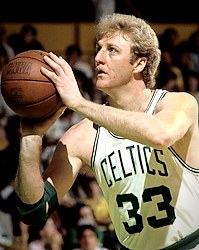
Larry Bird is the only person in NBA history to have won Most Valuable Player, Coach of the Year, and Executive of the Year. He spent all thirteen of his playing seasons with the Boston Celtics, won three championships, collected three consecutive regular-season MVPs, and, together with Magic Johnson, is widely credited with pulling the NBA from near-bankruptcy in 1979 into the most commercially successful decade the league had ever had. That is the official version. The more interesting one is about the specific Indiana town he grew up in, the degree to which the on-court style was a direct product of that childhood, and the twelve-year post-playing career he built more or less in order to have something to do when the back finally gave out.
French Lick, West Baden, and a specifically small-town childhood
He was born December 7, 1956, in West Baden Springs, Indiana, a town of under a thousand people that merged a few years later with neighboring French Lick, another small town, into the combined French Lick–West Baden municipality he is now associated with. The two towns sit about fifty miles northwest of Louisville and a four-hour drive south of Chicago. Coal, limestone, and a once-prosperous resort industry had been the local economy for a century and, by the 1950s, were all in decline. Bird’s father Joe was a Korean War veteran who worked as a shoe-factory machinist; his mother Georgia worked at a restaurant and a nursing home, sometimes both at the same time. There were six siblings. Joe Bird died by suicide in February 1975, Bird’s senior year of high school, a fact that Bird has spoken about publicly on only a handful of occasions across his life and that is the most important single influence, by his own on-the-record account, on the work habits he later became famous for.
The basketball part of the childhood was ordinary for the region. Indiana has, for most of the twentieth century, had the highest per-capita high-school basketball participation rate of any U.S. state, and the gym at Springs Valley High School in French Lick was, as a matter of course, the social center of the town on Friday nights. Bird played varsity all four years, averaged thirty a game as a senior, and signed a letter of intent with Bob Knight’s Indiana University in the spring of 1974.
Shop Larry Bird jersey
As an Amazon Associate we earn from qualifying purchases.
Indiana, a brief Indiana University stop, and Indiana State

He lasted twenty-four days at Indiana. By the most credible accounts, Bird’s own, in the 1989 autobiography, and a long Knight interview in the mid-1980s Bloomington Herald, the Bloomington campus was simply too large. Twenty-four thousand undergraduates, a football program, a dormitory assignment in the middle of an undergraduate population most of whom had cars and money and neither of which Bird did, and a realization, by the second weekend, that he was going to try to hitchhike home. He did. He enrolled at a local community college for a semester, worked on a garbage-collection crew back in French Lick for the following spring, and transferred to Indiana State, in Terre Haute, for the 1975–76 academic year. He sat out that first year per NCAA transfer rules, started playing in 1976–77, and by 1978–79 was the best college player in the country.
His senior year the Sycamores went 33–0 in the regular season and reached the NCAA championship game against Michigan State, led by a sophomore point guard named Earvin Johnson. It is still the highest-rated college basketball broadcast in American television history; Michigan State won 75–64, and the Bird–Magic rivalry that defined the NBA’s next decade had its first chapter on a Monday night in late March, 1979.
The 1978 draft, the sit-out year, and the Celtics arrival
One detail that gets elided in most tellings: Boston drafted Bird in June 1978, his junior year, rather than June 1979. At the time, NBA rules allowed teams to draft an underclassman whose class had graduated (Bird’s high-school class graduated in 1974; he had entered college a year late), then retain his rights for a year while he finished college, a loophole Celtics general manager Red Auerbach found and used, correctly anticipating that no one else in the front-office community would. Bird signed a contract with Boston in the summer of 1979 worth roughly $650,000 a year, at the time the highest salary ever paid to a rookie in any American professional team sport.
He joined a 29-win Celtics team and, as a rookie, led it to a 61-win regular season and Rookie of the Year honors. The doubling was the largest single-season improvement in NBA history to that point. The team was not a champion yet, Boston lost the Eastern Conference Finals to the Julius Erving 76ers that spring, but it was competitive from day one, and every subsequent Celtics roster of the 1980s was built by layering in additional pieces around him rather than rebuilding the core.
Three straight MVPs (1984–1986)
Bird won three consecutive regular-season MVP awards from 1984 to 1986, a stretch matched only by Bill Russell (1961–63), Wilt Chamberlain (1966–68), and, later, LeBron James (2009–10 was a two-peat, not three). Boston won the NBA championship in 1981 (over Houston), 1984 (over the Lakers in seven games), and 1986 (over Houston again). Bird was Finals MVP both times he faced the Lakers and in 1984 delivered a seven-game stretch that remains the emotional peak of the rivalry.
The 1985–86 Boston Celtics, in context
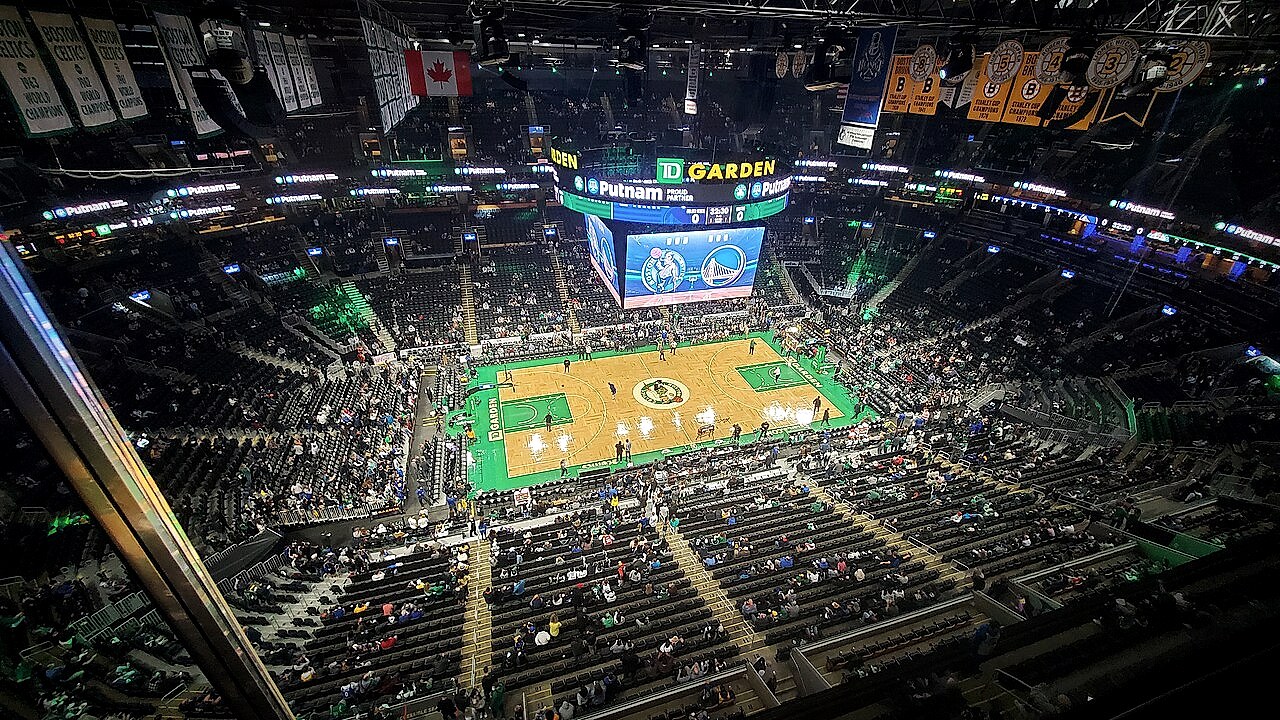
It is worth pausing on the 1985–86 Celtics, because the team is a credible candidate for best single-season NBA roster of the pre-Jordan era. They went 67–15 in the regular season, 40–1 at the old Boston Garden, and 15–3 in the playoffs en route to Bird’s third championship. The front-court, Kevin McHale at one elbow, Robert Parish at the other, Bird orchestrating from the high post, is the most heavily credentialed three-person front line of any modern NBA team: all three made the 1996 Top 50 Players list, and McHale and Parish are both Hall of Famers in their own right. The bench was anchored by Bill Walton, a former MVP himself, who played that one season as the Celtics’ sixth man and won Sixth Man of the Year. Bird averaged 25.8 points, 9.8 rebounds, and 6.8 assists a night and won the MVP, the Finals MVP, and the All-Star Game three-point contest in the same twelve-month window.
The back, and the retirement
Persistent back problems, specifically a congenital vertebral condition that progressively worsened through the late 1980s, limited Bird’s playing time from roughly the 1988–89 season forward. He played only six games that year, eighty-five percent of a season in 1989–90, seventy percent in 1990–91, and fifty-five games in 1991–92 before retiring at age thirty-five in the summer of 1992. The final playing appearance of his career was the 1992 Olympic gold-medal game in Barcelona as a member of the original Dream Team, where the presence of his back (both in a literal and a locker-room sense) was the main reason he was on the roster at all. He retired that August.
Coach of the Year, and the Pacers run
Bird joined the Indiana Pacers as head coach in the summer of 1997, without ever having coached at any level before, and won Coach of the Year in 1998 after leading Indiana to a 58–24 season and the Eastern Conference Finals. Indiana reached the 2000 NBA Finals, losing to the Shaquille O’Neal / Kobe Bryant Lakers in six games, and Bird retired from coaching that summer, citing the back issues that had forced him out of the playing career a decade earlier.
He took over as the Pacers’ president of basketball operations in 2003 and held the role for more than a decade, winning Executive of the Year in 2012 for the Frank Vogel / Paul George teams that reached consecutive Eastern Conference Finals. He stepped down from full-time front-office duties in 2017 but has continued in an advisory role with the franchise since.
Hall of Fame and the Magic rivalry
Bird was inducted into the Naismith Memorial Basketball Hall of Fame in 1998 and again, as a member of the 1992 Dream Team, in 2010. The rivalry with Magic Johnson, which by the 1990s the league office had effectively institutionalized as the narrative backbone of NBA marketing, was in fact a single real friendship by 1989; the two of them co-authored the 2009 book When the Game Was Ours and have each, across subsequent decades, been the first person to call the other on significant family events. The competitive part of the rivalry, three NCAA and NBA Finals matchups and a decade of overlapping MVP candidacies, is the version most American fans remember. The longer-running part is the friendship, which is a thing both of them spent the 2000s and 2010s explaining to interviewers who expected the opposite.
The stylistic legacy
The specific contribution Bird made to the game is harder to summarize than the rings and the trophies. He was a six-foot-nine forward who could shoot from beyond what would become the NBA three-point line, which was introduced in 1979, his rookie year, before any other forward in league history could, and who passed out of the high post the way a modern point guard passes out of a pick-and-roll. The current NBA stretch-four archetype is essentially a Bird-derived position, down to the specific footwork on a catch-and-shoot from the wing. Every team in the league now runs a version of his game. He ran the original one on a parquet floor in downtown Boston in the 1980s, on a back that was three years from ending his career even at the peak, and the game has never quite looked the same without him.
Gear
Read When the Game Was Ours, his joint memoir with Magic Johnson.
Shop Jerseys & Fan Gear at Fanatics
As a Fanatics affiliate, we may earn a commission from qualifying purchases.
Shop on Amazon
As an Amazon Associate, we earn from qualifying purchases.
Shop Sneakers & Gear at JD Sports
We may earn a commission from qualifying purchases on JD Sports.