Shaquille O'Neal
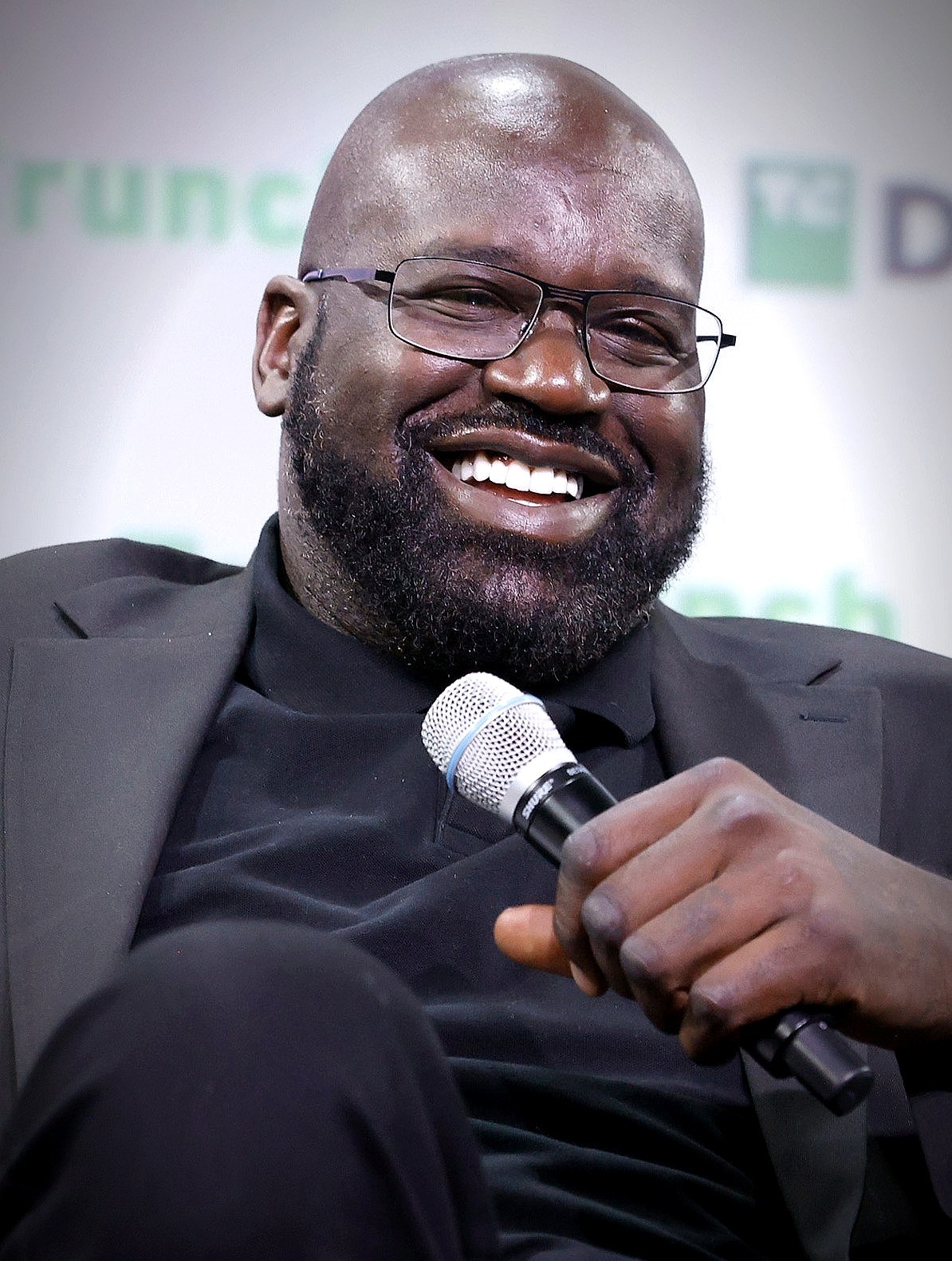
Shaquille O’Neal is the most physically dominant basketball player who has ever lived. The only reasonable counter-argument is Wilt Chamberlain, and Chamberlain never had to play against defensive schemes purpose-built to stop him or against the hand-check and illegal-defense rule adjustments that were written, across the 1998-2004 window, specifically in response to Shaq’s paint presence. He is a four-time NBA champion. He is a three-time Finals MVP (the only non-repeating Finals MVP winner ever to do it in three consecutive seasons, 2000-2002). He is the 2000 regular-season MVP. He is a fifteen-time All-Star, a fourteen-time All-NBA selection, the 1992-93 NBA Rookie of the Year, a Hall of Famer, and the holder of the highest career field-goal percentage (.582) of any player to cross 25,000 points. He broke two NBA backboards in his rookie year. He released a platinum-selling rap album the same year. He has, since 2011, been the studio analyst on TNT’s Inside the NBA, the longest-running and most-imitated sports-broadcast panel in American television. His post-playing business portfolio, as of 2026, is the largest of any NBA retiree. He holds an Ed.D. from Barry University. This entry is held to a higher quality bar than most on the site because Shaquille O’Neal is the personal favorite NBA player of this site’s founder and editor, and because the career earns it on its own.
Newark, Fort Stewart, and the Army sergeant who raised him
He was born March 6, 1972 in Newark, New Jersey to Lucille O’Neal. His biological father, Joe Toney, was a high-school basketball star in New Jersey whose own life was derailed by addiction and incarceration; he was out of Shaq’s life by the time Shaq was a year old. The stepfather who raised him was Phillip Harrison, a U.S. Army staff sergeant with artillery deployments on three continents. The family moved frequently in the late 1970s and 1980s: Newark to Bayonne to Fort Stewart in Georgia to Wildflecken in West Germany to San Antonio.
He was 6’6” at twelve and 6’10” by fifteen. He was famously uncoordinated through his early teens; in Shaq Uncut, his 2011 memoir with Jackie MacMullan, he describes Phillip Harrison drilling him with footwork exercises on the base parking lots in Wildflecken, West Germany, and describes the single decision that ended his pre-basketball career as a dancer when, at a local arts performance in Germany, he was too tall to stand upright on the stage. Phillip Harrison, who died in 2013, is the person every long-form account of Shaq’s childhood circles back to. The stepfather’s rule, as Shaq has recounted it in multiple interviews, was that the boy who was going to be 7’1” and 325 pounds had to learn to be polite first. The name “Shaquille” is Arabic and translates approximately to “little warrior.” Lucille O’Neal picked it in 1972 and Phillip Harrison endorsed it.
Shop Shaquille O'Neal jersey
As an Amazon Associate we earn from qualifying purchases.
San Antonio and the Cole High School state championship
In 1987 Phillip Harrison was reassigned to Fort Sam Houston in San Antonio, Texas. Shaq enrolled at Robert G. Cole High School, a small Department of Defense-affiliated high school on the base. By his junior year he was 6’11”. As a senior in 1988-89 he averaged 32 points, 22 rebounds, and 8 blocks and led Cole to the Texas 3A state championship, going 36-0. Dale Brown, the Louisiana State University head coach who had met the family at a 1984 basketball clinic on the U.S. Army base in Wildflecken, West Germany, flew to San Antonio six times during Shaq’s senior year to maintain the relationship. Larry Brown (then at Kansas, no relation to Dale) and Dean Smith (North Carolina) also recruited. Shaq picked LSU. The decision was, by his own account, about Dale Brown personally rather than about the program.
LSU (1989–1992)
He played three years at LSU. As a freshman he averaged 13.9 points, 12 rebounds, and 3.6 blocks. As a sophomore he averaged 27.6, 14.7, and 5.0 and was the consensus national player of the year. As a junior, with LSU’s competitive ranking not meaningfully improved by his presence (Dale Brown’s program was talent-capped throughout the era), he averaged 24.1, 14.0, and 5.2. He was two-time SEC Player of the Year and two-time consensus first-team All-American. He declared for the 1992 NBA Draft after his junior year. He returned to LSU each summer for the next two decades to sit in on classes; he eventually completed his undergraduate degree in general studies in 2000, his MBA at the University of Phoenix in 2005, and his Doctor of Education from Barry University in 2012. His dissertation was titled “The Duality of Humor and Aggression in Leadership Styles.”
The 1992 draft and the Orlando Magic (1992–1996)
The 1992 NBA Draft Lottery, on May 17, 1992, gave the first pick to the Orlando Magic. It was not a surprise selection. Shaq was picked No. 1 overall on June 24, 1992. His four-year contract was, at $40 million, the largest rookie deal in NBA history to that point. On November 14, 1992, in his fourth NBA regular-season game, in a home game against the Phoenix Suns, he brought down the entire shot-clock mechanism with a one-handed dunk. He had already broken one backboard in an April 1993 preseason exhibition. The NBA changed its backboard-support specifications before the 1993-94 season as a direct consequence of his rookie-year performance.
He was Rookie of the Year in 1992-93. He was a starting All-Star his rookie year (the first rookie to start an All-Star Game since Michael Jordan in 1985). He averaged 23.4 points and 13.9 rebounds as a rookie on a Magic team that jumped from 21-61 the year before to 41-41.
In October 1993 he released Shaq Diesel, his first rap album, on Jive Records. It reached #25 on the Billboard 200, went platinum, and featured Phife Dawg, Erick Sermon, and A Tribe Called Quest’s Ali Shaheed Muhammad as producers. He released three more studio albums over the next five years (Shaq Fu: Da Return, You Can’t Stop the Reign, and Respect). None of them went platinum. The first one did.
In 1993-94 the Magic drafted Anfernee “Penny” Hardaway first overall (having swapped that pick to the Golden State Warriors for Chris Webber in a pre-draft agreement), which paired Shaq with the point guard who would become his most celebrated teammate of the Orlando years. In 1994-95 they reached the NBA Finals against Hakeem Olajuwon and the Houston Rockets. Houston swept them in four. Shaq averaged 28.0 and 12.5 in the series; Olajuwon, at 32, averaged 32.8 and 11.5 and gave the most recognized-as-great performance of his career. It was Shaq’s first Finals loss.
In 1995-96 the Magic won 60 games, the most in franchise history, and lost to Michael Jordan’s 72-10 Bulls in the Eastern Conference Finals. That summer, on July 18, 1996, Shaq signed a seven-year, $121 million contract with the Los Angeles Lakers. The Magic had offered $95 million. The margin was not principally about money. Jerry Buss and Jerry West had built the Lakers organization around the idea that Shaq would be the franchise’s next Kareem Abdul-Jabbar. Shaq wanted Los Angeles. He arrived.
The Lakers (1996–2004) and the three-peat
The Lakers he joined were not championship-ready. Kobe Bryant, drafted 13th that same summer and traded from Charlotte to Los Angeles for Vlade Divac, came off the bench for his first two seasons. Del Harris coached the team through 1998 and was replaced at midseason by Kurt Rambis. The 1996-97 Lakers lost in the second round. The 1997-98 team reached the Western Conference Finals and was swept by Utah. The 1998-99 Lakers, in a lockout-shortened year, were swept by San Antonio in the second round.
On June 16, 1999, the Lakers hired Phil Jackson. He installed Tex Winter’s triangle offense. The 1999-2000 Lakers went 67-15. Shaq averaged 29.7 points, 13.6 rebounds, and 3.0 blocks and won the 2000 NBA Most Valuable Player award with a then-record 120 of 121 first-place votes. The one dissenting voter, then-unnamed, was later identified as Sacramento Bee writer Fred Jones, who voted for Allen Iverson. (The vote is still, by a large margin, the closest the NBA has ever come to a unanimous MVP.)
The 2000 Finals against Indiana opened with Shaq scoring 43 in Game 1 and 40 in Game 2. Lakers won the series in six. He was the Finals MVP. He averaged 38.0 points and 16.7 rebounds across the six games, which remains the most points per game ever averaged in a Finals series by anyone other than Michael Jordan in 1993. He dedicated the Finals MVP in his on-court interview to his high-school coach Herb More, who had just died of cancer.
The 2001 Finals were a five-game win over the Allen Iverson 76ers (see our Allen Iverson biography for the step-over and the 48-point Game 1 Iverson dropped on the Lakers to open that series). Shaq averaged 33 points and 15.8 rebounds. The series-defining game was Game 1 in Los Angeles, which Philadelphia won 107-101 behind Iverson, at which point the Lakers won four in a row. Finals MVP number two.
The 2002 Finals, a sweep of the New Jersey Nets, featured Shaq averaging 36.3 points and 12.3 rebounds. His 44 points in Game 1 at Continental Airlines Arena in East Rutherford was the highest-scoring Finals game at that point since Jordan dropped 55 on Phoenix in 1993. Finals MVP number three. He is the only player other than Magic Johnson to win three consecutive Finals MVPs.
The 2002-03 season produced a Western Conference Semifinals loss to San Antonio. The 2003-04 Lakers, with Karl Malone and Gary Payton joining Shaq and Bryant in what the Los Angeles media was calling a “superteam” before the word existed, lost the 2004 Finals to the Detroit Pistons in five. It was the first time in NBA history that a team with four Hall of Fame starters lost a Finals to a team with zero. Detroit’s defensive pressure on Bryant (primarily from Tayshaun Prince) and the ability of Ben Wallace and Rasheed Wallace to neutralize Shaq on the defensive glass were the structural cause. The team split that summer.
The 2004 trade to Miami
The Shaq-Kobe relationship had been publicly contentious since at least 1999. Both players have since described, in multiple books and interviews, a working dynamic where neither one wanted to defer to the other and where Phil Jackson spent most of his coaching-day managing the interpersonal more than the on-court. On July 14, 2004, the Lakers traded O’Neal to the Miami Heat for Lamar Odom, Caron Butler, Brian Grant, and a 2006 first-round pick (which became Jordan Farmar). Jerry Buss, the Lakers’ owner, has since said in an on-record interview that the single biggest professional regret of his career was not finding a way to keep the two of them together for two more seasons. Kobe Bryant has said publicly, on multiple occasions, that the trade was the best thing that happened to him because it forced him to become the primary offensive option for the Lakers. Shaq has said, on multiple occasions, that he would have retired with five championships if they had found a way.
The 2006 Miami championship
The 2004-05 Heat, with Shaq and the 23-year-old Dwyane Wade, went 59-23 and lost in seven games to the Detroit Pistons in the Eastern Conference Finals. The 2005-06 Heat, coached for the final three months by Pat Riley after Stan Van Gundy’s mid-season resignation, beat Chicago, New Jersey, and Detroit on their way to the Finals against Dallas. Dallas won the first two games. Wade then averaged 39.2 points over Games 3 through 6 (see our Dwyane Wade biography for the detailed account of Wade’s single-greatest series). Shaq, at 34, averaged 13.7 and 10.2 in the series and played the central role of setting the defensive interior the Mavericks could not solve. It is the only championship of his four where he was not the statistical centerpiece. It is also the one he has repeatedly said meant the most, because it was the first championship he won as a teammate rather than as the axis.
Phoenix, Cleveland, Boston (2008–2011)
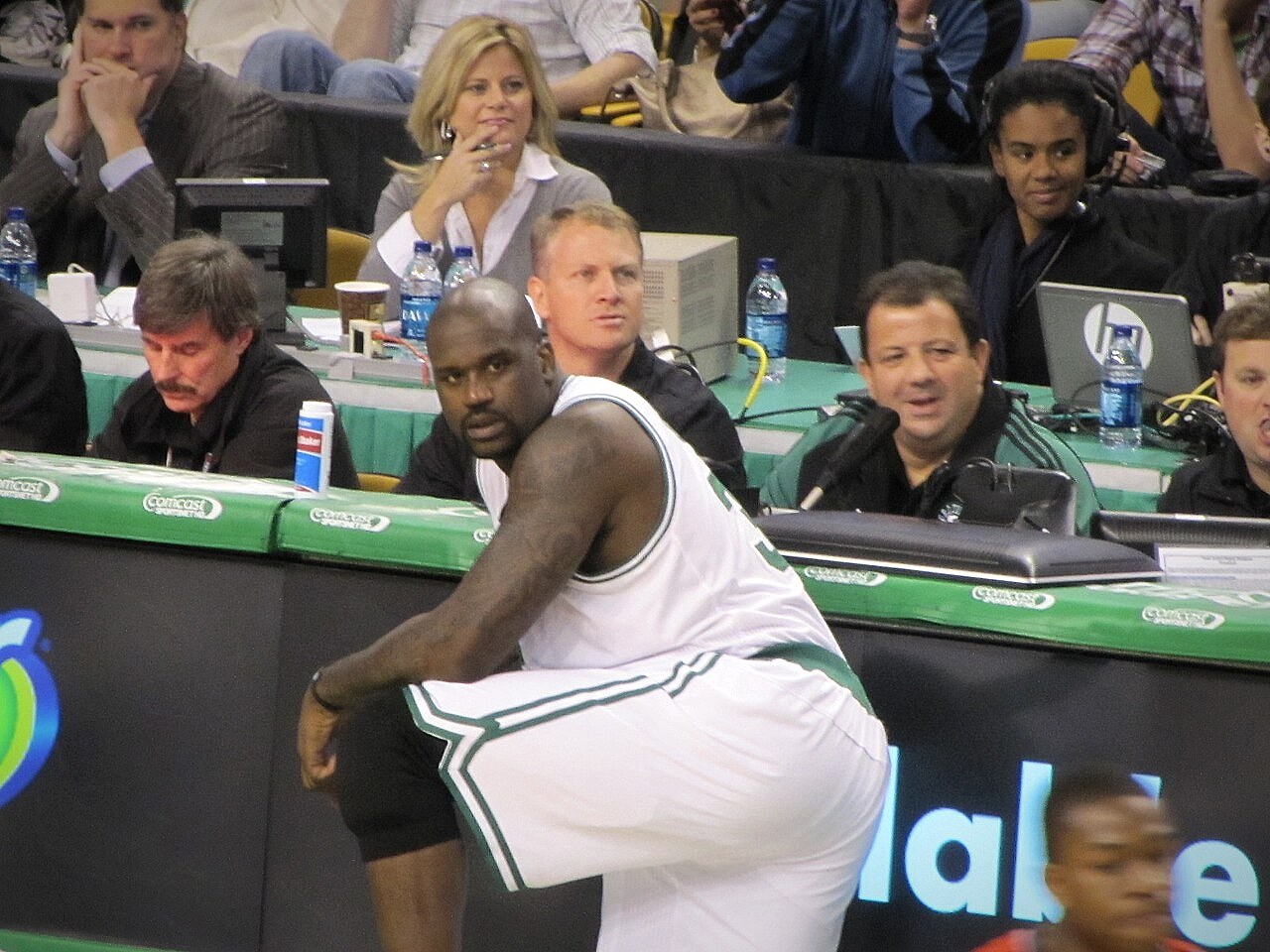
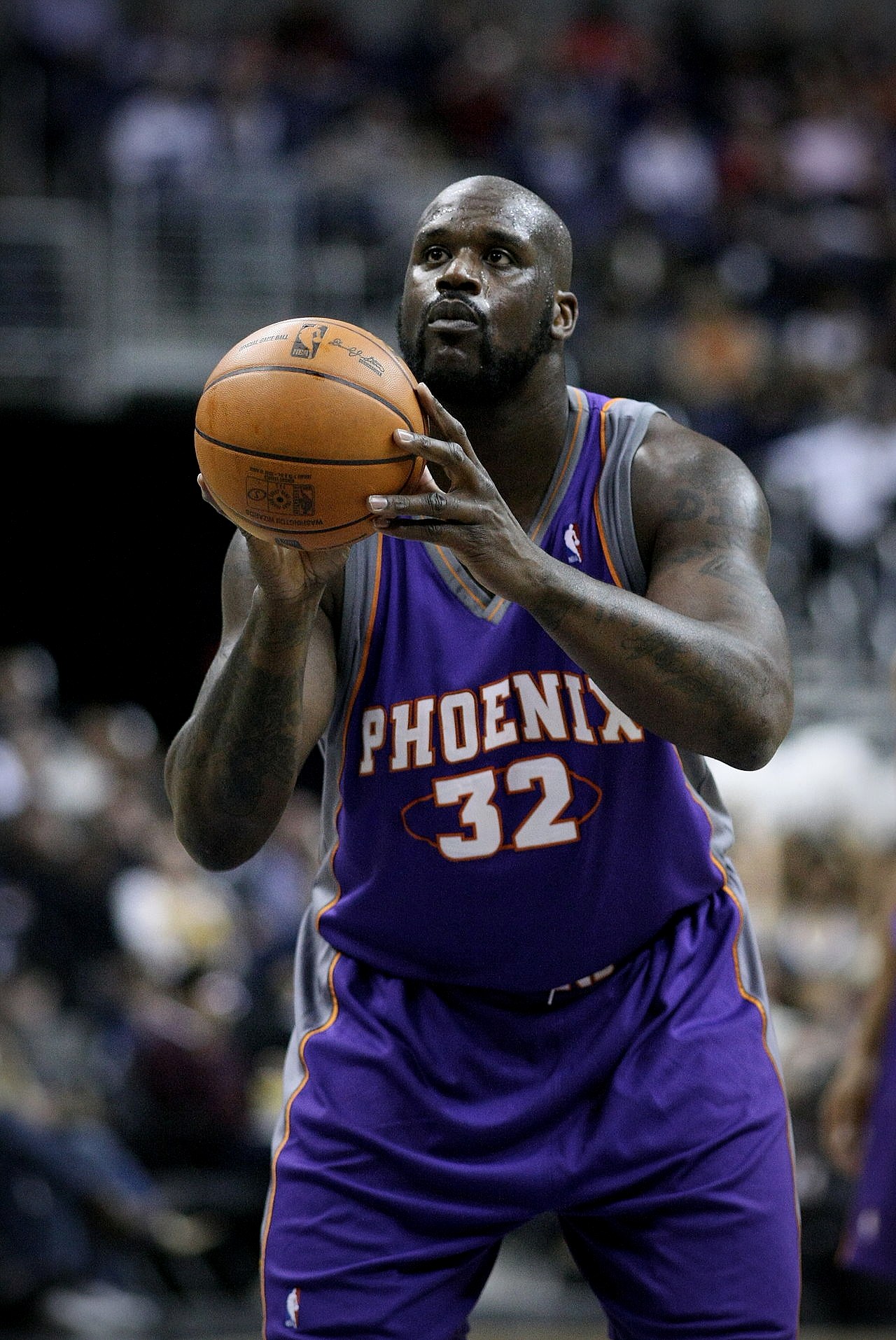
On February 6, 2008, Miami traded him to the Phoenix Suns for Shawn Marion. He played a season and a half there in what was, in effect, Steve Nash’s last meaningful Finals push. In June 2009 Cleveland acquired him to pair with LeBron James in a short-lived experiment that ended with a second-round loss to Boston. He signed with Boston for 2010-11 as depth insurance, played 37 games, and retired on June 1, 2011 after a nagging right Achilles injury. He was 39.
The final career line: 28,596 points (seventh all-time at retirement; twelfth all-time in 2026), 13,099 rebounds, 2,732 blocks, and a career field-goal percentage of .582, the highest of any player in history with more than 25,000 career points. His career free-throw percentage of .527 is the worst of any 25,000-point scorer in league history. This is a real part of his legacy: the “Hack-a-Shaq” strategy (attributed to Don Nelson during the 1999-2000 Dallas-Lakers series; intentionally fouling Shaq on every possession to force him to shoot free throws) is the only tactical adjustment an opposing coach ever devised that caused the NBA to consider changing the rules of the game.
Hall of Fame, jersey retirements
He was inducted into the Naismith Memorial Basketball Hall of Fame on September 9, 2016, alongside Allen Iverson and Yao Ming. His presenter was Julius Erving. The Lakers retired his #34 on April 2, 2013. The Miami Heat retired his #32 on December 22, 2016. Orlando has honored him in the Magic Heritage Collection and is expected to retire his #32 within the decade; the relationship between Shaq and the Orlando organization has warmed considerably since the 1996 departure. LSU retired his #33 in 2008.
Inside the NBA and the business empire
He joined TNT’s Inside the NBA as a lead studio analyst in October 2011. He has now been on the panel alongside Charles Barkley (see our Charles Barkley biography), Kenny Smith, and Ernie Johnson for fourteen full seasons and twenty-two Sports Emmy Awards. The show moves to ESPN in the 2025-26 season under the league’s new broadcasting arrangements.
His post-playing business portfolio includes, at various points across the 2011-2026 window: an early-stage investment in Google that closed before the 2004 IPO; operation of more than 150 Five Guys franchises; a Krispy Kreme franchise group that he purchased in 2016 and which, at its peak, owned 26 stores; a Papa John’s equity stake (taken publicly during the 2018 founder-controversy period when he advocated for changes to the company’s operations); an Auntie Anne’s pretzel operation; a chain of car washes (which he consolidated under the name Big Chicken in 2018 and later spun off); the Big Chicken quick-service restaurant chain itself; a partnership with Authentic Brands Group covering most of his name-and-likeness income; ownership of minority stakes in the Sacramento Kings and the Detroit Pistons at various points; and equity in Reebok (having signed with the company in 1992 and later, in 2023, purchased a stake in Reebok’s leadership structure that placed him in the role of President of Basketball alongside Allen Iverson as Vice President). He has also recorded four rap albums, starred in five films (Kazaam, Steel, Blue Chips, He Got Game, Grown Ups 2), and holds ceremonial reserve deputy commissions with multiple police departments.
He has given over $100 million to various philanthropic causes since 2000, including the Shaquille O’Neal Foundation (focused on at-risk-youth programming), Walmart-partnered Shaq-A-Claus Christmas gift drives (which have run every December since 2008), and a hurricane-relief fund after Hurricane Ian hit Central Florida in 2022. He publicly funded the funeral of the twelve-year-old Treyvon Cole in Atlanta in February 2024, an act that received little press coverage because Shaq himself asked for it not to be covered.
Legacy
The cleanest single sentence about his career is this one: from roughly 1998 to 2003, Phil Jackson’s Los Angeles Lakers built an offensive system whose central mechanic was to let Shaquille O’Neal demand two defenders on every interior touch, and during those five seasons no opposing team figured out a reliable counter. That is a shorter peak than Jordan’s Bulls or Kareem’s Bucks but a sharper one. Center play in the league changed structurally after him. Every big man drafted between 2003 and 2020 has been evaluated, at least in part, on whether he could theoretically do what Shaq did on a single defensive possession in his prime. Most could not.
The cultural legacy is its own category. The rap album, the films, the TNT panel, and the 26-franchise Krispy Kreme operation are pieces of a post-career resume that is, by reasonable measure, broader than any retired NBA player’s has ever been. His net worth, estimated by Forbes in October 2025 at approximately $500 million, is the largest of any retired NBA player excluding Michael Jordan. The Shaquille O’Neal public persona, across three decades, has been the single most approachable superstar personality the league has produced. He is the version of himself in public that he has always been in private. This is not an accident. It is the work his stepfather Phillip Harrison told him, on the parking lot at the Wildflecken base in 1986, was going to be worth more than the basketball eventually.
Gear
Read Shaq Uncut, his memoir with Jackie MacMullan.
Sources
The biographical detail on Phillip Harrison, Wildflecken, and the family upbringing is drawn from Shaq Uncut: My Story (Grand Central, 2011), co-authored with Jackie MacMullan, and cross-referenced against Jack McCallum’s February 1993 Sports Illustrated feature “The Biggest Thing Ever.” The LSU chapter is documented in Dale Brown’s own 2002 memoir Dale Brown’s Memoirs from LSU Basketball (LSU Press). The 2000 MVP-vote detail (120 of 121 first-place votes) is from the official NBA 1999-2000 Kia Most Valuable Player press release. The Shaq-Kobe relationship chapter is reported in Jackie MacMullan’s 2009 book When the Game Was Ours and in Roland Lazenby’s 2016 biography Showboat: The Life of Kobe Bryant (Little, Brown). Business-empire figures are from Forbes profiles of October 2019, May 2022, and October 2025. The TNT broadcasting tenure is sourced from Sports Business Journal’s annual studio-show ratings coverage.
Shop Jerseys & Fan Gear at Fanatics
As a Fanatics affiliate, we may earn a commission from qualifying purchases.
Shop on Amazon
As an Amazon Associate, we earn from qualifying purchases.
Shop Sneakers & Gear at JD Sports
We may earn a commission from qualifying purchases on JD Sports.
Sources
- Basketball-Reference: Shaquille O'Neal
- Naismith Memorial Basketball Hall of Fame: Shaquille O'Neal
- Shaquille O'Neal, Shaq Uncut: My Story (Grand Central, 2011)
- Jackie MacMullan, When the Game Was Ours (Houghton Mifflin Harcourt, 2009), source on the Shaq-Kobe reconciliation
- Sports Illustrated: "The Biggest Thing Ever" (Jack McCallum, February 1993)
- NBA.com: 2000 NBA MVP award announcement (Shaquille O'Neal)