Kobe Bryant
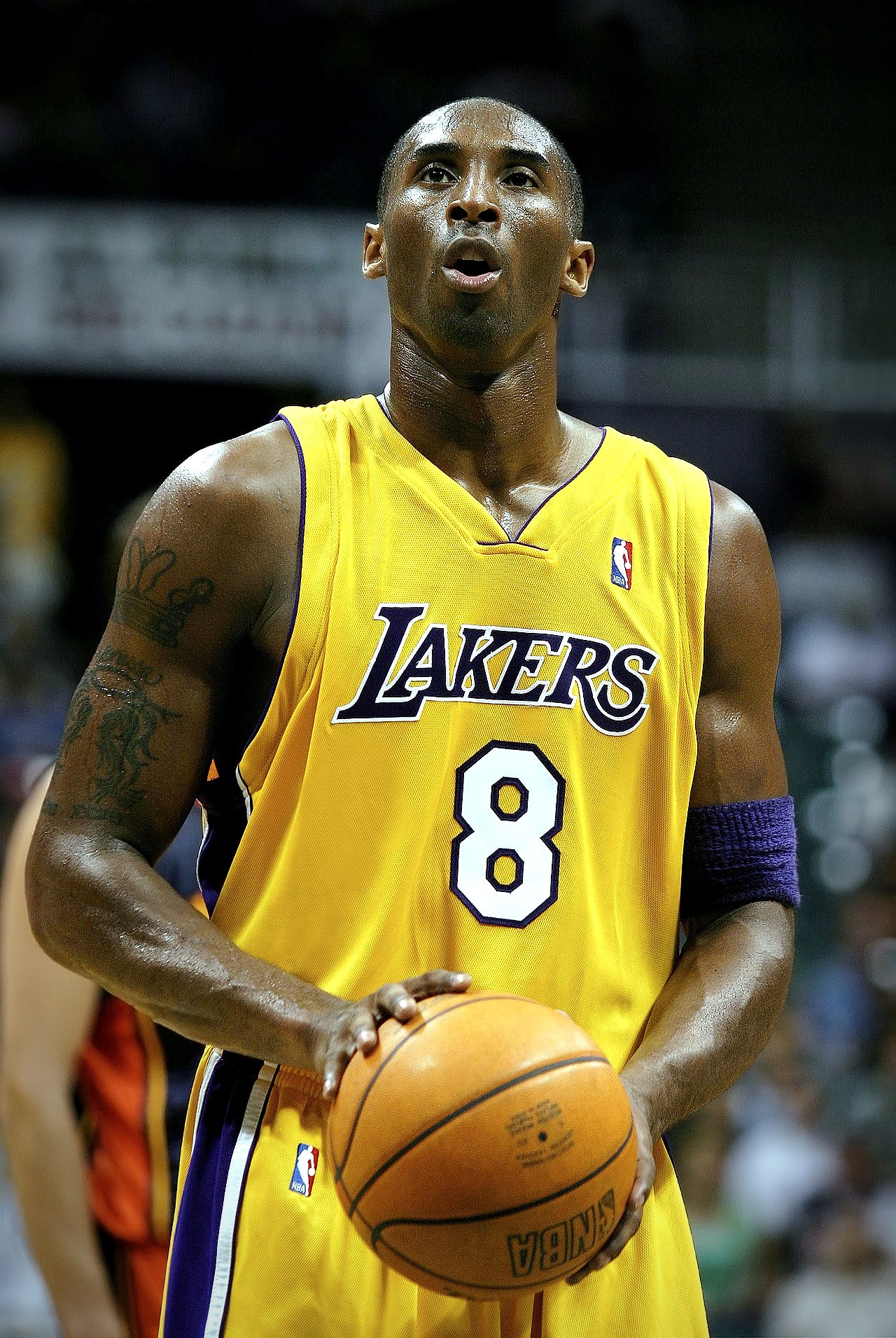
Kobe Bryant played twenty NBA seasons. All twenty of them were with the Los Angeles Lakers. When he retired in 2016 he was third on the all-time scoring list, behind only Kareem Abdul-Jabbar and Karl Malone, with five championship rings, eighteen All-Star appearances, and one regular-season MVP. He was inducted into the Naismith Memorial Basketball Hall of Fame in 2020, several months after he was killed in a helicopter crash in Calabasas, California, on January 26 of that year, at age forty-one. The bare chronology is well-known. The more complicated part of the biography, the one that actually shaped the player, is the part the highlight reels tend to skip.
Born in Philadelphia, raised in Italy
He was born August 23, 1978, in Philadelphia. His father, Joe “Jellybean” Bryant, was then a forward with the 76ers, in his third NBA season; his mother, Pam, was a homemaker and the daughter of an NBA-connected basketball family (her brother, “Chubby” Cox, had briefly played in the league). Three years after Kobe was born Joe’s NBA career wound down, and in 1984 Joe signed with Rieti in the Italian LBA. The family moved to Italy. Kobe spent the next seven years there, Rieti, then Reggio Calabria, then Pistoia, then Reggio Emilia, and learned the game, in every concrete sense, in Italian gyms.
The Italian childhood is the part of his biography that the American sports pages have never fully reckoned with. He was fluent in Italian, functionally bilingual across the rest of his life, and his earliest real coaching was from middle-aged Italian club assistants who spent ninety minutes a day teaching thirteen-year-olds how to pivot, how to fake with the shoulders, and how to hold the ball above the forehead on a shot release. Most of the technical idiosyncrasies that later defined his NBA scoring, the jab step into a pull-up, the one-foot turnaround, the specific way he squared to the rim on a fadeaway, are more common in Italian professional basketball than in American AAU play. The Bryant family moved back to the Philadelphia area in 1991, and Kobe enrolled the following fall at Lower Merion High School, where by his senior year he was the Pennsylvania player of the year. The Italy-trained technical craft, though, was already substantially finished.
Shop Kobe Bryant jersey
As an Amazon Associate we earn from qualifying purchases.
From Lower Merion to the NBA at age seventeen
He declared for the 1996 NBA Draft straight out of Lower Merion. The Charlotte Hornets selected him thirteenth overall and, in a deal brokered by Lakers general manager Jerry West and Hornets-adjacent agent Arn Tellem, traded him to the Lakers for center Vlade Divac. The trade is regularly cited as the most consequential in franchise history; it certainly reshuffled the balance of power in the league for the next decade.
He was seventeen years old at his first NBA game, on November 3, 1996, against Minnesota. He played six minutes. He was the youngest player to ever appear in an NBA game at the time; the record has since been broken. For most of the 1996–97 season he came off the bench behind Eddie Jones. In the first-round playoff loss to the Utah Jazz that May, as a rookie, he took four consecutive air-ball jumpers in overtime and the closing minutes of regulation of a close-out Game 5, a sequence that has, in retrospect, been described by teammates (and by Bryant himself, repeatedly) as the formative defeat of his early career. The version of him who arrived in training camp three months later was identifiably different.
The Shaq–Kobe three-peat (2000–2002)
Paired with Shaquille O’Neal and coached by Phil Jackson, who arrived in 1999, Bryant won three consecutive NBA championships from 2000 through 2002. O’Neal was Finals MVP each time. The partnership is the best-documented internal tension in modern Lakers history, for reasons that the reporting at the time, in fairness, did not invent. O’Neal was the team’s alpha scorer and its most marketable star; Bryant, four years into the league, had begun openly campaigning for first-option minutes. The 2004 Finals loss to the Detroit Pistons, an upset, on almost every informed prediction going in, that the Lakers did not recover from, was the break point. O’Neal was traded to Miami that summer, and from the 2004–05 season forward the franchise was unambiguously Bryant’s.
Eighty-one points, and the mid-2000s one-man era
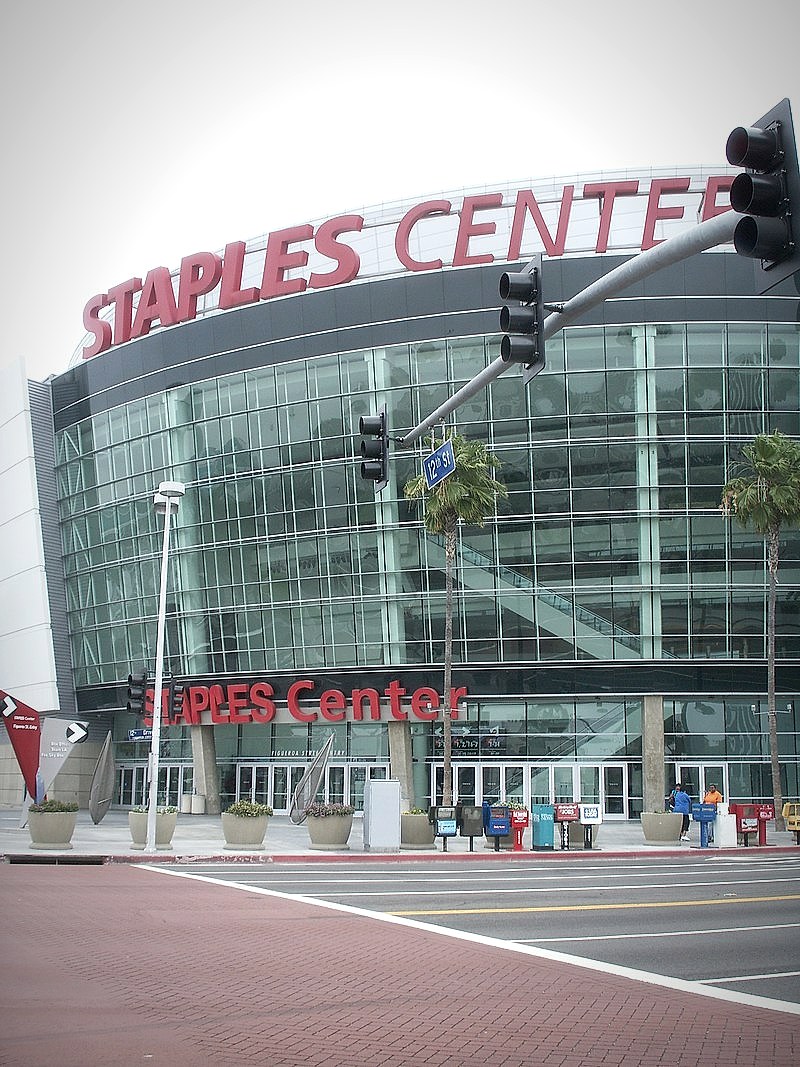
On January 22, 2006, Bryant scored eighty-one points against the Toronto Raptors at Staples Center. It is the second-highest single-game total in NBA history, behind only Wilt Chamberlain’s hundred on a 1962 road game that was not televised. Bryant’s eighty-one was televised, on Lakers’ local flagship Fox Sports West and nationally on NBA on TNT’s late window. He made twenty-eight of forty-six field-goal attempts, including seven of thirteen threes, and went eighteen of twenty at the free-throw line. His fifty-fifth point came on a driving layup with 5:42 left in the fourth quarter; the sixty-first broke the Lakers’ single-game franchise record; the seventy-second surpassed Elgin Baylor’s 71. Phil Jackson pulled him with 4:40 remaining. The league scoring title that year, 35.4 points per game, was his first. The following season (31.6 per game) was his second.
The 2005–2007 seasons are the Bryant period the league’s contemporary analytics community treats with the most interest. The Lakers teams around him were not good enough to be legitimate contenders, and Bryant’s usage rate and touch count are, even now, among the highest ever logged by a perimeter player. They are also the seasons during which the specific craft of the game, footwork, shot-preparation speed, shot selection variety, reached the form he is now remembered for. The rings arrived after; the player who won them was mostly finished being built by the time he turned twenty-eight.
Pau Gasol and the second two-title run
The Lakers acquired Pau Gasol from the Memphis Grizzlies in February 2008 for a trade package centered on Kwame Brown and Javaris Crittenton, plus the rights to Marc Gasol. The trade is now infamous, the Grizzlies’ front office received less than market value even by the information available at the time, but the Lakers’ performance over the next three postseasons is what it looks like when a team correctly identifies a missing piece. They reached the 2008 Finals and lost to Boston, then won the 2009 Finals in five games over Orlando and the 2010 Finals in a Game 7 over Boston. Bryant was Finals MVP both times. The 2009 championship, which he specifically described in the postgame locker room as “the one that was mine,” settled, for his purposes, a version of the Shaq question that had hung over the first three rings.
Achilles, and the final seasons
On April 12, 2013, in the fourth quarter of a home game against the Golden State Warriors, Bryant tore his left Achilles tendon on a drive from the left elbow. He stayed on the floor, shot the two resulting free throws, both of which he made, on a ruptured tendon, and walked unassisted to the locker room under his own power. The sequence is, with the possible exception of Willis Reed’s 1970 Game 7 entrance, the most-cited pain-tolerance clip in NBA history. He was thirty-four.
He played three more seasons on progressively worse Lakers teams. A torn shoulder labrum in the 2014–15 season kept him to thirty-five games, a torn rotator cuff the following year kept him to sixty-six, and the twentieth season (2015–16) was, by mutual agreement with the front office, an extended farewell tour. The final game, April 13, 2016, against the Utah Jazz at Staples Center, ended on a sixty-point performance in which he took fifty shots and played forty-two minutes. He retired that night.
Post-playing, and the helicopter crash
In 2018 Bryant won an Academy Award for the animated short film Dear Basketball, based on the poem he published at retirement, and directed by the Disney animator Glen Keane. The final years of his life were occupied with his production company Granity Studios, with his broadcast-analyst work for the WNBA’s LA Sparks, and, increasingly publicly, with coaching his daughter Gianna’s AAU basketball team, the Mamba Academy, which he had built out of a converted warehouse in Newbury Park, California. He and Gianna, age thirteen, were among the nine people killed on January 26, 2020, when their Sikorsky S-76B helicopter, bound for a Mamba Academy tournament game at the academy’s home court in Thousand Oaks, crashed into a hillside in Calabasas in heavy morning fog. The other victims included Orange Coast College baseball coach John Altobelli, his wife Keri, and their daughter Alyssa (Gianna’s teammate); Mamba Academy coach Christina Mauser; parent Sarah Chester and her daughter Payton (also a teammate); and pilot Ara Zobayan.
Hall of Fame and legacy
Roland Lazenby’s biography Showboat: The Life of Kobe Bryant (Little, Brown, 2016), the most authoritative single-volume account of the career, covers the Italy years and the Shaq partnership in detail that the highlight reels never reach.
The 2020 Naismith Memorial Basketball Hall of Fame induction class had been scheduled for an in-person ceremony in August 2020. The pandemic delayed the ceremony to May 2021; Bryant’s widow, Vanessa, accepted the honor on his behalf. The rest of the class, Tim Duncan, Kevin Garnett, Tamika Catchings, Rudy Tomjanovich, and coaches Eddie Sutton and Kim Mulkey, overlapped Bryant’s career enough to give the ceremony the character of a shared generational farewell. The Lakers retired both of Bryant’s jersey numbers, 8 and 24, at a December 2017 ceremony at Staples Center. Both hang in the rafters at Crypto.com Arena today.
The “Mamba Mentality” question
The particular thing he is now remembered for, beyond the statistics, is the specific approach to the craft of playing basketball that he called, in the last third of his career, the Mamba Mentality. He wrote about it directly in The Mamba Mentality: How I Play (MCD, 2018), a book-length account of the footwork, shot-preparation, and study habits behind the career. The best technical description of it, by someone in a position to know, comes from his Italian-born Lakers assistant coach Ettore Messina, who in a 2020 Corriere della Sera interview described Kobe’s work habit as “the only NBA player I ever worked with who treated practice the way European players treat practice, as if the contract did not exist.” That is, he practiced like his job was not guaranteed. It was always guaranteed; the Lakers were not going to cut him. But the habit is the thing that made the player, and the habit is the part the tribute pieces most often try to capture. Five championships are easier to tally. The work ethic that produced them, for American fans who had never seen the Italian version of the sport, was the innovation.
Signature Shoes
Kobe’s Nike signature line ran from the Kobe 1 (2005) through the Kobe 11 (2016), notable for producing the first low-cut performance basketball shoe from a major superstar. The Kobe 4 Protro and the Kobe 6 Protro “Grinch” reissue have been the most sought-after in the modern retro run, with the “Grinch” carrying some of the highest resale prices of any Nike basketball shoe at its 2022 relaunch.
Shop Kobe signature shoes at JD Sports →
Shop Jerseys & Fan Gear at Fanatics
As a Fanatics affiliate, we may earn a commission from qualifying purchases.
Shop on Amazon
As an Amazon Associate, we earn from qualifying purchases.
Shop Sneakers & Gear at JD Sports
We may earn a commission from qualifying purchases on JD Sports.