Los Angeles Lakers
The Los Angeles Lakers have won seventeen NBA championships, tied with the Boston Celtics for the most in league history. They have produced four distinct dynasties across eight decades of play, each with a different arc, a different coach, and a different on-court identity. The Minneapolis Lakers under George Mikan from 1947 to 1954. The Showtime Lakers under Magic Johnson, Kareem Abdul-Jabbar, and Pat Riley from 1979 to 1991. The Shaq-Kobe Lakers under Phil Jackson from 1996 to 2004. The LeBron Lakers from 2018 to present. Each era is the result of a specific acquisition (Mikan from Detroit in 1947, Magic in 1979, Shaq in 1996, LeBron in 2018) that arrived roughly a decade after the previous one’s decline. No franchise in North American professional sport has produced championships at a comparable cadence over a comparable time horizon.
Minneapolis, George Mikan, and the five-in-six run (1947–1954)
The franchise began in 1947 as the Detroit Gems, a near-bankrupt National Basketball League club purchased in June 1947 for $15,000 by Ben Berger and Morris Chalfen and relocated to Minneapolis. Ownership renamed the team the Lakers for Minnesota’s “Land of 10,000 Lakes” nickname. Under general manager Max Winter and coach John Kundla, the Lakers acquired George Mikan, a 6’10” Chicago-based college star out of DePaul, in the June 1948 NBL dispersal draft after the folding of the Chicago American Gears. Mikan’s arrival was the single move that made the franchise.
The Minneapolis Lakers won five championships in six years: 1949 (BAA), 1950 (first NBA title after the BAA-NBL merger), 1952, 1953, and 1954. Mikan was named MVP of the 1953 All-Star Game, league scoring champion three times, and the most-recognized figure in the sport’s pre-1960 television-era rise. He retired in 1956. The franchise, without him, made one more Finals appearance (1959, a 4–0 sweep by the Celtics) before the 1960 relocation to Los Angeles.
Shop Los Angeles Lakers merchandise
As an Amazon Associate we earn from qualifying purchases.
Los Angeles, 1960, and seven Finals losses
Owner Bob Short moved the franchise from Minneapolis to Los Angeles in April 1960, one of the first major sports relocations from the Midwest to the West Coast. The move gave the NBA its first major West Coast presence alongside the 1962 San Francisco Warriors relocation.
Between 1962 and 1970, the Lakers reached the NBA Finals seven times. They lost seven times. Six of the seven losses were to Bill Russell’s Boston Celtics. Jerry West, the team’s Hall of Fame shooting guard from 1960 to 1974, was the leading scorer in most of those Finals. His silhouette (from a 1969 Wen Roberts photograph) became the NBA’s official logo in 1969 and remains the league’s logo through 2024. Elgin Baylor, the team’s Hall of Fame forward, retired in November 1971, nine games into what would become the 1972 championship season. He did not receive a ring.
The 1972 championship and the 33-game winning streak
The 1971–72 Lakers, coached by Bill Sharman and led by Wilt Chamberlain, Jerry West, Gail Goodrich, and Happy Hairston, finished 69–13. They won 33 consecutive games between November 5, 1971 and January 7, 1972. The streak is the longest in American major-team professional sport. The Lakers defeated the New York Knicks 4–1 in the 1972 NBA Finals. Chamberlain was Finals MVP, playing with a fractured wrist he had sustained in the conference finals. It was the franchise’s first championship in Los Angeles, twelve years after the relocation.
Jerry Buss, the 1979 draft, and Magic Johnson
Jerry Buss purchased the Lakers from Jack Kent Cooke in 1979 for $67.5 million, a package deal that also included the Forum, the Los Angeles Kings NHL team, and a 13,000-acre ranch in Utah. Buss’s first draft pick as owner was Magic Johnson, first overall in the 1979 NBA Draft, out of Michigan State.
The Showtime era began that fall. Johnson, paired with Kareem Abdul-Jabbar (acquired from Milwaukee in 1975), won the 1980 NBA championship in Johnson’s rookie year, a six-game series in which rookie Johnson famously started Game 6 at center for an injured Abdul-Jabbar and scored 42 points. Over the next nine seasons the Lakers won championships in 1980, 1982, 1985, 1987, and 1988. Pat Riley, promoted to head coach in November 1981 after Paul Westhead’s firing, coached four of the five titles. Johnson was Finals MVP three times. Abdul-Jabbar was Finals MVP in 1985 at age thirty-eight, the oldest Finals MVP in the history of the award.
The Showtime Lakers reached nine NBA Finals in twelve seasons between 1980 and 1991. Johnson’s November 7, 1991 HIV announcement ended the era abruptly, midway through what would have been the 1991–92 season. Jeff Pearlman’s 2014 book Showtime (Gotham) is the definitive account.
The mid-1990s rebuild
Abdul-Jabbar retired in 1989. Johnson retired in 1991. James Worthy retired in 1994. The Lakers missed the playoffs in 1993–94 for the first time in Buss’s ownership. The rebuild happened over two years. In July 1996, the Lakers signed Shaquille O’Neal as a free agent from Orlando (a seven-year, $120 million deal, the largest free-agent contract in NBA history at the time). The same month, the Lakers acquired the draft rights to Kobe Bryant from the Charlotte Hornets, a thirteenth-overall pick, in exchange for Vlade Divac. Bryant was seventeen.
Del Harris coached the Lakers from 1994 to 1999. The team reached the second round three times. Phil Jackson was hired in June 1999 after his six-ring run with the Chicago Bulls. The next season, 1999–2000, the Lakers won the championship. They won again in 2001 and 2002.
The Shaq-Kobe three-peat and the 2004 trade
The 2000, 2001, and 2002 NBA Finals produced, in order, a six-game defeat of the Indiana Pacers, a five-game defeat of the Philadelphia 76ers, and a four-game sweep of the New Jersey Nets. O’Neal was Finals MVP all three years. Jackson’s run as head coach produced three titles in four seasons.
The 2003–04 season was the end. The Lakers, having added Karl Malone and Gary Payton in the offseason on minimum-salary contracts, went 56–26 and reached the 2004 Finals. They lost to the Detroit Pistons in five games. The loss, combined with the well-publicized O’Neal-Bryant personality conflict, produced the July 2004 trade that sent O’Neal to Miami for Lamar Odom, Caron Butler, Brian Grant, and a first-round pick. Jackson was not re-hired. Rudy Tomjanovich, hired to replace Jackson, coached twenty-one games before resigning for health reasons. Frank Hamblen coached the remainder of the 2004–05 season.
The 2009 and 2010 back-to-back
Jackson returned as head coach for the 2005–06 season. The February 2008 acquisition of Pau Gasol from Memphis for Kwame Brown, Javaris Crittenton, two first-round picks, and the draft rights to Marc Gasol (the trade widely referred to as the most lopsided multi-year deal in NBA history) restored the Lakers to championship contention.
The Lakers lost the 2008 Finals to the Celtics in six games. They won the 2009 Finals over Orlando in five games, and won the 2010 Finals over the Celtics in seven games. Bryant was Finals MVP both years. The 2009–10 team, coached by Jackson in his final season, is the most roster-stable of the Bryant-era Lakers teams and is widely regarded as the second peak of his career after the 2001 championship.
Jackson retired in 2011. Bryant played five more seasons. His April 13, 2016 final-game 60-point performance against Utah, at age thirty-seven, is one of the two or three most-broadcast individual farewell performances in NBA history. The Bryant jersey retirement on December 18, 2017 was the first time the Lakers had retired two numbers for one player (8 for his first ten seasons, 24 for the second ten).
The LeBron era, 2018–present
LeBron James signed a four-year $153 million contract with the Lakers on July 1, 2018. The 2018–19 season was a rebuilding one, the team missed the playoffs for the first time in Bryant’s era. The July 2019 trade for Anthony Davis (four players and three first-round picks to New Orleans) restored the roster to championship contention.
The 2019–20 Lakers, playing half the season in the NBA’s Orlando bubble because of the COVID-19 pandemic, won the 2020 NBA championship, defeating Miami in six games. James was Finals MVP. It was the franchise’s seventeenth championship, the first since Bryant’s retirement, and it arrived exactly twenty years after the Shaq-Kobe first ring in 2000. The 2019–20 team was coached by Frank Vogel, a coach with no prior championship experience who had been hired one week after a failed Tyronn Lue negotiation.
The five seasons since the 2020 title have produced one conference finals appearance (2023), two first-round exits, and one play-in elimination. James re-signed with the Lakers in August 2022 and again in August 2024. Davis has remained on the roster throughout. The 2023 acquisition of Austin Reaves as an undrafted free agent and the 2024 hiring of J. J. Redick as head coach represent the team’s current attempt to build around an aging LeBron core. The Lakers selected Dalton Knecht and Bronny James (LeBron’s son) in the 2024 NBA Draft.
Arenas and homes
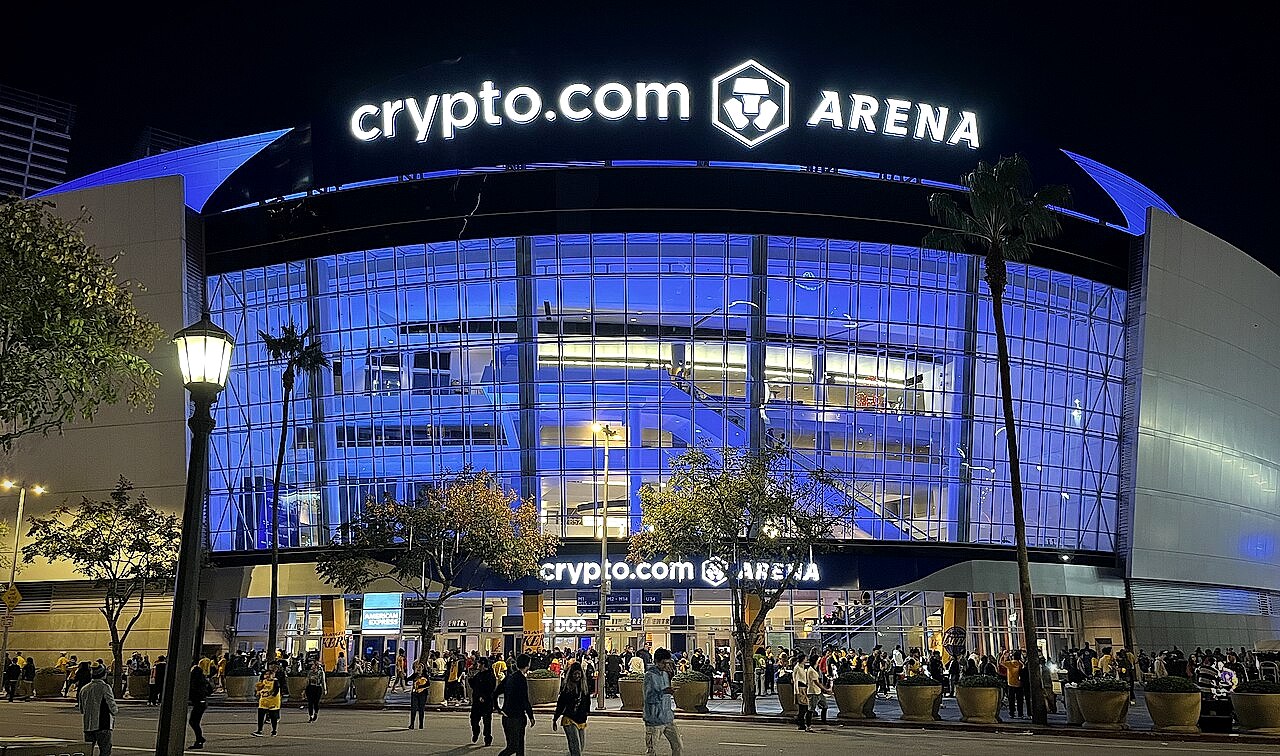
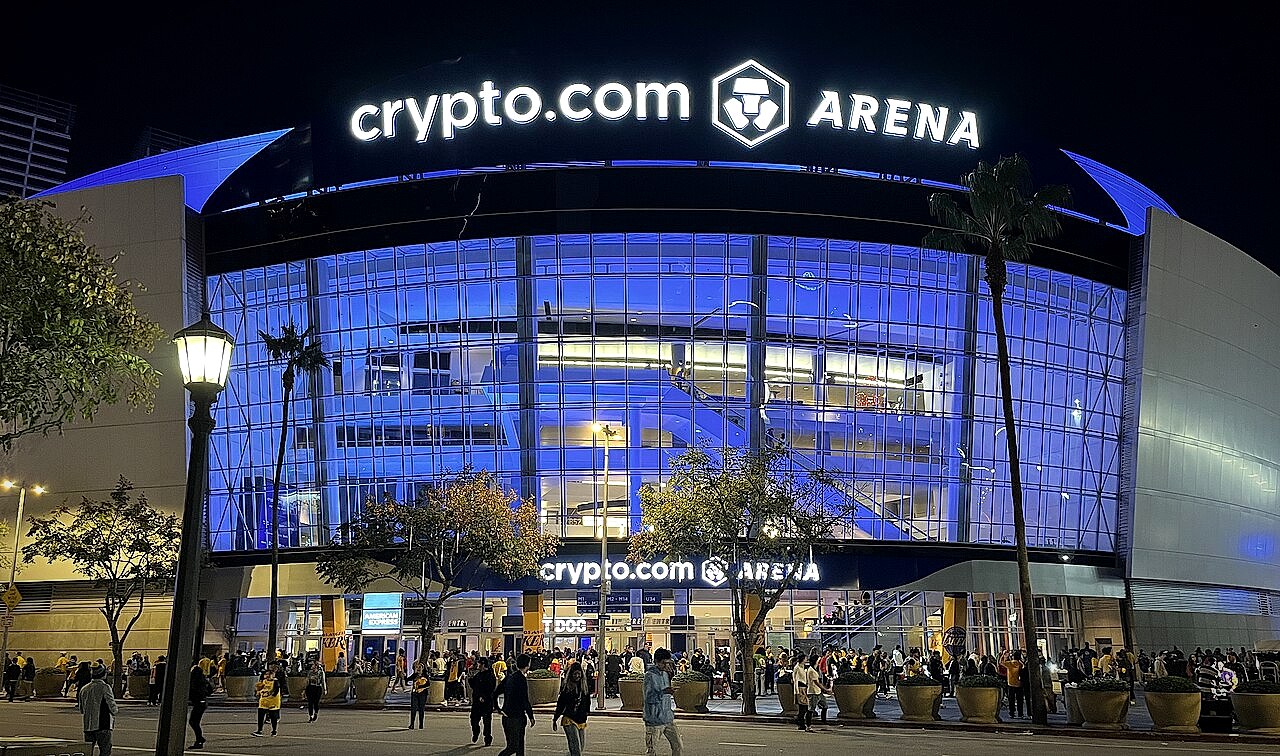
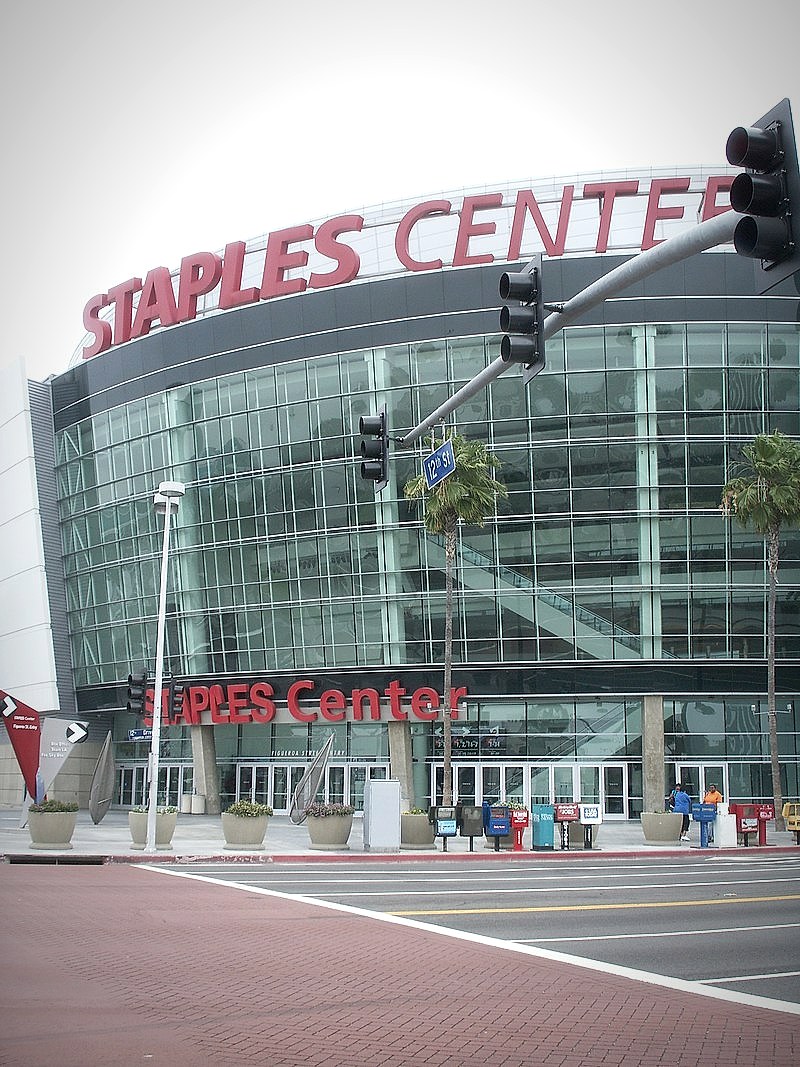
The Minneapolis Lakers played at the Minneapolis Auditorium from 1947 to 1960. The Los Angeles Lakers played at the Los Angeles Memorial Sports Arena from 1960 to 1967 and at The Forum (later the Great Western Forum, then the Kia Forum) in Inglewood from 1967 to 1999. The franchise moved to Staples Center in downtown Los Angeles for the 1999–2000 season. The building was renamed Crypto.com Arena on Christmas Day 2021 under a naming-rights deal reportedly worth $700 million over twenty years.
Retired numbers, and the two Bryant retirements
The Lakers have retired thirteen jersey numbers, including both of Kobe Bryant’s (8 and 24, retired simultaneously on December 18, 2017):
- Elgin Baylor (22)
- Wilt Chamberlain (13)
- Vlade Divac (in 2017, unretired; number 21 on the ceremonial honor list)
- Gail Goodrich (25)
- Magic Johnson (32)
- Jamaal Wilkes (52)
- Jerry West (44)
- Kareem Abdul-Jabbar (33)
- James Worthy (42)
- Shaquille O’Neal (34)
- Kobe Bryant (8)
- Kobe Bryant (24)
- Pau Gasol (16, retired March 7, 2023)
The franchise also honors Jim Pollard (17) and Bill Sharman (coach banner). Jerry Buss’s name hangs at the Crypto.com rafters in a separate honor banner. The Lakers’ practice on number retirements has been strict: the standard is championship-era contribution, not career statistical performance. The only retired number from a player who did not win a championship with the Lakers is Jerry West’s 44 (West’s seven Lakers Finals losses produced a ring only in 1972, late in his career).
Sources
- Basketball-Reference, Los Angeles Lakers franchise page (regular-season and playoff records, Finals appearances)
- Jerry West with Jonathan Coleman, West by West: My Charmed, Tormented Life (Little, Brown, 2011)
- Jeff Pearlman, Showtime: Magic, Kareem, Riley, and the Los Angeles Lakers Dynasty of the 1980s (Gotham Books, 2014)
- Roland Lazenby, The Show: The Inside Story of the Spectacular Los Angeles Lakers in the Words of Those Who Lived It (McGraw-Hill, 2006)
- Los Angeles Lakers media guides, 2019–20 through 2024–25 (roster transactions, championship chronology)
- NBA Finals box scores: 2000, 2001, 2002, 2008, 2009, 2010, 2020 (Basketball-Reference)
- Minneapolis Lakers media archive (Mikan era, NBL dispersal draft 1948)
- Lakers retired-number ceremony records (Bryant December 18 2017, Gasol March 7 2023)
Shop Official Los Angeles Lakers Gear at Fanatics
As a Fanatics affiliate, we may earn a commission from qualifying purchases.
Shop on Amazon
As an Amazon Associate, we earn from qualifying purchases.
Shop NBA Gear at JD Sports
We may earn a commission from qualifying purchases on JD Sports.