Pat Riley: Showtime, Heat Culture, and seven championships across four decades
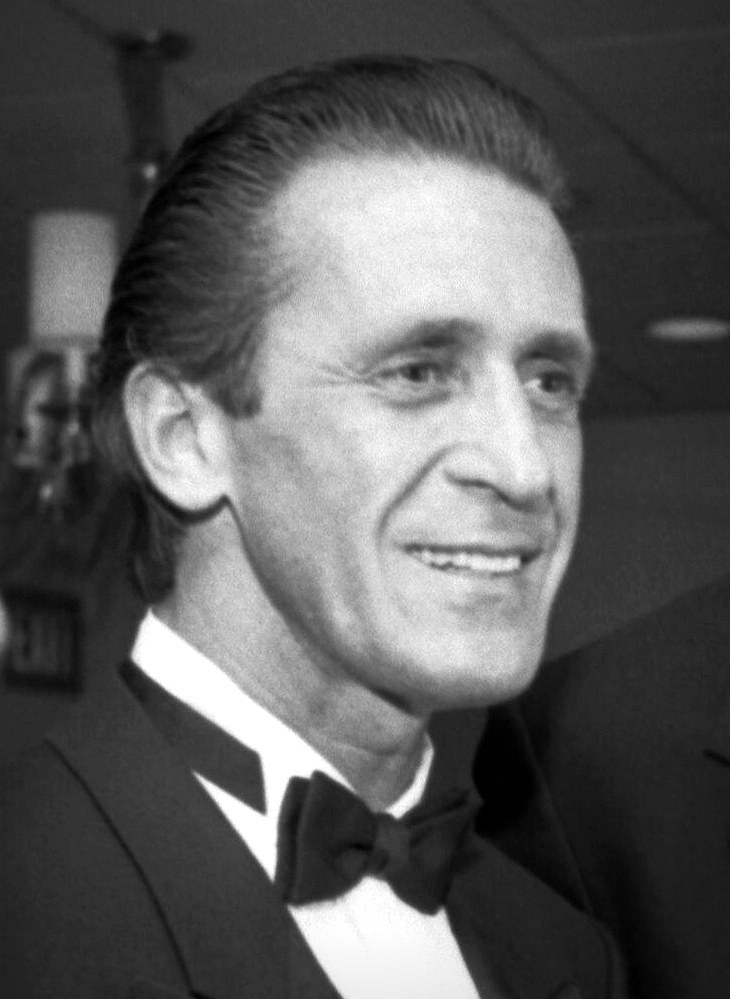
Pat Riley is the only person in NBA history to win championships as a player, an assistant coach, a head coach, and a team executive. He won one as a Lakers reserve in 1972, four as the Showtime Lakers head coach (1982, 1985, 1987, 1988), one as the Miami Heat head coach in 2006, and two more as Heat president (2012, 2013). The total is eight, more than any other living basketball figure except Bill Russell. He has been a basketball lifer in every literal sense of the word; he has not held a job outside the NBA since the 1976-77 season.
He is also the architect of the modern Miami Heat franchise. He bought into the Heat ownership group in 1995, became the head coach the same year, and has been the team’s president continuously since. He built the 2006 championship team around Shaquille O’Neal and Dwyane Wade. He recruited LeBron James and Chris Bosh, and convinced Wade to take less money to fit them all in, in July 2010, producing the Big Three Heat that went to four straight Finals (2011, 2012, 2013, 2014) and won two championships (2012 and 2013).
He is, in 2026, 81 years old, still the Miami Heat president, still the most influential single figure in the franchise’s history.
Shop Pat Riley memorabilia
As an Amazon Associate we earn from qualifying purchases.
Schenectady, Rupp’s Runts, and the playing years
Patrick James Riley was born March 20, 1945 in Rome, New York. His father, Leon “Lee” Riley, was a minor-league baseball player and manager who later worked as the head custodian at a Schenectady high school. The Rileys had six children. Pat was the youngest. The family moved to Schenectady when Pat was five.
He attended Linton High School in Schenectady and was a two-sport star: quarterback in football and the team’s leading scorer in basketball. He committed to Kentucky in 1963 to play for Adolph Rupp.
Pat played four years at Kentucky (1963-67). His most-cited college season was 1965-66, when the Wildcats went 27-2 and reached the NCAA championship game. Their opponent was Texas Western (now UTEP), the all-Black starting five whose coach Don Haskins had famously become the first major-college coach to start five Black players in a Final Four game. Texas Western won 72-65. The game has become, in basketball-historical writing, the structural moment that ended the segregated-college-basketball era; the integration of the SEC over the next decade traces directly to its outcome.
Pat scored 19 points in the loss and was named to the All-Tournament team. He has discussed the game in multiple interviews since, including a 2006 ESPN documentary, and has consistently said the loss was the best thing that happened to him because of what it taught him about race and basketball at age 21.
He was drafted seventh overall in the 1967 NBA Draft by the San Diego Rockets. He played nine NBA seasons as a 6’4” backup guard and won the 1972 NBA championship as a bench player on the Wilt Chamberlain–Jerry West Lakers (the team that won 33 games in a row). He averaged 7.4 points per game across his career and retired in 1976 at age 31.
The Lakers radio booth, Westhead, and Westhead’s bus
Pat spent the 1976-77 and 1977-78 seasons as the Lakers’ radio analyst alongside Chick Hearn. The Lakers’ head coach Jerry West (the same player Pat had been a teammate of) brought him on staff as an assistant in 1979. The 1979-80 Lakers won the championship under head coach Paul Westhead, with rookie Magic Johnson starting at center for the injured Kareem Abdul-Jabbar in the closeout Game 6 in Philadelphia.
The Westhead-as-head-coach story ended on November 18, 1981. The Lakers were 7-4. Magic, increasingly frustrated with Westhead’s slow-down half-court offense, told reporters after a loss in Utah that he wanted to be traded. Owner Jerry Buss fired Westhead the next morning. He named Pat Riley head coach in the same press conference.
Showtime (1981-90) and the four rings
Pat’s nine seasons as Lakers head coach produced four NBA championships (1982, 1985, 1987, 1988). The Lakers reached the NBA Finals seven of nine times. Magic, Kareem, James Worthy, and Byron Scott (the Showtime starting four) became, by every retrospective ranking, the best fast-break offensive team in NBA history. They averaged 117 points per game across the 1980s, the only decade in NBA history in which any team averaged 110-plus across an entire decade.
The two formative coaching identities Pat built in his Lakers years:
The hard-driving practice culture. Pat ran the most demanding practice schedule in the NBA. Two-a-days were standard during training camp. Saturday practices were three hours minimum during the regular season. He yelled at Magic in front of the team. He yelled at Kareem (who almost never permitted that from anyone). The 1985 Lakers, who had famously lost the 1984 Finals to the Boston Celtics on a Larry Bird Game 7 dagger, came back to win the 1985 title in part because of the practice intensity Pat ramped up over the summer.
The “career coach” identity. Pat treated coaching as a profession in the way few NBA coaches before him had. He wore Armani suits on the bench. He gave players motivational books and quoted Robert Frost in pre-game speeches. He published a 1988 book (Show Time: Inside the Lakers’ Breakthrough Season) that became a New York Times bestseller. The cultural image of the modern NBA head coach as a mid-career professional, comparable to a corporate CEO, descends in a more or less straight line from Pat Riley’s Showtime years.
He left the Lakers after the 1989-90 season following a contract dispute with Buss. He spent 1990-91 as an NBC color analyst.
Knicks (1991-95) and Heat (1995-present)
The New York Knicks hired Pat in May 1991. He coached them four years. The 1993-94 Knicks reached the NBA Finals and lost to the Houston Rockets in seven games (the famous Game 7 in which Hakeem Olajuwon outplayed Patrick Ewing in overtime). Pat had a public falling-out with Knicks ownership during the 1995 playoffs and resigned by fax on June 1, 1995.
He joined the Miami Heat as president and head coach on September 2, 1995. The Heat owner, Mickey Arison, gave him a partial ownership stake (the only NBA coach to receive equity at hire in modern league history). Pat coached the Heat through 2003, then again briefly in 2005-06, winning the 2006 NBA championship with Shaq, Wade, and a coaching staff that included future Heat head coach Erik Spoelstra. He stepped down as head coach permanently in 2008 to focus on the executive role.
Heat Culture
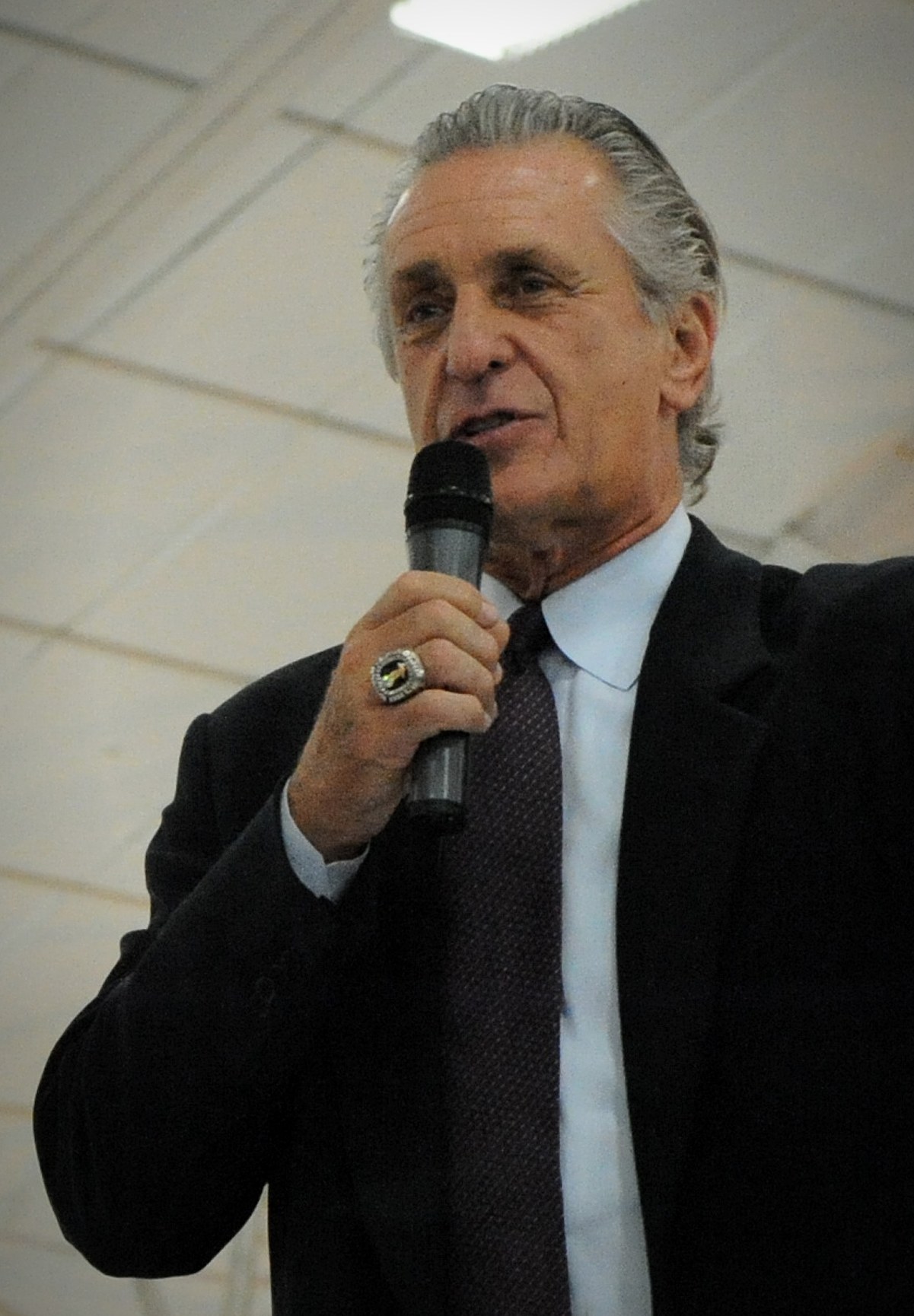
Heat Culture is, by basketball-historical convention, the most distinctive single team identity in modern NBA front-office history. It is built around the principles Pat established when he took the Miami job in 1995: maximum-effort defense, controlled-tempo offense, no-excuses player accountability, and a willingness to cut players who do not meet conditioning standards. The Heat’s annual training camp body-fat-percentage requirement (under 8% for guards, under 10% for big men) was Pat’s idea and is, in 2026, the strictest such requirement in the NBA.
The most famous single execution of Heat Culture came on July 9, 2010, when Pat convinced LeBron James and Chris Bosh to join Wade in Miami in the famous Big Three formation. Pat had recruited all three players personally over the previous two years. He had flown to Akron in March 2010 to meet LeBron’s mother. He had hosted Bosh and his fiancée at Pat’s South Beach home in June. He had told Wade in a series of phone calls through the spring of 2010 that Wade should take less money than the maximum to make the math work.
The Heat went to four straight NBA Finals (2011, 2012, 2013, 2014). They won championships in 2012 and 2013. Dwyane Wade won his second and third championship rings under Pat. LeBron won his first two NBA titles in Miami. Bosh won his first two.
The post-Big-Three Heat era has produced two more NBA Finals appearances (2020 and 2023), both with Jimmy Butler as the centerpiece (Pat traded for Butler in July 2019 free agency). The franchise has, in 2026, not won a championship since 2013, but has not had a losing season in nine of the last twelve years, an unusual stretch of competitiveness for any NBA team without a perennial top-five superstar. The team’s current centerpiece is Bam Adebayo, the 14th pick of the 2017 draft Pat personally scouted three times in college.
The legacy
Pat Riley has won 5 NBA championships as head coach (4 Lakers, 1 Heat) and 2 as Heat president (2012, 2013), plus the 1972 ring as a player. His career total of 8 is more than any other living NBA figure except Bill Russell (who has 11 as a player). He was a 3-time NBA Coach of the Year (1990, 1993, 1997).
He was inducted into the Basketball Hall of Fame as a coach in 2008. The Heat did not retire his number (he was a Lakers player, not a Heat one). The Heat have, however, named their basketball-operations practice facility the “Pat Riley Basketball Operations Facility.” It is the only such named NBA team facility in 2026.
Pat is, in 2026, 81 years old. He is still the Heat’s president. His most recent contract extension (signed July 2024) runs through the 2026-27 season. He has said in multiple interviews, including a 2024 Sports Illustrated profile by Chris Mannix, that he intends to retire “when the team is in better hands than mine.” The post-Pat Heat plan has, by every public indication, been Erik Spoelstra (head coach since 2008) succeeding Pat in the president role at some point in the next two to four years.
The most-cited sentence Pat has ever said about coaching, from his 1993 book The Winner Within, is the structural summary of his entire 30-year executive philosophy: “There are only two options regarding commitment. You’re either in or you’re out. There is no such thing as life in-between.”
The Miami Heat have been, by every measure of organizational stability, the most consistent franchise in the NBA over the past three decades. The reason has Pat Riley’s name on it.
Gear
Read Riley’s leadership framework in The Winner Within.
Sources
- Basketball-Reference: Pat Riley coaching record.
- Pat Riley, Show Time: Inside the Lakers’ Breakthrough Season (Warner Books, 1988).
- Pat Riley, The Winner Within: A Life Plan for Team Players (G.P. Putnam’s Sons, 1993).
- Roland Lazenby, Pat Riley: A Coach’s Life (Doubleday, 1997).
- Sports Illustrated, Chris Mannix, “Pat Riley at 80: The Heat Culture endgame” (March 2024).
- Miami Herald, Barry Jackson, archive coverage of the July 2010 Big Three formation.
Shop NBA Gear at Fanatics
As a Fanatics affiliate, we may earn a commission from qualifying purchases.
Shop on Amazon
As an Amazon Associate, we earn from qualifying purchases.
Shop Sneakers & Apparel at JD Sports
We may earn a commission from qualifying purchases on JD Sports.
Sources
- Basketball-Reference: Pat Riley coaching record
- Pat Riley, Show Time: Inside the Lakers' Breakthrough Season (Warner Books, 1988)
- Pat Riley, The Winner Within: A Life Plan for Team Players (G.P. Putnam's Sons, 1993)
- Roland Lazenby, Pat Riley: A Coach's Life (Doubleday, 1997)
- Sports Illustrated: Chris Mannix, "Pat Riley at 80: The Heat Culture endgame" (March 2024)
- Miami Herald: Barry Jackson archive coverage of the July 2010 Big Three formation