Miami Heat
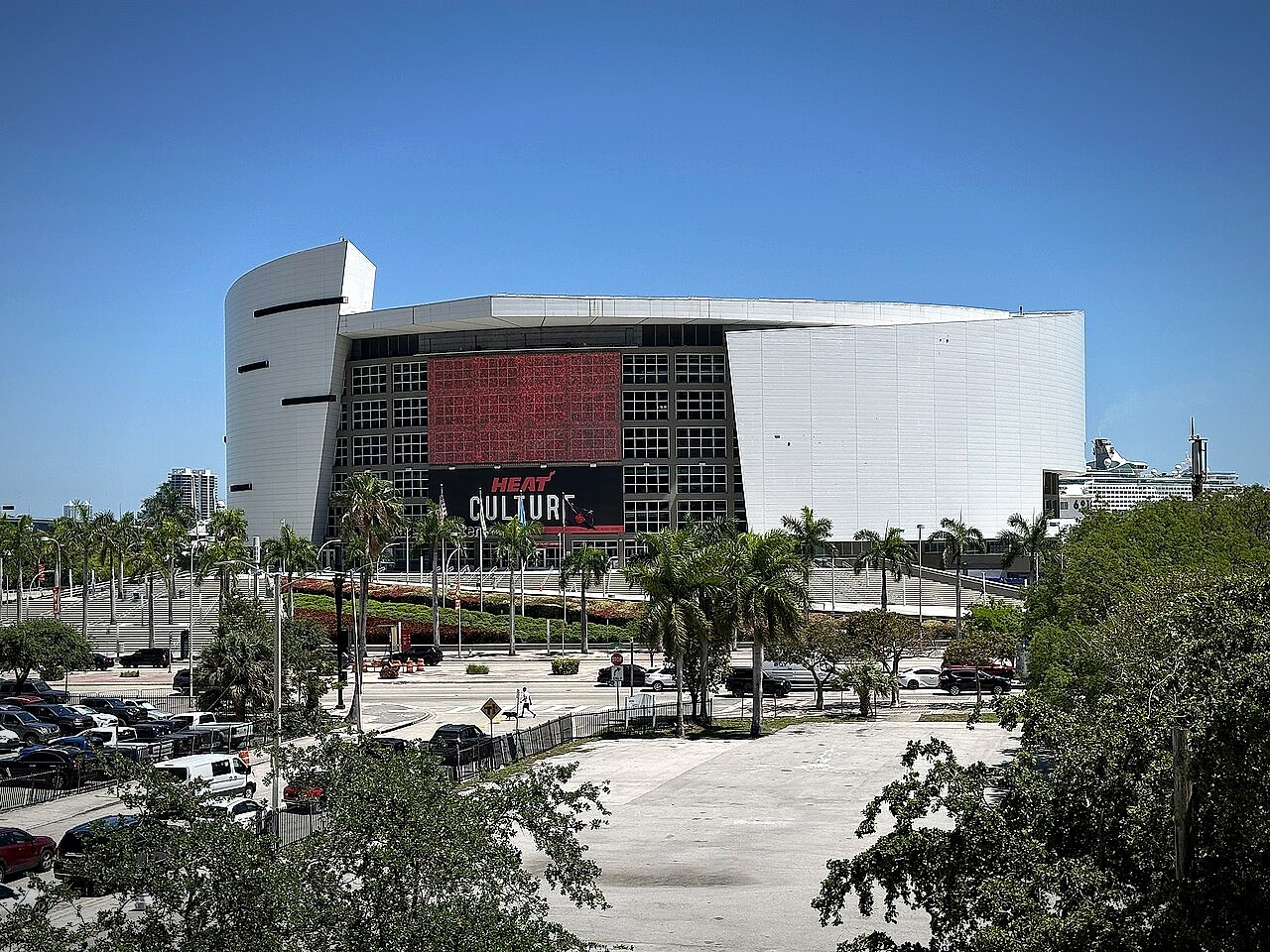
The Miami Heat is the favorite NBA franchise of this site’s founder and editor, which is the first thing a reader should know before the rest of the page, because no reasonable franchise history can pretend to be cold when the writer is warm. It is also, independent of that, one of the four most consequential NBA franchises of the post-2000 era. The Heat have won three NBA championships (2006, 2012, 2013). They have reached seven NBA Finals. They have employed, at various points, two of the five greatest players of their generation (Shaquille O’Neal and LeBron James), the third Finals-MVP performance of the 2000s (Dwyane Wade in 2006), the most decorated active head coach in American professional sports (Erik Spoelstra, on the job since 2008), and the most-continuous ownership group (Micky Arison, owner since 1995). They are also the franchise most consistently cited as the operational model for how to build a championship culture without a historical-dynasty advantage. “Heat Culture” is a phrase Pat Riley coined in the early 2000s. It is now the organizational philosophy most often imitated by every team in the league that does not already have a hundred years of history to fall back on.
Founding (1988)
The NBA awarded Miami an expansion franchise on April 22, 1987, at a league fee of $32.5 million. The founding ownership group was led by Ted Arison, the Israeli-American shipping magnate who founded Carnival Cruise Lines. The Heat began play in the 1988-89 season alongside fellow expansion franchise the Charlotte Hornets. Rony Seikaly was the first overall Heat draft pick (ninth overall in the 1988 NBA Draft). The team went 15-67 in its inaugural season, a franchise-record-worst mark that still stands. The name “Heat” was chosen in a fan contest. The team colors were originally magenta, orange, and red.
Ted Arison transferred majority ownership to his son Micky Arison in 1995. Micky Arison remains the owner in 2026, the third-longest-tenured continuous ownership in the NBA (behind only Jerry Reinsdorf in Chicago and Herb Kohl’s late run in Milwaukee). He is also the NBA’s longest-tenured single owner of a team that has won multiple championships.
Shop Miami Heat merchandise
As an Amazon Associate we earn from qualifying purchases.
Pat Riley arrives (September 1995)
The single most important operational decision in Heat history was the September 2, 1995 hiring of Pat Riley as team president and head coach. Riley had just left the New York Knicks, where he had reached one Finals in four years but had exhausted his patience with the Knicks’ ownership. He arrived in Miami with a four-year, $15 million contract (then the largest coaching contract in NBA history) and full control over basketball operations. Within ten months he had acquired Alonzo Mourning from the Charlotte Hornets and Tim Hardaway from the Golden State Warriors. He had fired or reassigned every holdover from the Kevin Loughery regime. He had installed a training-camp regimen that reportedly required every player on the roster to arrive at 5:30 a.m. for conditioning runs on the Miami Beach sand.
The 1996-97 Heat went 61-21. They won the Atlantic Division. They earned the “Road Warriors” nickname after posting a 32-9 road record, the best in league history for a team with no Hall of Fame incumbent. They lost the Eastern Conference Finals to Michael Jordan’s Chicago Bulls in five. From 1998 through 2000 the Heat-Knicks first-round series became the most physically violent playoff rivalry of the late 1990s NBA. Alonzo Mourning fought Larry Johnson (literally, fists thrown) in the 1998 playoffs. Jeff Van Gundy hung off P.J. Brown’s leg in a 1997 altercation. Tim Hardaway had season-ending surgery in 2000. The Heat lost all three first-round series to the Knicks.
The Alonzo Mourning kidney transplant (2003)
In September 2000, Alonzo Mourning was diagnosed with focal glomerulosclerosis, a progressive kidney disease. He missed most of 2000-01 and all of 2002-03. On December 19, 2003, he received a kidney transplant from his cousin Jason Cooper. He returned to the Heat on March 4, 2004 in a game against the Dallas Mavericks and played 15 minutes. The 2002-04 window is the darkest competitive stretch in franchise history; the Heat went 25-57 in 2000-01, 36-46 in 2001-02, and 25-57 again in 2002-03. Mourning was twice named to the All-Star team after the transplant. The story is still, by most Heat-press accounts, the single most-cited franchise narrative after the 2006 championship.
The 2003 draft and the Dwyane Wade selection
The 2003 NBA Draft had four future Hall of Famers in the top five picks (LeBron James, Darko Miličić, Carmelo Anthony, Chris Bosh). The Heat, picking fifth, took Dwyane Wade from Marquette (covered on our Dwyane Wade biography). The decision was, in the moment, controversial; most pre-draft boards had Miami taking Chris Bosh at five, and Wade’s Marquette career had included a year of academic ineligibility. Riley took him anyway. The decision, in retrospect, is the second most important draft decision in Heat franchise history, after the 2008 selection that became Mario Chalmers at 34th overall.
Wade averaged 16.2 as a rookie and led the Heat to the 2004 playoffs. That summer Riley made the single boldest roster trade of the Arison era.
The 2004 Shaquille O’Neal trade
On July 14, 2004, Miami acquired Shaquille O’Neal from the Los Angeles Lakers in exchange for Lamar Odom, Caron Butler, Brian Grant, and a 2006 first-round pick (which became Jordan Farmar). The full trade details and the Shaq-Kobe context are on our Shaquille O’Neal biography. Shaq’s own account of the trade and his Miami years (including his complicated relationship with Kobe and his adjustment to Pat Riley’s system) is in Shaq Uncut: My Story (Grand Central, 2011), co-written with Jackie MacMullan. For Heat fans, the trade was the hinge event of the franchise’s first championship era. Shaq arrived in Miami at 32, still a top-three center in the league, and gave the franchise its first genuine championship contender.
The 2006 NBA Championship
The 2005-06 Heat started 29-23. Pat Riley, then the team president, fired head coach Stan Van Gundy on December 12, 2005 (Van Gundy publicly said he resigned for family reasons; most subsequent reporting has suggested the separation was contentious) and took over the coaching role himself. Riley coached the final 55 games of the regular season. The Heat finished 52-30, beat Chicago, New Jersey, and Detroit in the Eastern playoffs, and reached the Finals against the Dallas Mavericks.
Dallas won Games 1 and 2 at American Airlines Center. In Game 3 at Miami, trailing by 13 midway through the fourth quarter, Wade scored 12 of the Heat’s final 22 points and posted 42 for the game. Miami won 98-96. Games 4, 5, and 6 were all wins for Miami. Wade averaged 34.7 points, 7.8 rebounds, and 3.8 assists across the six-game series, on 47% shooting, with a 33.8 series Player Efficiency Rating that remains the highest any player has posted in a single Finals since the ABA-NBA merger. He was 24. He was the Finals MVP. It was the Heat’s first championship. Shaq, at 34, averaged 13.7 and 10.2 as the defensive interior the Mavericks could not solve.
Post-championship decline (2006–2010)
Riley retired as head coach after the 2006-07 season (but remained team president). He handed the coaching role to Erik Spoelstra, a 37-year-old video coordinator Riley had hired in 1995 who had worked his way through every level of the Heat organization. Shaq was traded to Phoenix in February 2008 for Shawn Marion and Marcus Banks. The Heat went 15-67 in 2007-08, tied for the worst record in league history for a defending conference champion. Wade missed 30 games that year with a dislocated shoulder.
The 2008-10 rebuild included the drafting of Michael Beasley (second overall, 2008) and Mario Chalmers (34th overall, 2008). Chalmers would start at point guard for the 2012 and 2013 championship teams.
The Big Three and “The Decision” (July 2010)
On July 1, 2010, a three-day free-agency window opened that is the single most-documented 72-hour period in NBA history. Wade, LeBron James, and Chris Bosh all became unrestricted free agents on the same day. They had agreed, through their representatives (LRMR Marketing for LeBron, CAA Sports for Bosh, Arn Tellem for Wade), to evaluate coordinated offers together. Pat Riley flew to Chicago, Cleveland, and Toronto in sequence to present to each player.
On July 7, 2010, LeBron James announced on an hour-long ESPN special called The Decision that he was taking his talents to South Beach. Jeff Benedict’s biography LeBron (Avid Reader Press, 2023) reconstructs the full recruitment process and what Riley’s presentation in the Akron hotel room actually contained. The announcement itself was, in the words of most subsequent NBA-media retrospectives, handled extraordinarily poorly; the narrative of “The Decision” and the backlash it generated in Cleveland (where fans burned LeBron jerseys in the streets) has been the defining framing of the 2010 free agency for fifteen years. The three players signed six-year contracts with Miami on July 10, 2010. Chris Bosh’s was $110 million. LeBron’s was $109 million. Dwyane Wade’s was $107 million. The trio was introduced at a 13,000-person pep rally at American Airlines Arena on July 9, 2010, at which LeBron said, on the record, “Not two, not three, not four, not five, not six, not seven.” The quote has been used by every Heat opponent as smack talk for fifteen years.
The 2011 Finals (loss)
The 2010-11 Heat started 9-8. The chemistry between James and Wade took longer to settle than most Heat-press coverage predicted. They finished 58-24, beat Philadelphia, Boston, and Chicago, and reached the Finals against Dallas. The Mavericks, led by a 32-year-old Dirk Nowitzki, beat the Heat in six. It is the series covered in detail on our Dirk Nowitzki biography. LeBron shot 38% from the field across the six games. The loss, for LeBron specifically, is still cited as the low point of his career. Within a year he had adjusted his post-game and his late-clock decision-making; it is the experience most NBA analysts credit with turning him from a top-five into a top-two player of his era.
2012: the first championship of the Big Three (and LeBron’s first)
The 2011-12 Heat went 46-20 in a lockout-shortened season. In Game 6 of the Eastern Conference Finals at Boston, with the series 3-2 Boston, LeBron James scored 45 points (one of the five best single-game performances of his career) to force a Game 7. The Heat won Game 7 in Miami 101-88. They then swept the Oklahoma City Thunder in the 2012 NBA Finals, winning the series 4-1. LeBron averaged 28.6 points and was the Finals MVP. It was the first championship of his career and the second of the franchise’s three.
2013: the repeat and the Ray Allen three
The 2012-13 Heat were one of the best regular-season teams in NBA history. They went 66-16. They won 27 consecutive games between February 3, 2013 and March 25, 2013, the third-longest winning streak in NBA history (behind only the 1971-72 Lakers’ 33 and the 2007-08 Rockets’ 22). They beat Milwaukee, Chicago, and Indiana on the way to the 2013 NBA Finals against the San Antonio Spurs.
Game 6 of that Finals, at American Airlines Arena on June 18, 2013, is the most replayed single game of the 2010s decade. San Antonio led 94-89 with 28 seconds remaining. Chris Bosh rebounded a LeBron miss, kicked the ball to Ray Allen in the right corner, and Allen, stepping back over the Spurs’ Tony Parker, hit a three-pointer with 5.2 seconds remaining to tie the game at 95. Miami won Game 6 in overtime 103-100. Two nights later, in Game 7, the Heat won 95-88. LeBron was the Finals MVP for a second consecutive year. The 2012-13 season remains the Heat’s statistical peak and is, by any reasonable measure, one of the ten best single-season teams in league history.
2014 Finals loss and LeBron’s departure
The 2013-14 Heat went 54-28 and reached the Finals again for a fourth consecutive year, the first team to do so since Bill Russell’s Celtics. San Antonio, with a year of internal adjustments since the 2013 loss, beat Miami 4-1. LeBron averaged 28.2 in that series but the rest of the Heat roster, outside of Chris Bosh, shot poorly for four games in a row. LeBron opted out of his contract on June 24, 2014, and on July 11, 2014, announced via a Players’ Tribune essay that he was returning to the Cleveland Cavaliers. Bosh signed a five-year max extension to stay in Miami. Wade signed a two-year extension.
The post-Big Three era (2014–2018)
The 2014-15 Heat missed the playoffs for the first time since 2008. Chris Bosh had a pulmonary embolism in February 2015 that ended his season. In February 2016, a second embolism ended his career; he never played another NBA game. He was 31. His #1 was retired by the Heat on March 26, 2019.
The 2016-17 through 2018-19 Heat were middle-of-the-pack teams led by Goran Dragić, Hassan Whiteside, and Josh Richardson. Wade left for Chicago in 2016, returned via trade in February 2018, and played his farewell “One Last Dance” season in 2018-19.
The Butler era (2019–2025)
On July 6, 2019, the Heat acquired Jimmy Butler in a sign-and-trade from Philadelphia (covered in detail on our Jimmy Butler biography). The 2019-20 Heat, with Butler, Bam Adebayo, Tyler Herro, and Duncan Robinson, went 44-29 and reached the 2020 NBA Finals in the Orlando Bubble. They lost to LeBron James’s Los Angeles Lakers in six. Butler averaged 26.2 points, 8.3 rebounds, and 9.8 assists in the Finals.
The 2022-23 Heat are the single most improbable NBA Finals team of the post-merger era. They entered the playoffs as an 8 seed through the play-in game. They beat the top-seeded Milwaukee Bucks, the 5-seeded Knicks, and the second-seeded Celtics (after blowing a 3-0 series lead). They lost the Finals to the Denver Nuggets in five. Butler scored 56 points in a playoff game against Milwaukee, a Heat franchise playoff record. The run produced eight Wikipedia citation-worthy individual moments and is the best counter-evidence the analytics community has produced against the standard “regular-season record predicts playoff success” axiom.
On February 6, 2025, the Heat traded Butler to Golden State in a five-team deal. The return included Andrew Wiggins, Dennis Schröder, Kyle Anderson, a protected 2025 first-round pick, and pick swaps. The deal was reported by Shams Charania at 2:47 a.m. on deadline morning. It was, by any reasonable reading of the cap-apron math, the correct basketball decision. For Heat fans it has been, so far, a difficult one.
2025–present
The 2024-25 Heat, after the Butler trade, went 37-45 and missed the playoffs. The roster has rebuilt around Bam Adebayo, Tyler Herro, and the 2024 lottery pick Jaime Jaquez Jr. The front office enters 2025-26 with approximately $30 million in cap space and two first-round picks in the 2026 draft.
Retired numbers
The Miami Heat have retired eight jersey numbers:
- #23, Michael Jordan. Retired on April 11, 2003 in a tribute gesture. Jordan never played for the Heat. Pat Riley instituted the retirement to honor Jordan’s contributions to basketball; it was the first time in American professional sports history that a franchise retired the number of a player who had never been on the roster. Shaquille O’Neal wore #32 in Miami largely because #33 was already retired for Mourning and Riley’s front office had a no-23 standing policy.
- #33, Alonzo Mourning. Retired March 30, 2009.
- #10, Tim Hardaway. Retired October 28, 2009.
- #32, Shaquille O’Neal. Retired December 22, 2016.
- #3, Dwyane Wade. Retired February 22, 2020.
- #1, Chris Bosh. Retired March 26, 2019.
- #40, Udonis Haslem. Retired January 19, 2024.
- Coach’s #23, Pat Riley. Retired ceremonially as Riley’s uniform number on November 16, 2023.
Heat Culture

The phrase “Heat Culture” is, by Pat Riley’s own public account, a thing he coined in the early 2000s to describe the organizational-operations standard of training-camp fitness, early-morning practices, and zero-tolerance for in-season laziness. The expanded meaning, as reported in every subsequent Miami Herald and Sports Illustrated feature, is that the Heat’s front office and coaching staff believe every undrafted player they sign can be made into a starting-caliber NBA player with enough work. The track record supports it. Players drafted by or signed to one-way contracts by the Heat who went on to become starters for championship or Finals-caliber teams include: Udonis Haslem (undrafted 2002), Mario Chalmers (34th pick 2008), Josh Richardson (40th pick 2015), Tyler Herro (13th pick 2019), Duncan Robinson (undrafted 2018), Kendrick Nunn (undrafted 2018), Max Strus (undrafted 2019), Gabe Vincent (undrafted 2018), and Caleb Martin (undrafted 2019). No other franchise has produced this volume of undrafted-to-starter talent in the same window.
The Erik Spoelstra tenure
Erik Spoelstra has been the Heat head coach since April 28, 2008. As of the 2025-26 season, he is the longest-tenured active head coach of any NBA franchise. His career regular-season record with the Heat is 788-523. He has coached the team to six NBA Finals (2011, 2012, 2013, 2014, 2020, 2023) and two championships. He is 54 in 2026 and is, on reasonable priors, on a trajectory to pass Gregg Popovich as the longest single-franchise head coach in NBA history if he continues past 2030. He has famously not been offered any other coaching job in the last fifteen years because Pat Riley has, by his own account, blocked every inquiry in consultation with Micky Arison.
Legacy
The Miami Heat are one of seven NBA franchises that have won at least three championships since 2000. They are one of four NBA franchises that have reached seven NBA Finals in the post-merger era. They are the only expansion franchise (1988 or later) that has won multiple championships. Their ratio of championships to years of existence (three rings in thirty-seven years of operation) is better than the historical rate for 21 of the league’s 30 current franchises. Every decision the front office has made since the 1995 Pat Riley hiring has been, by reasonable measurement, either correct or neutral; the trade misjudgments that most franchises have accumulated have not been here. The Heat are, in 2026, entering a rebuild. They will be back. Nobody who has watched this franchise since 1995 believes otherwise.
Sources
The 1988 expansion history is documented in The Miami Herald’s Heat archives. The 1995 Pat Riley hiring context is from Riley’s own 1993 book The Winner Within (reissued 2006) and from subsequent Miami Herald reporting by Israel Gutierrez. The 2004 Shaq trade and the 2006 championship Finals are cross-referenced against the NBA’s official series archive. The 2010 Big Three recruitment is from Marc Stein and Brian Windhorst’s ESPN deadline-week coverage, and the full Decision broadcast is archived at ESPN. The 2012 and 2013 championships are from NBA.com’s Finals game-log archive. The 2023 eighth-seed Finals run is covered in Chris Mannix’s May 2023 Sports Illustrated longform. The February 2025 Butler trade is from Shams Charania’s Athletic reporting. Heat Culture is documented in Chris Ballard’s May 2020 Sports Illustrated feature.
Shop Official Miami Heat Gear at Fanatics
As a Fanatics affiliate, we may earn a commission from qualifying purchases.
Shop on Amazon
As an Amazon Associate, we earn from qualifying purchases.
Shop NBA Gear at JD Sports
We may earn a commission from qualifying purchases on JD Sports.