Bill Russell
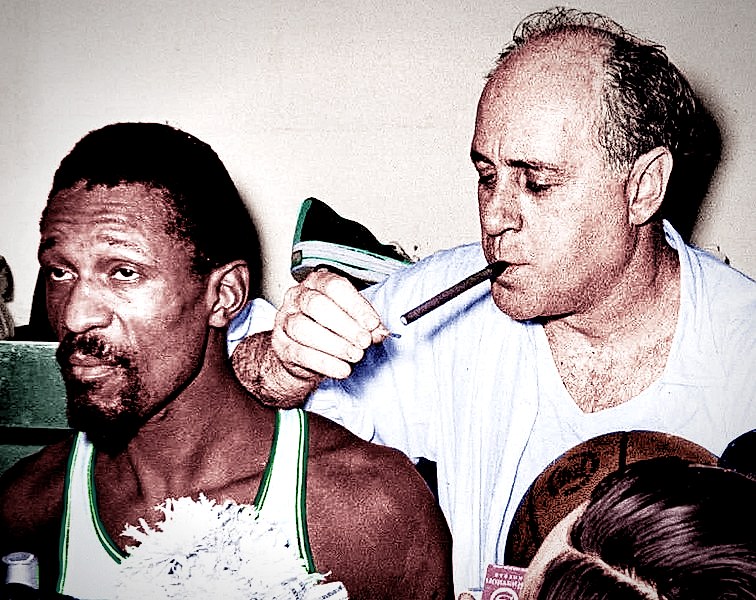
Bill Russell won eleven NBA championships in thirteen seasons. No player in the history of American team sports has won more titles. He won five NBA MVP awards, nine All-NBA selections, and twelve All-Star appearances, and he coached the final two of his eleven championships himself as the Celtics’ player-coach. He is the most-decorated winner in basketball history and the single most important Black figure in the first generation of integrated professional basketball. He was the first Black head coach in any major American professional sport. He is the man the Bill Russell NBA Finals Most Valuable Player Trophy was named for in 2009 on his 75th birthday. He was awarded the Presidential Medal of Freedom by Barack Obama on February 15, 2011. He died on July 31, 2022 at the age of 88. The NBA retired his #6 across all 30 franchises on August 11, 2022, the first and only time the league has made a number unavailable leaguewide.

West Monroe and Oakland (1934–1952)
He was born February 12, 1934 in West Monroe, Louisiana, a segregated town in the Jim Crow South. His father Charles Russell worked in a paper bag factory. His mother Katie ran the household. When Bill was nine, Charles moved the family to Oakland, California to escape Jim Crow labor conditions. Katie died of kidney failure in 1946 when Bill was twelve. Charles raised Bill and his brother Charlie alone.
Bill was cut from his McClymonds High School freshman basketball team. He barely made varsity as a sophomore. As a senior he was a role player, not a recruited prospect. The only Division I scholarship offered was from the University of San Francisco, then a mid-tier basketball program in the West Coast Conference.
Shop Bill Russell jersey
As an Amazon Associate we earn from qualifying purchases.
The University of San Francisco (1953–1956)
He played three varsity seasons for head coach Phil Woolpert. USF went 55-1 across his junior and senior years. They won back-to-back NCAA championships in 1955 and 1956. Russell was the 1955 and 1956 NCAA Tournament Most Outstanding Player. He was a two-time consensus first-team All-American. He led the 1956 U.S. Olympic team to the gold medal in Melbourne, averaging 14.1 points and scoring an Olympic-record 61% from the floor.
Woolpert’s starting lineup across those two championship runs was all-Black, the first all-Black starting lineup in major college basketball history. The team had been turned away from multiple segregated hotels on road trips and, in 1954, staged a team-wide boycott of the Oklahoma City-based All-College Tournament after tournament organizers refused to seat the Black players in the same dining room as their white teammates.
The 1956 draft and the move to Boston
The St. Louis Hawks held the second overall pick of the 1956 NBA Draft. They drafted Russell. Hawks owner Ben Kerner, anticipating that Russell would not report to play in a segregated Southern city, traded the pick to the Boston Celtics for Ed Macauley and Cliff Hagan. The Celtics held the territorial pick that year, which was Tom Heinsohn.
Russell joined the Celtics in December 1956 after the Olympics. Head coach Red Auerbach had been rebuilding the team around Bob Cousy and Bill Sharman; Russell completed the defensive and rebounding core that would define the eleven-championship run. In his first season (1956-57, partial season because of the Olympics), Boston won the NBA championship. It was the first NBA title in Celtics history. Russell averaged 19.6 rebounds in the Finals.
The eleven championships (1957–1969)
The Celtics won championships in 1957, 1959, 1960, 1961, 1962, 1963, 1964, 1965, 1966, 1968, and 1969. Russell was on the roster for all eleven. Only the 1957-58 season did Russell play in the Finals without winning, when he injured his ankle in Game 3 against the St. Louis Hawks and Boston lost in six.
Across his thirteen seasons, the Celtics played 132 playoff games. They went 78-54. Russell averaged 16.5 points and 22.4 rebounds across those playoff games. He is the career playoff leader in rebounds (4,104) and is second all-time in regular-season rebounds behind only Wilt Chamberlain. His career rebounding average of 22.5 per game is second only to Chamberlain’s 22.9. The head-to-head regular-season record between Russell’s Celtics and Chamberlain’s Warriors/76ers/Lakers is 86-57 in Russell’s favor, and the head-to-head playoff record is 57-37. In the nine playoff series the two played, the Celtics won seven.
Russell was MVP in 1958, 1961, 1962, 1963, and 1965. He was three times second-team All-NBA and eleven times first or second team. His 1961-62 season (18.9 points, 23.6 rebounds, 4.5 assists) is one of the ten most-valuable single seasons any player has produced. Across the five MVP years, he won them all without a three-point line, without shot-clock changes that benefited guards, and in a league where centers were expected to limit their offensive role to what the system needed from them. The MVP is, on that framing, an undercount.
The player-coach years (1966–1969)
Red Auerbach retired as Celtics head coach after the 1965-66 championship and named Russell his successor. Russell became the first Black head coach in any major American professional sport on April 18, 1966. He was also the first player-coach to win an NBA championship (1968 and 1969). His coaching record across three seasons was 162-83. The 1968-69 Celtics, his final year as player-coach, went 48-34 in the regular season and entered the playoffs as the Eastern Conference’s four seed. They beat the Philadelphia 76ers, the New York Knicks, and Wilt Chamberlain’s Lakers in a seven-game Finals. Russell retired on his own terms, immediately after the final horn of the 1969 Game 7.
Civil rights and the 1961 Kentucky boycott
Russell was a vocal civil-rights advocate throughout his career. On October 17, 1961, in Lexington, Kentucky, Russell and three Black Celtics teammates (Sam Jones, Satch Sanders, and Al Butler) were refused service at the segregated restaurant of their team hotel the night before an exhibition game. The four players left the arena, returned to the hotel, packed their bags, and flew home. Russell organized the boycott. Red Auerbach, when informed of the decision, supported the players. The four missed the exhibition game, which was played without them.
He attended the 1963 March on Washington. He was vocally critical of the NBA’s slow integration pace throughout his playing career and in the decades after. He turned down a Presidential Medal of Freedom invitation from President Lyndon B. Johnson in 1968 in protest of the treatment of the civil-rights movement. He accepted the same medal from President Barack Obama on February 15, 2011.
Hall of Fame, jersey retirement, and legacy
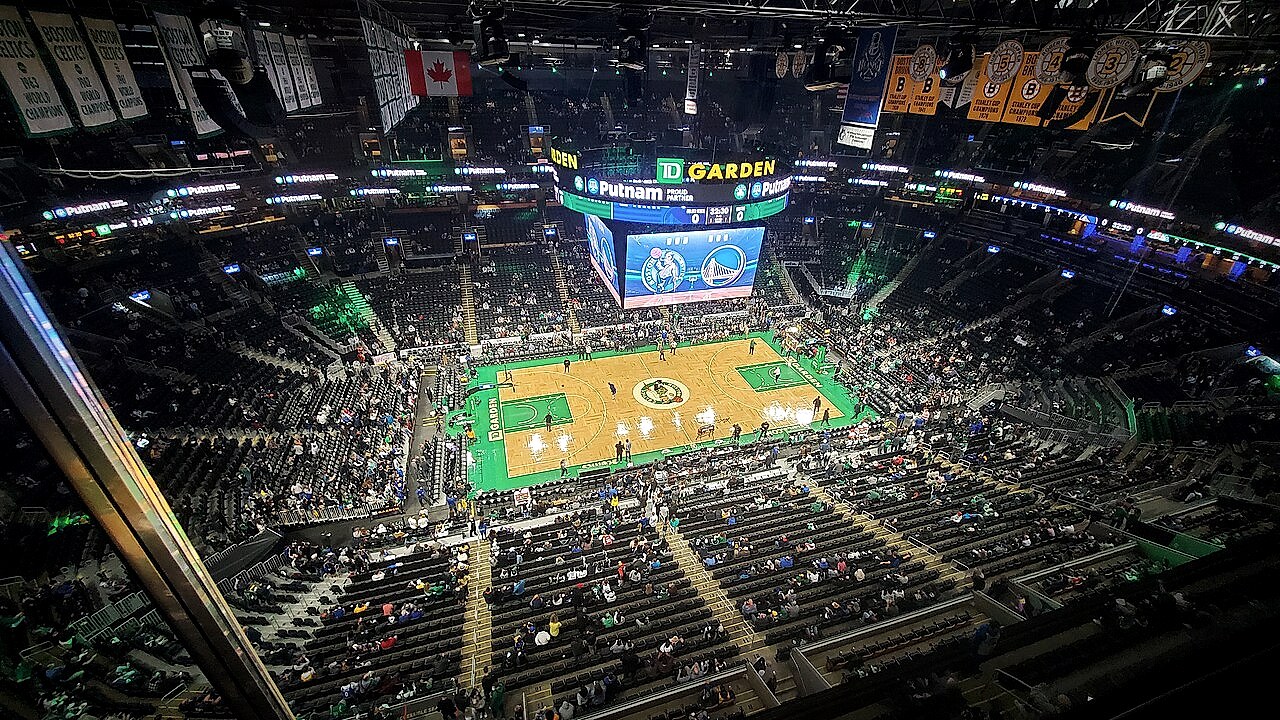
He was inducted into the Naismith Memorial Basketball Hall of Fame in 1975. He was named to the NBA 35th, 50th, and 75th Anniversary Teams. The NBA Finals MVP trophy was renamed the Bill Russell NBA Finals MVP Award on February 14, 2009 at his 75th-birthday All-Star Weekend ceremony. The Boston Celtics retired his #6 in 1972. The NBA retired his #6 leaguewide on August 11, 2022, twelve days after his death. He is the only player in any major American professional sport to have his number retired leaguewide.
Russell’s own memoir, Second Wind: The Memoirs of an Opinionated Man (co-authored with Taylor Branch, Random House, 1979), is the primary written record of his views on race, basketball, and Boston’s complicated history with its Black athletes. His biographer Taylor Branch has written that his influence on the sport is, on aggregate, the largest of any single individual in the first 75 years of professional basketball. The eleven championships, the integration of the NBA coaching ranks, the activism, and the decades of post-playing civil-rights work are separate categories, each of which, on its own, would warrant a significant legacy. He died on July 31, 2022 at his home on Mercer Island, Washington. President Biden and NBA Commissioner Adam Silver each issued statements. The Celtics held a public tribute at TD Garden on October 18, 2022, the opening night of the 2022-23 season, which included every living NBA head coach and most of the retired Celtics dynasty players.
Gear
Read his memoir Second Wind.
Sources
The West Monroe childhood and the McClymonds recruitment detail are from Russell’s 1979 memoir Second Wind (co-authored with Taylor Branch). The 1961 Kentucky restaurant boycott is documented in the Associated Press’s October 17, 1961 game-day coverage and in Russell’s own essay “I’m Not Worried About Ali” published in Sports Illustrated on June 19, 1967. The 2011 Presidential Medal of Freedom ceremony is archived at the Obama White House press office. The 2022 death coverage is from Richard Goldstein’s New York Times obituary of the same day.
Shop Jerseys & Fan Gear at Fanatics
As a Fanatics affiliate, we may earn a commission from qualifying purchases.
Shop on Amazon
As an Amazon Associate, we earn from qualifying purchases.
Shop Sneakers & Gear at JD Sports
We may earn a commission from qualifying purchases on JD Sports.
Sources
- Basketball-Reference: Bill Russell
- Bill Russell and Taylor Branch, Second Wind: The Memoirs of an Opinionated Man (Random House, 1979)
- The New York Times: "Bill Russell, Celtics Star Who Personified Winning, Dies at 88" (Richard Goldstein, July 31, 2022)
- Presidential Medal of Freedom ceremony (February 2011)