Bob Cousy
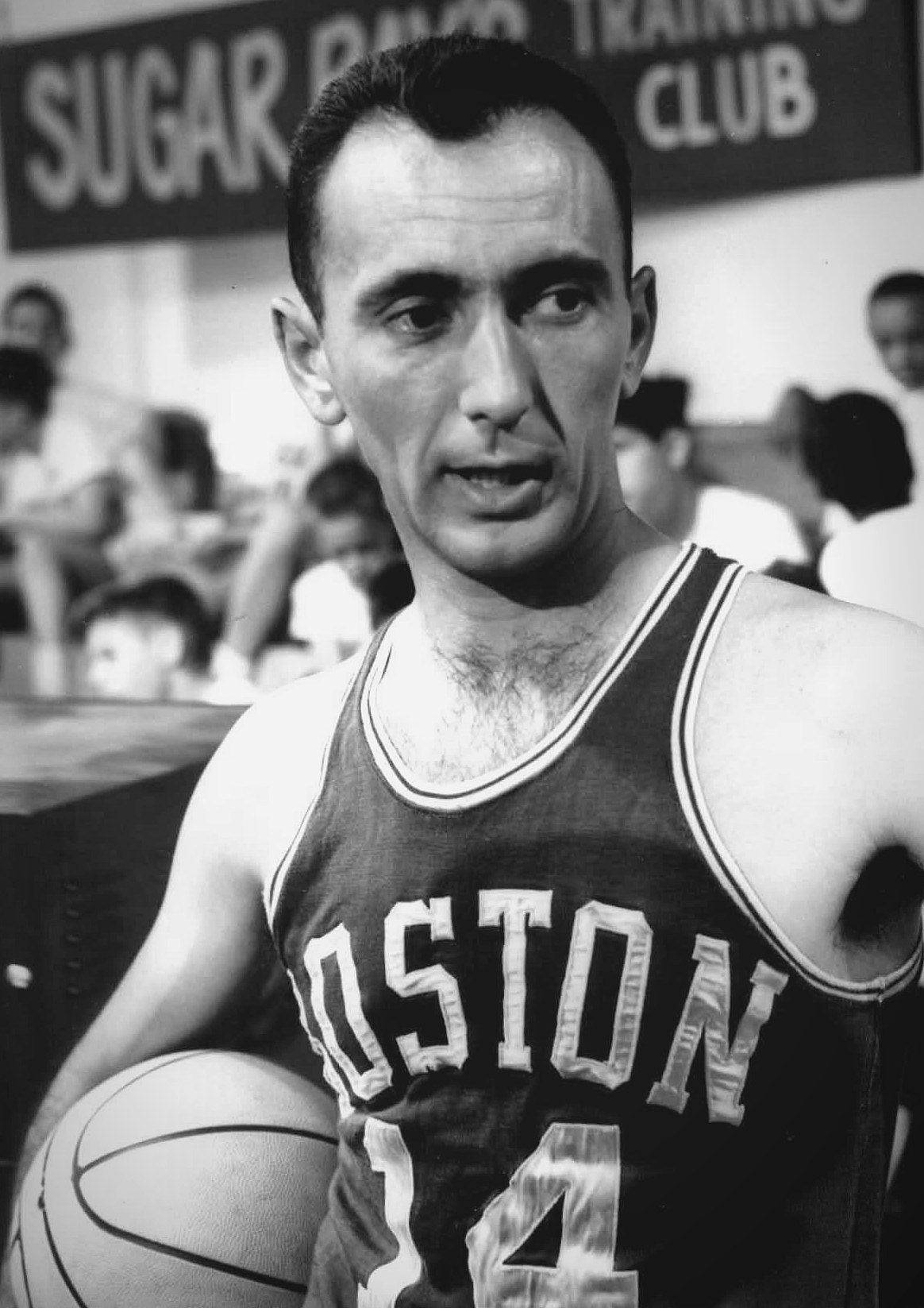
Bob Cousy is the player who invented the modern point guard. Before him, NBA backcourts were defined by two-handed set-shooters who passed when no shot was open. Cousy, a French-American kid out of Queens who taught himself to dribble left-handed after breaking his right arm in junior high, was the first NBA guard whose game was built on the dribble first and the shot second. He spent thirteen years with the Boston Celtics, won six championships, made thirteen straight All-Star teams, won the 1957 MVP, and led the league in assists eight years in a row. He is also, in his late nineties, the player who has spent the most public time of any post-retirement Celtic working through what he did not do for Bill Russell during the civil-rights battles of the 1960s.
Queens
Robert Joseph Cousy was born August 9, 1928 in New York City. His parents had emigrated from Dijon, France in the early 1920s. His father Joseph drove a taxi in Manhattan; his mother Juliette spoke very little English and ran the household in French. Bob was bilingual through age five. The family moved to St. Albans, Queens when Bob was twelve, and he attended Andrew Jackson High School.
He was cut from the Andrew Jackson basketball team three times, as a freshman, sophomore, and junior. He made varsity as a senior. The story is true and Cousy has confirmed it in every long-form interview from the 1950s onward, including a 1957 Sports Illustrated profile by Bill Furlong. In ninth grade he had broken his right arm falling out of a tree. The cast forced him to learn to dribble and shoot with his left. By the time he made varsity he was an unusual high-school player, a right-handed guard who could go either direction with the ball.
Shop Bob Cousy jersey
As an Amazon Associate we earn from qualifying purchases.
He averaged 28 points his senior year. Holy Cross, then a small Catholic school in Worcester, Massachusetts with no basketball tradition, was the only college that recruited him seriously.
Holy Cross
He arrived at Holy Cross in the fall of 1946. The team’s coach, Doggie Julian, ran an unstructured offense that suited Cousy’s instincts. Cousy was a freshman starter on the team that won the 1947 NCAA championship over Oklahoma in the title game at Madison Square Garden. He was 18 years old. He played three more years at Holy Cross under Buster Sheary, was a three-time All-American, and finished as the school’s all-time leading scorer with 1,755 points.
The 1950 NBA Draft put Cousy through one of the strangest entry processes in league history. The Tri-Cities Blackhawks, then owned by Ben Kerner, took him third overall. Cousy told the team he would not report to Moline, Illinois (Tri-Cities’ home base). The Blackhawks traded him to the Chicago Stags. The Chicago Stags folded before training camp. The league dispersed the Stags’ roster. Three remaining Stags players (Cousy, Max Zaslofsky, and Andy Phillip) were placed in a hat. Walter Brown, the owner of the Boston Celtics, drew names. He drew Cousy. Brown, who had wanted Zaslofsky, said publicly the next day that he was disappointed.
Boston
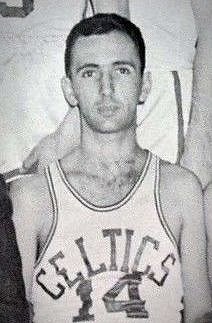
The 1950-51 Celtics, Cousy’s rookie year, finished 39-30 and made the NBA playoffs for the first time in franchise history. Cousy averaged 15.6 points and 4.9 assists, made the All-NBA Second Team, and was named the East’s All-Star starting guard. The team’s coach, Red Auerbach, had originally been one of the loudest voices against Cousy as a draft pick. Auerbach later wrote in his autobiography that he was wrong; that Cousy was, by mid-November of that rookie season, the player whose pace dictated the entire Celtics offense.
The 1950s Celtics were a high-scoring, high-tempo team that did not yet have a championship-caliber front court. Cousy averaged 18 to 21 points per game and 7 to 9 assists per game year after year. He was named the 1957 NBA Most Valuable Player at age 28, the year Bill Russell arrived in Boston midseason from his Olympic delay. The 1956-57 Celtics won the franchise’s first NBA championship, beating the St. Louis Hawks in seven in the Finals.
The dynasty followed. Boston won eight straight championships from 1959 through 1966. Cousy was on the floor for the first six of them (1957, 1959-63), then retired before the 1963-64 season. He has said in multiple later interviews that the run was, more than anything else, a Bill Russell run. His own role, he has been clear, was to be the lead ball-handler on a team whose championships were built on Russell’s defense.
The Houdini of the Hardwood
The behind-the-back dribble. The no-look pass. The hesitation move on the open floor. None of these were invented by Cousy in any literal first-ever sense; barnstorming Black players on teams like the Harlem Globetrotters and the New York Renaissance had used variations of all three for thirty years. What Cousy did was bring them into the NBA at a time when the league’s white audience and white officiating crews had viewed those moves as unsportsmanlike. He used the behind-the-back dribble in a 1953 playoff game against the Syracuse Nationals, a four-overtime Game 2 in which he scored 50 points and shot 30 free throws. The Boston Globe ran a story the next day calling him “Houdini.” The nickname stuck.
The point-guard position itself, as the contemporary NBA understands it, was rebuilt around what Cousy did between 1950 and 1963. Magic Johnson, John Stockton, Chris Paul, and Steph Curry all sit in his lineage. Cousy himself has said in interviews, including the 2018 Gary Pomerantz book The Last Pass, that he sees Magic as the closest direct descendant of his game in the post-1979 era.
Coaching
He retired after the 1962-63 season at age 34. He coached Boston College the next six years (117-38 record, four NCAA tournaments, one NIT title in 1969). The Cincinnati Royals hired him as head coach in 1969. He coached the Royals (later the Kansas City-Omaha Kings) for four seasons. He activated himself as a player in November 1969 at age 41, played seven games (averaging 0.7 points), and retired again. He went 141-209 as a head coach. He left coaching in 1974.
Late life and the Bill Russell question
Gary Pomerantz’s 2018 book The Last Pass: Cousy, Russell, the Celtics, and What Matters in the End is the closest the basketball-historical record has to a primary source on Cousy’s late-life reckoning with race. Pomerantz interviewed Cousy in his Worcester home over the course of three years. The thesis: Cousy, in his late eighties at the time of the interviews, had spent the previous twenty years trying to find a way to apologize to Russell for not standing publicly with him during the late-1960s civil-rights battles. Russell had been the target of racist threats and vandalism in Boston (his house was broken into and feces left in his bed in 1963, an incident Russell wrote about himself in his 1979 memoir Second Wind). Cousy, his teammate and the team’s white captain at the time, did not speak out publicly. He has told Pomerantz, and has repeated to interviewers since, that the silence is the regret of his life.
In November 2019 he received the Presidential Medal of Freedom at a White House ceremony presented by President Donald Trump. He has said in interviews after the ceremony that the moment he found most meaningful that day was a phone call from Russell that night.
Bill Russell died July 31, 2022. Cousy attended the memorial service in Boston that fall and spoke briefly. He was 94 years old.
The legacy
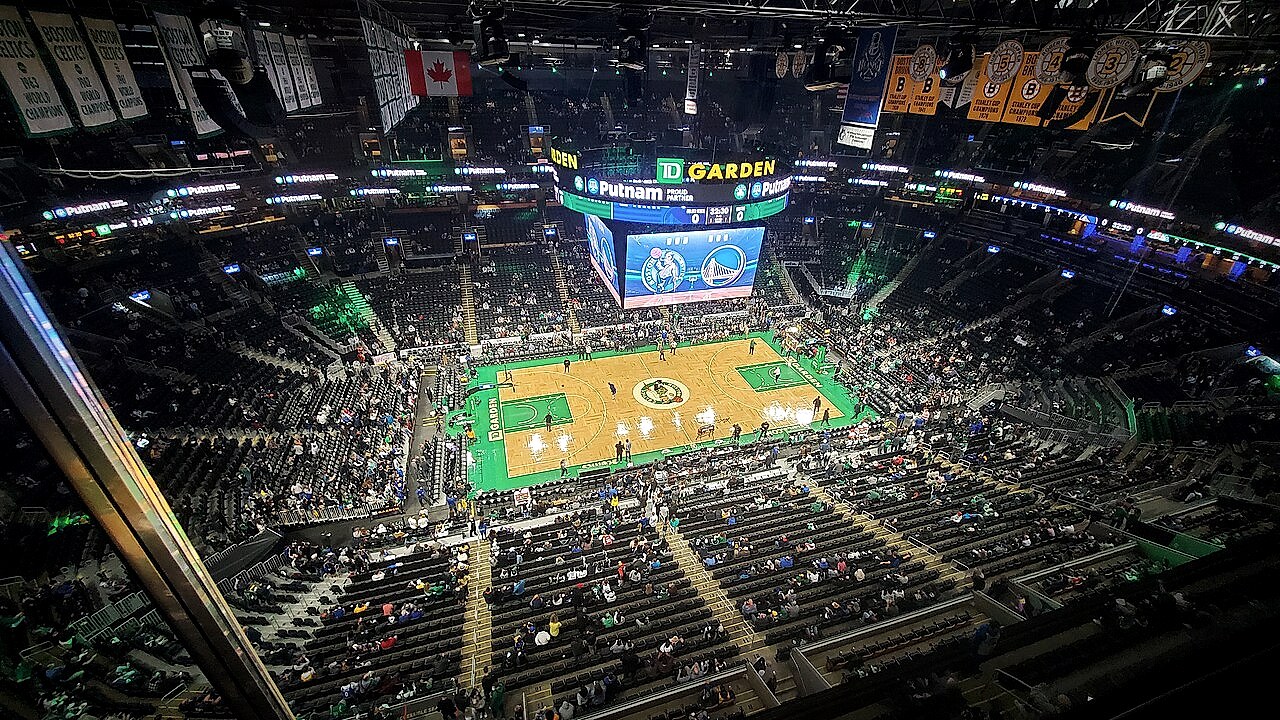
He was inducted into the Basketball Hall of Fame in 1971, four years after his retirement under the Hall’s old eligibility-window math. The Celtics retired his number 14 in 1963. The NBA named him to its 25th, 35th, 50th, and 75th Anniversary Teams. He averaged 18.4 points and 7.5 assists per game across 924 regular-season games and 18.5 and 8.6 across 109 playoff games. Six championship rings.
In the modern Win Shares and Box Plus-Minus rankings of pre-merger guards, Cousy comes out second behind only Oscar Robertson among 1950s and 1960s lead guards. The point-guard position itself, as the league’s modern offensive engine, descends in a more or less straight line from him: Cousy to Oscar Robertson to Magic Johnson to John Stockton to Steve Nash to Chris Paul to Steph Curry. No other position in NBA history can be traced as cleanly to a single player.
Cousy turned 97 on August 9, 2025. He still lives in Worcester, Massachusetts in the home he shared with his late wife Missie (Marie Ritterbusch), who died in 2013 after 63 years of marriage. He gives interviews sparingly and writes occasional letters to old teammates. He is, as of April 2026, the oldest living NBA Most Valuable Player.
Gear
Pick up Gary Pomerantz’s The Last Pass.
Sources
- Basketball-Reference: Bob Cousy.
- Gary Pomerantz, The Last Pass: Cousy, Russell, the Celtics, and What Matters in the End (Penguin Press, 2018).
- Bill Russell with Taylor Branch, Second Wind: The Memoirs of an Opinionated Man (Random House, 1979).
- Sports Illustrated, Bill Furlong, “The Houdini of the Hardwood” (March 1957).
- Boston Globe archive, March 1953 (four-overtime Cousy 50-point game vs Syracuse).
- Red Auerbach with Joe Fitzgerald, Red Auerbach: An Autobiography (Putnam, 1977).
Shop Jerseys & Fan Gear at Fanatics
As a Fanatics affiliate, we may earn a commission from qualifying purchases.
Shop on Amazon
As an Amazon Associate, we earn from qualifying purchases.
Shop Sneakers & Gear at JD Sports
We may earn a commission from qualifying purchases on JD Sports.
Sources
- Basketball-Reference: Bob Cousy
- Gary Pomerantz, The Last Pass: Cousy, Russell, the Celtics, and What Matters in the End (Penguin Press, 2018)
- Bill Russell with Taylor Branch, Second Wind: The Memoirs of an Opinionated Man (Random House, 1979)
- Sports Illustrated: "The Houdini of the Hardwood" (Bill Furlong, March 1957)
- Red Auerbach with Joe Fitzgerald, Red Auerbach: An Autobiography (Putnam, 1977)