Washington Wizards
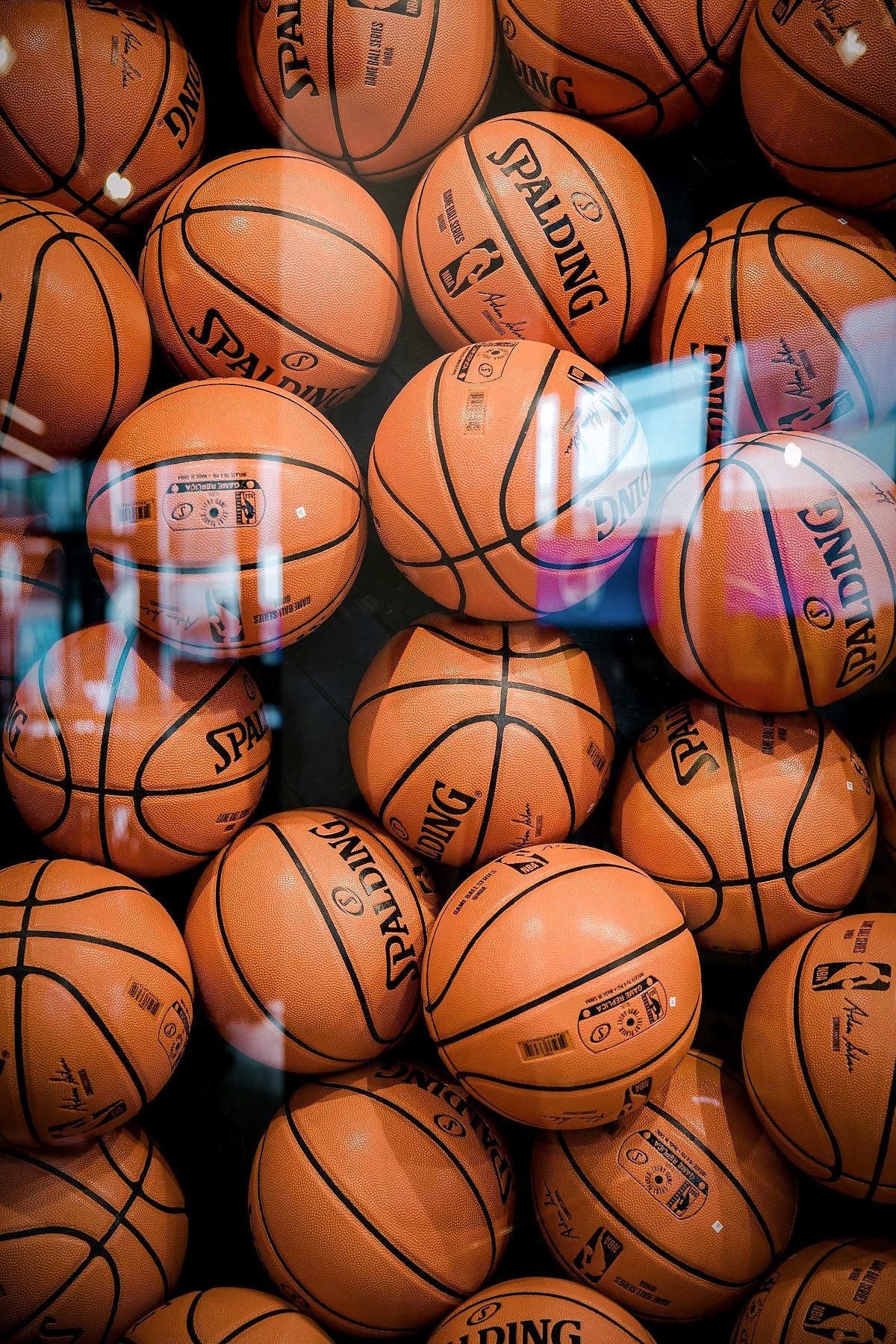
The Washington Wizards won the 1978 NBA championship under Wes Unseld, Elvin Hayes, and head coach Dick Motta. That is the franchise’s only NBA championship. The Wizards have reached four NBA Finals total (1971, 1975, 1978, 1979), all under the “Bullets” franchise name. The team has had six names in its history: Chicago Packers (1961–63), Chicago Zephyrs (1963–64), Baltimore Bullets (1964–73), Capital Bullets (1973–74), Washington Bullets (1974–97), and Washington Wizards (1997–present). The 1997 rebrand from Bullets to Wizards was ordered by owner Abe Pollin in response to Washington, D.C.’s 1990s-era gun-violence epidemic. Ownership transferred from Pollin (who owned the team from 1964 or 1968 depending on whether one counts the partial-stake period) to Ted Leonsis’s Monumental Sports & Entertainment in 2010.

The 1961 Chicago founding, and the multiple relocations
The Chicago Packers were founded in 1961 as an NBA expansion franchise, the league’s first expansion team since the BAA-NBL merger. Walter Kennedy, later NBA commissioner, was the founding general manager. The Packers drafted Walt Bellamy first overall in 1961 out of Indiana. Bellamy was Rookie of the Year with 31.6 points and 19.0 rebounds.
The franchise rebranded as the Chicago Zephyrs for the 1962–63 season. The name lasted one year before the relocation to Baltimore in 1963. The Baltimore Bullets (1964–73) made the playoffs nine times in nine seasons, reaching the Eastern Conference Finals three times (1965, 1969, 1971) and the NBA Finals once (1971, a 4–0 sweep by the Milwaukee Bucks). Earl Monroe, Wes Unseld, and Gus Johnson were the era’s core. Unseld was the 1969 Rookie of the Year and MVP (one of only two players to win both in the same season, along with Wilt Chamberlain in 1960).
Shop Washington Wizards merchandise
As an Amazon Associate we earn from qualifying purchases.
Earl Monroe, selected second overall in the 1967 draft, was the defining offensive player of that Baltimore era. He was nicknamed “Black Jesus” by Baltimore fans for his improvisational scoring. The Bullets traded Monroe to the Knicks in 1971, a move that puzzled many at the time but came as the franchise was pivoting to a Wes Unseld-centered identity. The 1970-71 Bullets went 42-40 and reached the NBA Finals, where they were swept 4-0 by the Milwaukee Bucks, who had the 22-year-old Kareem Abdul-Jabbar at center in only his second season. The series was not particularly close; Milwaukee was the best team in the league.
Gus Johnson, the forwards’ forward of that era, was the kind of player who set the physical tone before anyone had a phrase for it. He pulled rebounds with two hands and posterized people at a time when dunking was not yet a performance art. His number 25 is among the six retired by the franchise.
The franchise moved to Washington for the 1973-74 season as the Capital Bullets (using the Baltimore-adjacent arena) and adopted the Washington Bullets name in the fall of 1974.
The 1978 championship
The 1974–75 Washington Bullets reached the NBA Finals and were swept 4–0 by the Golden State Warriors. The 1977–78 team, coached by Dick Motta, had Wes Unseld at center, Elvin Hayes at forward, Bob Dandridge (acquired via free agency in 1977), and Kevin Grevey. They finished 44–38 and entered the playoffs as the three seed.
The 1978 playoff run went through Atlanta (2–0), San Antonio (4–2), Philadelphia (4–2), and Seattle in the NBA Finals. Seattle, the top Western Conference seed, took a 3–2 series lead. The Bullets won Game 6 at home and Game 7 at the Seattle Coliseum, 105–99, on the road. Unseld was Finals MVP with 9.0 points and 11.7 rebounds per game. The 1978 championship is the only major professional-team championship won by any Washington-based franchise in basketball history.
The 1978–79 Bullets reached the Finals as the rematch and lost to Seattle 4–1. The Unseld-Hayes Bullets faded by the early 1980s.
The post-championship decline, and the 1997 rebrand
The Unseld-Hayes core aged quickly after 1979. Elvin Hayes was traded back to Houston after the 1980-81 season, ending a nine-year run that had produced one championship and two Finals appearances. The early 1980s Bullets had Jeff Ruland, a physical center, and the backcourt of Jeff Malone and Darren Daye. The 1981-82 team finished 43-39 and reached the Eastern Conference semifinals, the last time a pre-Jordan-comeback Bullets team advanced past the first round.
The mid-1980s brought Manute Bol, the 7-foot-7 Sudanese center drafted in 1985. Bol blocked 397 shots in his first NBA season, a Bullets franchise record, and his partnership with the undersized Moses Malone (acquired in 1986 for Ruland) made for a strange-but-interesting front line. Neither was enough. The franchise went 39-43, 42-40, 38-44 during that stretch with no playoff depth.
The 1990s Bullets had better individual pieces: Juwan Howard (1994 draft) averaged a career-high 22.1 points and 8.1 rebounds in 1995-96. Rod Strickland at point guard averaged 17.2 points and 8.9 assists per game in 1996-97. Mitch Richmond, acquired in 1999, was a six-time All-Star coming off his Sacramento peak. They were good individual players on a middling team that could not get past the Bulls or the Knicks in the East.
On May 14, 1997, Abe Pollin announced the rebrand from Bullets to Wizards. Pollin’s stated reason was civic: he did not want the franchise to evoke the gun-violence crisis in Washington, where Pollin’s close friend Yitzhak Rabin had been assassinated in 1995. The rebrand was announced alongside the opening of the MCI Center, the new downtown arena.
The early Wizards seasons (1997–2001) produced multiple playoff misses. The team relocated its home games from the Capital Centre in Landover, Maryland (the Bullets’ home from 1973) to MCI Center in Washington, D.C.
The Michael Jordan comeback (2001–2003)
Michael Jordan joined the Wizards as president of basketball operations in January 2000. He came out of retirement for the 2001–02 and 2002–03 seasons to play for the Wizards. He averaged 22.9 points in 2001–02 and 20.0 in 2002–03. The Wizards did not make the playoffs in either season. Pollin fired Jordan from his front-office position on May 7, 2003, two weeks after Jordan’s final game. The dispute is covered in Jordan’s biography.
The John Wall and Bradley Beal era
The 2010 NBA Draft produced John Wall with the first overall pick. The 2012 NBA Draft produced Bradley Beal with the third overall pick. Wall was fast, explosive, and defensively credible at a time when fast point guards were reshaping the league. He made five All-Star teams and was genuinely in the discussion as a top-ten player from 2014 to 2017. Beal was a scorer who kept getting better each year, eventually pushing past 30 points per game.
The 2013-14 through 2017-18 Wizards made the playoffs four times, reaching the second round in 2014, 2015, and 2017, losing each time. The 2016-17 Wizards, with head coach Scott Brooks’s isolation-heavy scheme, won 49 games and beat Atlanta in six games in the first round before losing to the Celtics in seven in the second. Marcin Gortat at center and Otto Porter Jr. on the wing were solid complementary pieces. The team was good enough to be frustrating but not good enough to win a series against a contender. The 2017-18 season ended with a second-round loss to LeBron’s Cavaliers.
Wall was traded to Houston in December 2020 for Russell Westbrook. Westbrook spent one season in Washington before being traded to the Lakers in August 2021. Beal was traded to Phoenix in June 2023 for Chris Paul, Landry Shamet, and six second-round picks, ending the Wall-Beal era. Head coach Scott Brooks was fired in June 2021.
The current rebuild (2023–present)
The 2023–24 Wizards went 15–67, the worst record in franchise history since the 1999–2000 season. The 2024 NBA Draft produced Alex Sarr (2nd overall) and Bub Carrington (14th overall via trade). The 2024–25 Wizards went 18–64. The team acquired Anthony Davis in a February 2026 trade with Dallas for Kyle Kuzma and a first-round pick. The Davis acquisition shifted the franchise’s rebuild pace.

Ownership
Abe Pollin was part of a Baltimore-based ownership group that purchased the Bullets in 1964 and acquired sole majority ownership in 1968. He owned the franchise for forty-one years until his death on November 24, 2009. Ted Leonsis had been a minority owner since 1999. On June 10, 2010, the NBA approved the transfer of majority ownership to Leonsis’s Monumental Sports & Entertainment group for $551 million.
Monumental Sports owns the Wizards, the NHL’s Washington Capitals, the WNBA’s Washington Mystics, and Capital One Arena. Leonsis is the managing partner. Laurene Powell Jobs (Steve Jobs’s widow, who acquired a stake in 2017), Raul Fernandez, and Dick Patrick are minority owners. The franchise’s 2025 Forbes valuation was approximately $2.4 billion.
Retired numbers
Six jersey numbers have been retired:
- Wes Unseld (41)
- Elvin Hayes (11)
- Gus Johnson (25)
- Earl Monroe (10)
- Phil Chenier (45)
- Walt Bellamy (8)
Additionally a coaching-banner tribute exists for Wes Unseld Jr. Michael Jordan’s 23 has not been retired by Washington.
Sources
- Basketball-Reference, Washington Wizards franchise page
- The Washington Post, Wizards and Bullets beat coverage, 1978 championship through present
- Abe Pollin 1997 rebrand announcement (May 14, 1997)
- 1978 NBA Finals box scores (Bullets vs SuperSonics)
- Monumental Sports & Entertainment 2010 NBA approval documents ($551 million)
- Forbes NBA Team Valuations, 2025
Shop Official Washington Wizards Gear at Fanatics
As a Fanatics affiliate, we may earn a commission from qualifying purchases.
Shop on Amazon
As an Amazon Associate, we earn from qualifying purchases.
Shop NBA Gear at JD Sports
We may earn a commission from qualifying purchases on JD Sports.