Shai Gilgeous-Alexander and the 2025-26 MVP Season
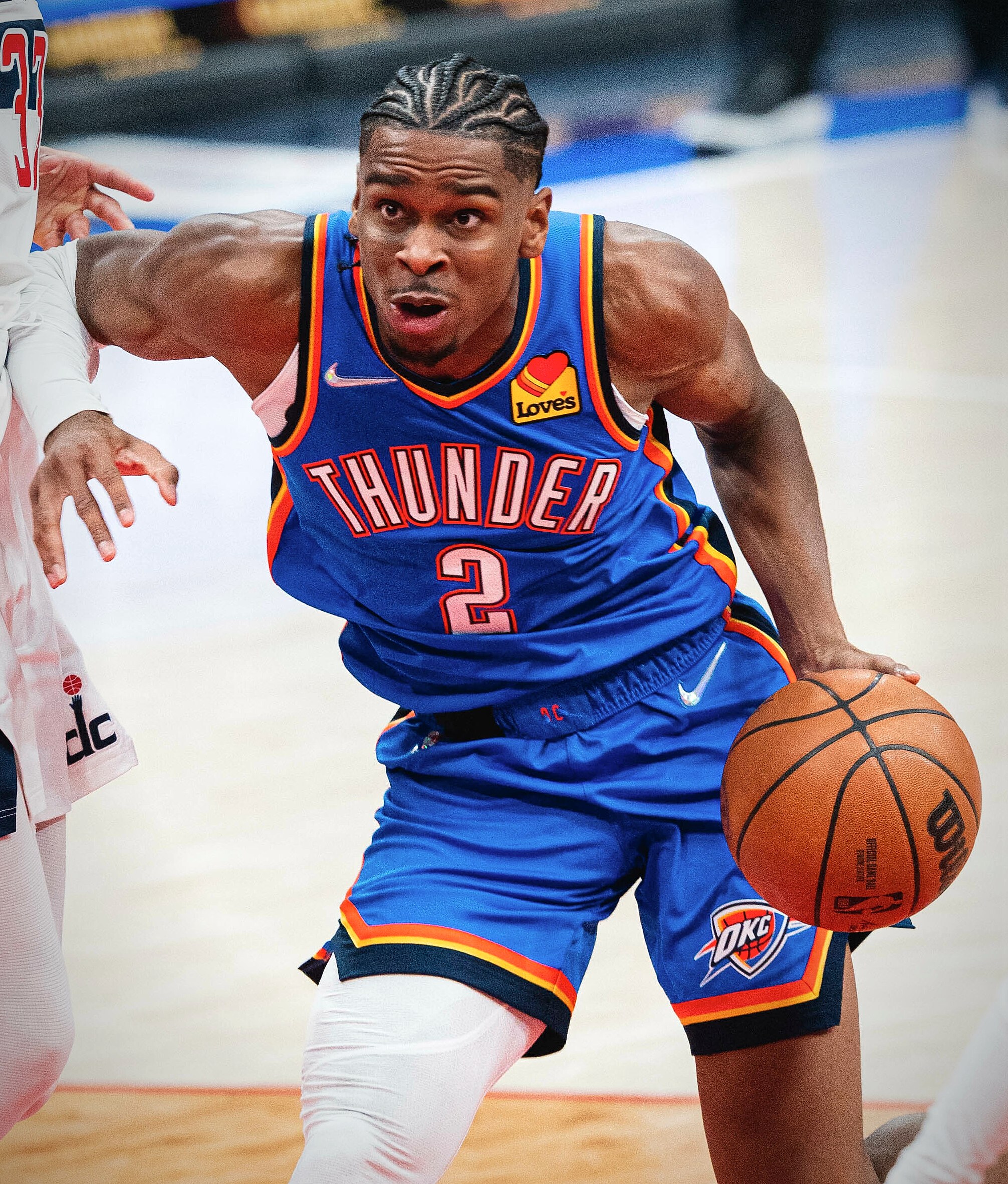
Shai Gilgeous-Alexander in 2025–26 averaged 31.1 points, 6.6 assists and 4.3 rebounds per game while shooting 55.3 percent from the field. He won the NBA Most Valuable Player Award for the second consecutive year. He broke Wilt Chamberlain’s record for most consecutive games scoring 20 or more points, a mark that had stood for more than half a century. And in the playoffs, now underway, he has continued: a career-playoff-high 42 points, 15-of-18 from the field, 11-of-12 from the free-throw line, in a first-round performance that was the single most efficient scoring game in his postseason career.
The case for Shai Gilgeous-Alexander as one of the most statistically dominant guards in NBA history doesn’t feel premature at this point. It feels like the obvious read.
The numbers
31.1 points per game is among the highest scoring averages in the league in 2025–26. The efficiency attached to it, 55 percent shooting, is what separates it from almost every other 30-point season in NBA history. Most high-volume scorers at that level either rely on free throws, on high three-point volume, or on a shot selection that produces strong totals at workable but not exceptional efficiency. SGA does none of those things in isolation. He gets to the line at a high rate, shoots from three at a respectable percentage, and also finishes at the rim at an elite clip. The combination, across 82 games, produced a season that most analysts ranked among the top five guard seasons in NBA history by efficiency.
Shop NBA Gear
As an Amazon Associate we earn from qualifying purchases.
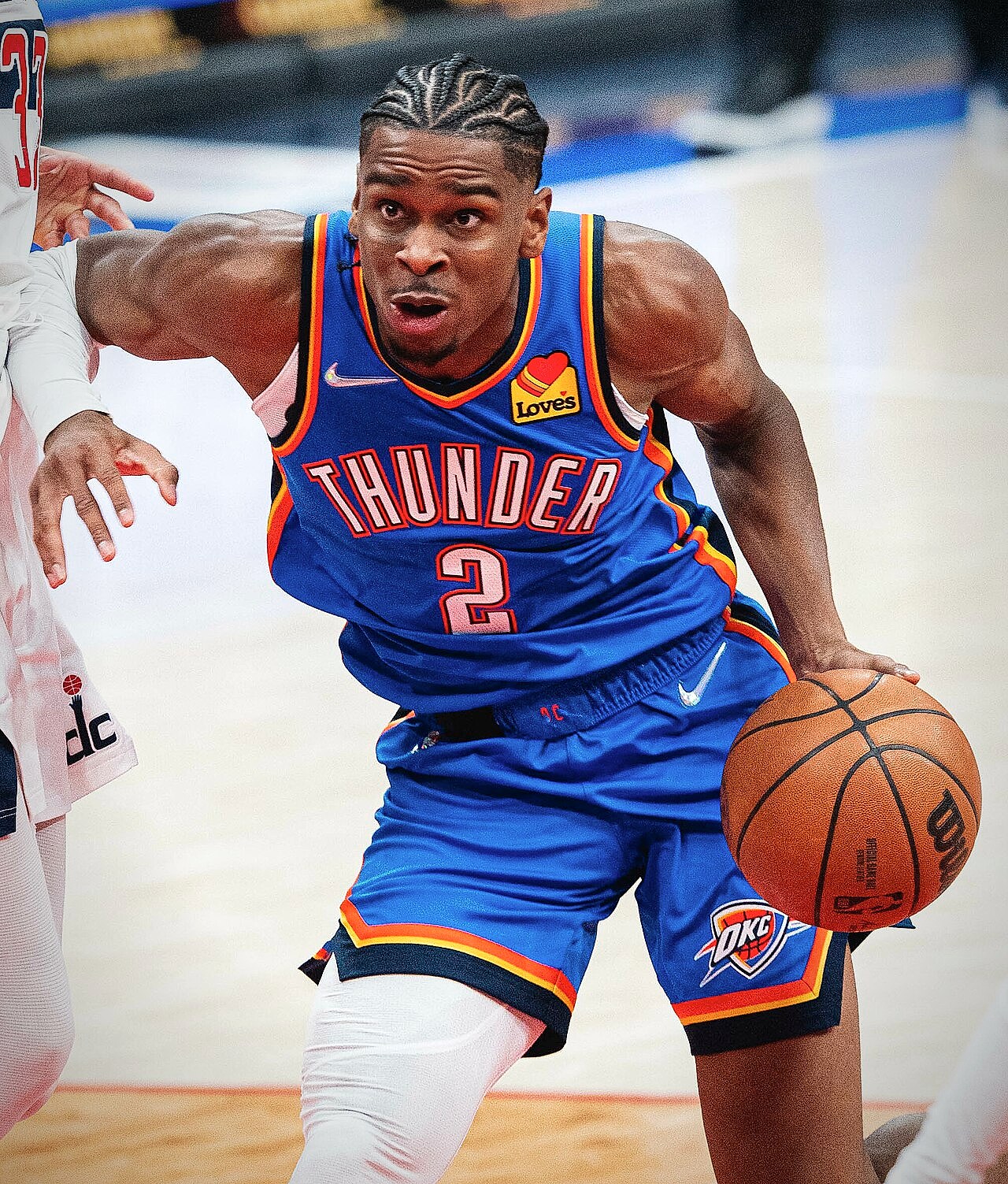
The Wilt Chamberlain consecutive 20-point game record is one of the odder records in NBA history because Chamberlain’s scoring numbers from the 1960s exist in a statistical environment that is nearly incomparable to the modern game. He averaged 50 points in 1961–62. The 20-point consecutive game streak was simply one of dozens of records he held that reflected how different the pace, the shot distribution, and the defensive attention paid to any single player was in that era. SGA’s streak, accumulated across a period where scoring 20 is harder because defenses are better and officiating favors fewer foul calls, is a legitimate achievement.
The MVP race
Five players had credible MVP cases at various points in 2025–26: SGA, Nikola Jokić, Luka Dončić, Victor Wembanyama, and, in the early months, one or two others whose seasons plateaued. By March, the race had effectively narrowed to SGA and Jokić, the same two players who have owned the award discussion for most of the past four seasons.
Jokić’s case: three previous MVPs, historically complete statistical profile, Denver in the playoff picture. He averaged 27.7 points, 12.9 rebounds and 10.7 assists, and became the first player in league history to lead the NBA in both rebounds and assists per game in the same season. Figures verified August 2026. If you are scoring by the holistic-impact standard that has governed most MVP ballots since 2020, Jokić’s case is not thin.
The reason SGA won: the Thunder had the better record. Oklahoma City spent most of the season at the top of the Western Conference standings, and the traditional “best player on the best team” framework, which the media and voters have returned to after several seasons of weighting individual efficiency more heavily, gave SGA’s candidacy the structural advantage. At 31.1 points and 55 percent on the best team in the conference, the argument for anyone else was a hard one to make.
March and the defining stretch
The reason the race closed the way it did was what SGA did in March. Five 30-point games. Three 40-point performances. A 39-minute game against Denver in which he recorded zero turnovers (not a single one across nearly the full regulation game) is the kind of line that makes statisticians look at their screens twice. He went 10-for-12 against Boston in a nationally televised late-season game that felt at the time like the closing argument.
No other player in the field could point to a comparable two-month stretch.
Oklahoma City’s season
The Thunder finished with the best record in the Western Conference. SGA was the center of everything, but the team around him contributed to the efficiency of the offense in ways that mattered. The spacing, the pace, the willingness to run early offense off turnovers: Oklahoma City in 2025–26 was what happens when a franchise builds a roster that actually fits the specific skill set of its franchise player rather than forcing the player to adapt to a preexisting scheme.
In the 2026 playoffs, the Thunder opened against the Phoenix Suns and advanced easily. They are now playing the Los Angeles Lakers in the second round. Through two games they lead 2-0. SGA scored 42 in a first-round performance and has continued at roughly the same level.
Where SGA stands historically

Back-to-back MVP awards at 27 years old. That puts him in a specific group of players who won consecutive MVPs before 30: Bill Russell, Wilt Chamberlain, Kareem Abdul-Jabbar (who won three consecutive, 1971–74), Moses Malone, Larry Bird, Magic Johnson, Michael Jordan, and LeBron James are all on the list at various points in their careers. Tim Duncan won back-to-back in 2002 and 2003. Steph Curry won both of his by 2022 but not consecutively. Nikola Jokić won in 2021, 2022 and 2024, so his three are not consecutive; Joel Embiid took the 2023 award.
SGA at 27 has two. If the Thunder contend for the next five or six years and his efficiency holds, the historical conversation gets more interesting. For now, the 2025–26 season is what it is: the best guard season in the NBA in at least a decade by efficiency, and one of the cleaner back-to-back MVP cases the league has seen since Jokić himself.
Shop NBA Gear at Fanatics
As a Fanatics affiliate, we may earn a commission from qualifying purchases.
Shop on Amazon
As an Amazon Associate, we earn from qualifying purchases.
Shop Basketball Shoes at JD Sports
We may earn a commission from qualifying purchases on JD Sports.
Sources
- Basketball-Reference, Shai Gilgeous-Alexander 2025-26 season
- Thunderous Intentions, 'Stunning stat further validates Shai Gilgeous-Alexander's MVP case' (2026)
- Heavy.com, 'Shai Gilgeous-Alexander Is Changing NBA MVP Race in Real Time' (2026)
- NBA.com, 'Thunder-Suns 2026 Playoffs Game 3 Takeaways: SGA dominates'
- StatMuse, Shai Gilgeous-Alexander 2025-26 stats
- NBA.com, 2026 NBA Most Valuable Player Award