North Carolina Tar Heels Basketball
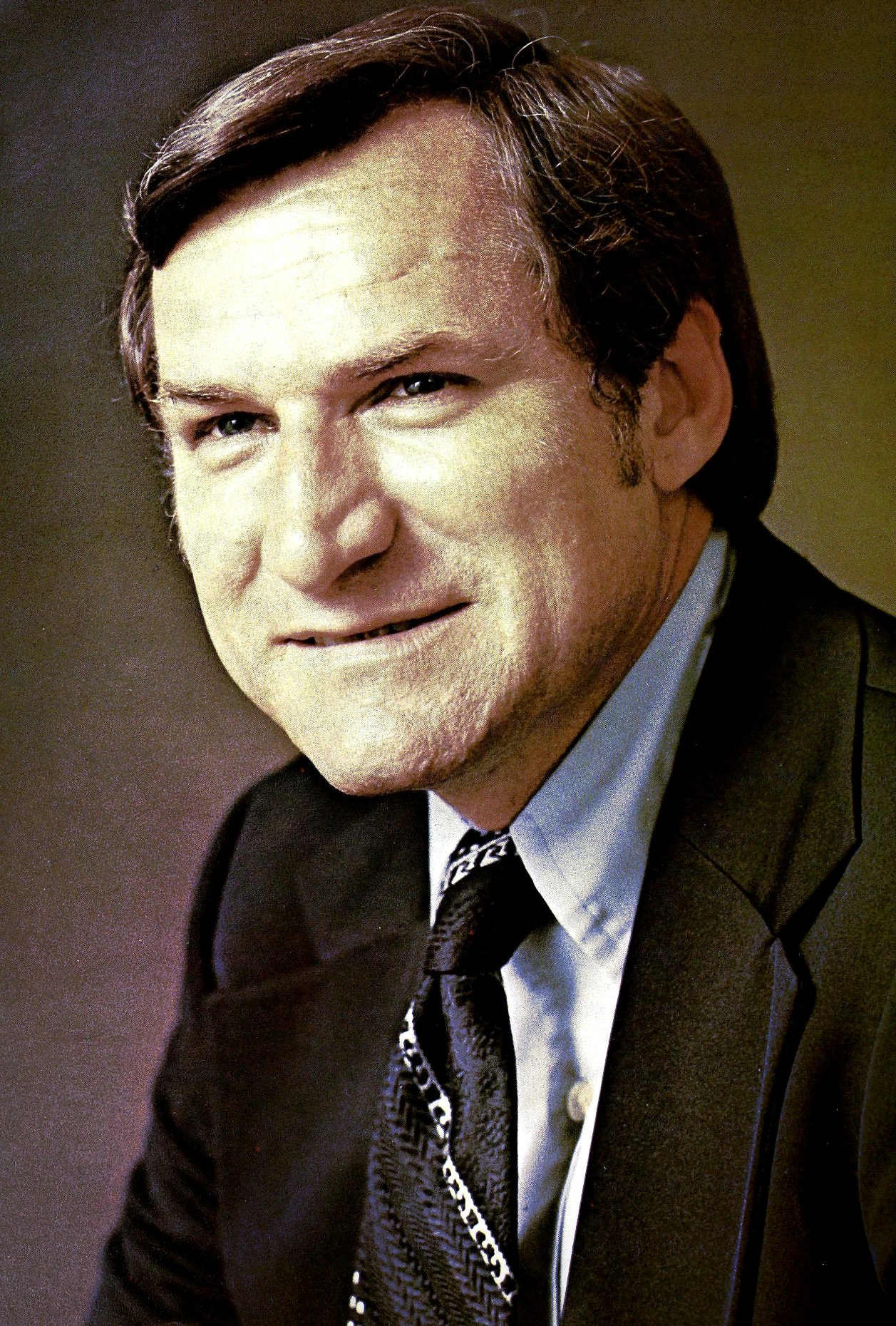
The University of North Carolina men’s basketball program has won six NCAA championships (1957, 1982, 1993, 2005, 2009, 2017), appeared in twenty-one Final Fours (second only to Kentucky among all Division I programs), and produced the single most-recognized American-born basketball player of the twentieth century. The Tar Heels play at the Dean E. Smith Center on the Chapel Hill campus. The program’s institutional identity is, more than any other single thread, the coaching lineage that runs from James Naismith at Kansas through Phog Allen to Dean Smith to Roy Williams, a three-generation line of which Kentucky and North Carolina are the two programs at either end. No other program in college basketball has a coaching tree of that shape.
Frank McGuire and the 1957 triple-overtime championship
The program’s first NCAA championship came under Frank McGuire, a New York-bred coach hired in 1952 out of St. John’s. McGuire’s 1956–57 team went 32–0, the only undefeated national champion in North Carolina basketball history. The championship came in Kansas City on March 23, 1957, in a triple-overtime win over Kansas, a team featuring sophomore Wilt Chamberlain. UNC won 54–53 on a box-and-one defensive scheme that had denied Chamberlain the ball for most of the decisive minutes. The McGuire team’s 32–0 record remains tied for the longest undefeated season by a national champion in Division I history (with the 1972–73 Indiana Hoosiers).
McGuire left for the NBA in 1961, coaching the Philadelphia Warriors for one season before returning to college basketball at South Carolina. He was replaced at UNC by his top assistant, Dean Smith.
Shop North Carolina Tar Heels merchandise
As an Amazon Associate we earn from qualifying purchases.
The Dean Smith era (1961–1997)
Dean Smith coached North Carolina for thirty-six seasons. His tenure is, by margin, the most consequential individual coaching era in program history, and by several standard accounting measures one of the three or four most consequential in NCAA basketball history overall. Smith retired in October 1997 with 879 career wins, at the time the most in Division I history; the number was surpassed by Bob Knight in 2007 and has since been passed by Mike Krzyzewski and Jim Boeheim.
Smith’s teams won two NCAA championships during his thirty-six years: 1982 (over Georgetown, 63–62, on a freshman Michael Jordan’s baseline jumper with sixteen seconds left in the Louisiana Superdome) and 1993 (over Michigan, 77–71, in the Superdome again, the game best-remembered for Michigan’s Chris Webber calling a timeout the Wolverines did not have in the final seconds). The 1982 team featured Jordan, James Worthy, and Sam Perkins; Worthy was named Final Four Most Outstanding Player.
The Smith era’s broader competitive shape is eleven Final Fours, twenty-three regular-season ACC championships, thirteen ACC tournament championships, and, from 1967 through 1997, thirty consecutive twenty-plus-win seasons. The “four-corners offense,” a deliberate-pace spread offense Smith used primarily to protect leads late in games, is the tactical innovation most closely associated with his career. The NCAA shot clock, introduced in 1985, was drafted in part as a rules-committee response to the four-corners.
Smith’s off-court contributions are, inside the program’s institutional history, treated as equally consequential. He recruited Charlie Scott, the first Black scholarship athlete at North Carolina and the first Black scholarship athlete at any Southeastern or Atlantic Coast Conference university, in 1966. The recruiting occurred in 1966–67, the year after the Texas Western vs Kentucky national championship game that had reshaped Southern basketball recruiting. Smith personally attended the 1963 March on Washington. He was among the first white coaches in the ACC to recruit Black players as a matter of explicit policy rather than occasional exception.
Bill Guthridge and the short transition (1997–2000)
Dean Smith’s long-time top assistant Bill Guthridge took over for the 1997–98 season. Guthridge coached three seasons, reached the Final Four twice (1998 and 2000), and retired in June 2000. The Guthridge seasons are the only sustained competitive dip in post-1965 UNC basketball; the short tenure itself was a deliberate handoff, not a program collapse, and Guthridge remained inside the Smith Center as an emeritus advisor after retirement.
The Matt Doherty years (2000–2003)
Matt Doherty, a former Tar Heel under Dean Smith, coached three seasons after Guthridge. The Doherty era is the one UNC avoids in program retrospective. The 2001–02 team went 8–20, the worst winning percentage in UNC men’s basketball history. Doherty was asked to resign after the 2002–03 season. The program lost scholarships, dropped out of the preseason top twenty-five for the first time since 1971, and had, by the time of the Doherty departure, become unrecognizable in the ACC standings.
The Doherty era is the one UNC’s internal historians treat as the exception that proves the point. The program’s institutional culture, which the Smith era had built around continuity and assistant-coach succession, broke under Doherty. The response was to hire back an outside product of the Smith coaching tree who had already run a program for fifteen years.
Roy Williams, 2003–2021
Roy Williams had coached Kansas for fifteen seasons (1988–2003) before Dean Smith personally called him in April 2003 to ask him to return to Chapel Hill. Williams, a UNC alumnus and a Smith graduate assistant in the 1970s, accepted. He coached the Tar Heels for eighteen seasons.
UNC won the NCAA championship under Williams in 2005 (over Illinois, 75–70), 2009 (over Michigan State, 89–72), and 2017 (over Gonzaga, 71–65). The 2009 team, which featured Tyler Hansbrough, Ty Lawson, Wayne Ellington, and Danny Green, is widely considered the most talent-loaded UNC team since the 1982 Jordan-Worthy-Perkins roster. The 2017 team, winning after a 2016 Final Four loss to Villanova on Kris Jenkins’s last-second three, was coached by Williams at a specific career peak. The 2016 and 2017 runs back-to-back produced an atmosphere inside the program that Williams has described, in his 2017 press conference, as the most personally meaningful of his career.
Williams retired on April 1, 2021. His career record at UNC was 485–163. His combined Kansas-plus-UNC total of 903 wins ranks among the top ten in Division I history. Williams is the only head coach to have taken two separate programs to the Final Four in each of his first four seasons at each program.
The NCAA academic-fraud investigation, 2011–2017
The Wainstein Report, an independent investigation commissioned by the university and released in October 2014, found that UNC had operated, from 1993 to 2011, a series of “paper classes” in the African and Afro-American Studies department in which student-athletes and non-athlete students alike received credit for courses with no regular instruction. The NCAA opened a formal infractions case in 2015. In October 2017 the NCAA ruled that the paper-class scheme, while a violation of academic standards, did not violate NCAA athletic rules because the courses had been available to non-athlete students on the same terms.
The ruling was controversial. It did not vacate any UNC wins or championships. It produced no scholarship penalties. The institutional position inside UNC basketball has been that the finding confirmed the program’s compliance with the letter of NCAA regulations; the broader academic-integrity questions remain, and the university’s university-level response over the 2015–2019 period included tightened academic-advising protocols and the closure of several cross-listed paper-course sections. The 2005, 2009, and 2017 championships remain on the books, which is the specific institutional fact the ruling produced.
Hubert Davis, 2021–present
Hubert Davis, a Tar Heel player (1988–92) and twelve-year Williams assistant, took over for the 2021–22 season. His first season reached the NCAA championship game, losing to Kansas 72–69 after leading by as much as fifteen in the second half. The 2022 Final Four run was the program’s eighth in a fifteen-year window, the highest rate in college basketball during that period.
Davis’s first three seasons produced one Final Four, one tournament first-round exit (2023), and one second-round exit (2024). The 2024–25 season, his fourth, is his third in a Name-Image-Likeness era that Davis has described, in multiple interviews, as the largest structural change to college basketball since the 1951 scandal. The program’s internal roster-construction strategy has been, under Davis, a balance between the Williams-era continuity of recruiting talented freshmen and the NIL-era necessity of retaining upperclassmen via collective pay.
The Duke rivalry
The Duke-UNC rivalry, contested twice per regular season since the two programs joined the ACC in 1953, is the most-played college basketball rivalry in Division I. The teams have met 254 times through the 2024–25 season; UNC leads the series 144–110. The rivalry’s most consequential games have typically been regular-season meetings rather than postseason matchups, with three NCAA tournament meetings of note: the 1991 East Regional Final (Duke 87, UNC 77, Duke eventually won the national championship), the 2022 Final Four semifinal (UNC 81, Duke 77, in Mike Krzyzewski’s final career game), and the 2025 Sweet Sixteen (UNC won).
The 2022 Final Four game ended Krzyzewski’s career, a specific sentence the rivalry’s collective memory has anchored to. Davis, in his post-game comments, said the game was “the most personally meaningful game I will ever coach.” The Duke program’s head-coaching transition from Krzyzewski to Jon Scheyer has, as of the 2024–25 season, produced competitive balance approximately equivalent to the 2010–2021 Krzyzewski-Williams cycle.
The Naismith coaching lineage
Dean Smith played under Forrest “Phog” Allen at Kansas from 1949 to 1953. Allen had been coached by James Naismith at Kansas in the early 1900s. That two-step lineage, Naismith to Allen to Smith, is the shortest coaching connection between North Carolina basketball and the sport’s inventor. Roy Williams, who played under Smith at UNC, is one additional step (Naismith to Allen to Smith to Williams). Hubert Davis, who played under Smith, extends the line by another step.
The only other program in college basketball with a direct two-step Naismith lineage is Kansas itself. The two programs, Kansas and North Carolina, have played each other in four NCAA championship games (1957, 1991, 2008, 2022), with UNC winning in 1957 and 1993 (as a non-Duke team) and Kansas winning in 2008 and 2022. No other pair of programs has met in four NCAA championship games.
Michael Jordan, James Worthy, and the NBA pipeline
Michael Jordan played at UNC from 1981 to 1984 and is the single most-cited recruiting-and-development case in the program’s history. His 1981–82 freshman year produced the 1982 national championship and the last-second shot over Georgetown’s Fred Brown that he has referenced as the defining moment of his early career. Jordan’s 1984 NBA Draft was the event that shifted college basketball’s scouting calendar forward; before Jordan, the common practice was four-year college careers, with early entry to the NBA draft uncommon. After Jordan, early departures became normal.
Other UNC alumni in the NBA: James Worthy (1982 NBA Draft, number one overall to the Lakers, three championships with the 1980s Lakers, 1988 Finals MVP), Sam Perkins, Bobby Jones, Kenny Smith, Rick Fox, Jerry Stackhouse, Rasheed Wallace, Vince Carter, Antawn Jamison, Ty Lawson, Danny Green, Wayne Ellington, Tyler Hansbrough, Marvin Williams, Harrison Barnes, Cole Anthony, Day’Ron Sharpe, and, in the 2024 class, Harrison Ingram and RJ Davis.
Gear
Browse The Book of Basketball for the NBA careers that started in Chapel Hill.
The Book of Basketball on Amazon →
Sources
- University of North Carolina Athletics, men’s basketball records and media guide (2024–25)
- NCAA men’s basketball tournament results, all UNC championship games (1957, 1982, 1993, 2005, 2009, 2017)
- Wainstein Report, “Independent Report on the UNC–Chapel Hill Academic Fraud Case” (October 2014)
- NCAA Division I Committee on Infractions public decision, October 13, 2017 (UNC case resolution)
- Art Chansky, Dean’s Domain: The Inside Story of Dean Smith and His College Basketball Empire (Longstreet Press, 1999)
- John Feinstein, A March to Madness (Little, Brown, 1998)
- UNC head-coaching tenure records (McGuire, Smith, Guthridge, Doherty, Williams, Davis)
- Kansas vs North Carolina NCAA championship game box scores (1957, 2008, 2022)
Shop NBA Gear at Fanatics
As a Fanatics affiliate, we may earn a commission from qualifying purchases.
Shop on Amazon
As an Amazon Associate, we earn from qualifying purchases.
Shop Basketball Shoes at JD Sports
We may earn a commission from qualifying purchases on JD Sports.