The Israeli Basketball Premier League
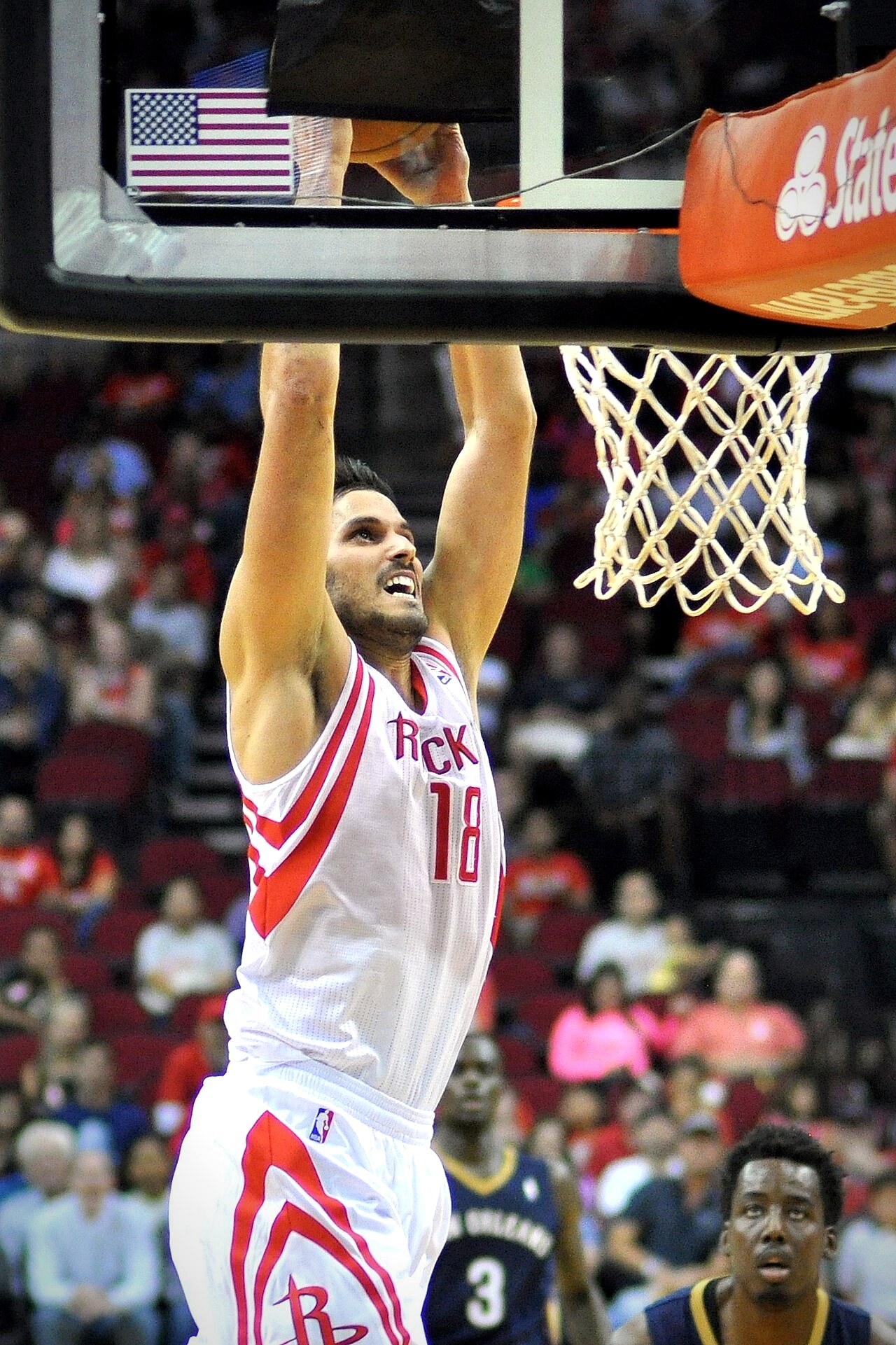
The Israeli Basketball Premier League, locally known as Ligat Ha’Al (literally “the Top League”), is the highest tier of Israeli men’s professional basketball. It was founded in 1953 as Israel’s first national-level club competition and has operated continuously since, with variations in the naming convention depending on whichever Israeli corporate sponsor holds the current title-rights deal. Across the league’s seventy-plus seasons, Maccabi Tel Aviv has won more than fifty championships; six EuroLeague titles; and produced, along with Hapoel Jerusalem and Bnei HaSharon, most of the league’s direct two-way NBA talent flow. The league is a smaller professional league than the top European circuits by revenue, attendance, and overall roster depth, but it is a high-intensity one, widely recognized by NBA scouting departments as a useful showcase for American perimeter players looking to return to the league.
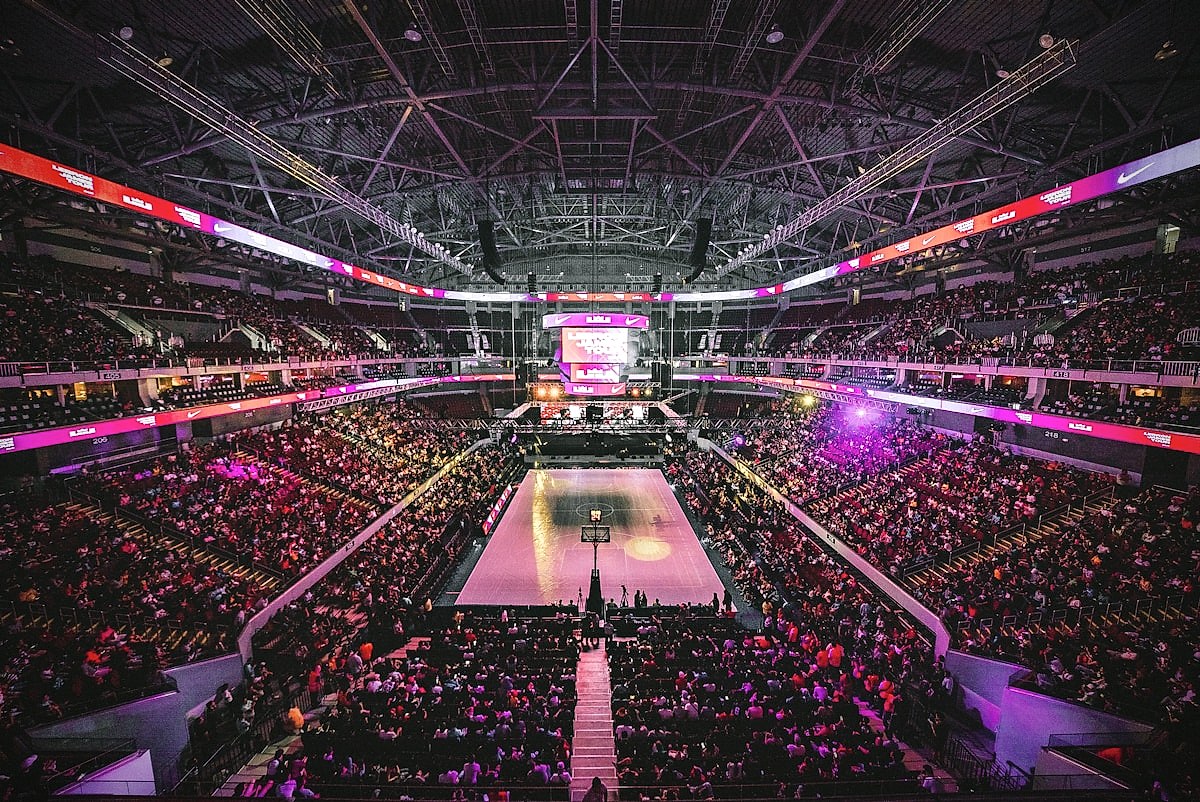
Founding and the Winner League / Premier League naming
The league began play in the 1953–54 season as a single-division national championship. The founding member clubs were eight, all based in Tel Aviv, Haifa, and Jerusalem, with Maccabi Tel Aviv the earliest dominant club. Through the league’s first three decades it operated as an amateur-to-semi-professional competition; full professionalization came in 1992 with the introduction of formal player-contract requirements and the Israel Basketball Association’s restructuring of foreign-import rules.
The league’s modern sponsor-naming history has shifted repeatedly. From 1999 to 2010 it was the “Ligat Ha’Al” without a corporate prefix. From 2010 to 2015 it was the “Winner League,” sponsored by the Israel Winner sports-lottery agency. Since 2015 it has been the “Israeli Basketball Premier League,” the name used in English-language coverage and on EuroLeague and FIBA documentation. The Hebrew “Ligat Ha’Al” remains the local name throughout.
Shop NBA Gear
As an Amazon Associate we earn from qualifying purchases.
Maccabi Tel Aviv’s dominance and EuroLeague titles
Maccabi Tel Aviv has won the Israeli championship in more than fifty of the league’s seventy-plus seasons, an unbroken domestic dominance with almost no precedent in European basketball. The non-Maccabi champions of record are a short list: Hapoel Tel Aviv (multiple early-league titles), Hapoel Jerusalem (champion in 2015, 2017, 2019, and 2022), Ironi Nahariya, and Hapoel Holon, along with a scattering of short-dynasty seasons.
Maccabi’s EuroLeague record is the one that matters for the league’s international profile. Six EuroLeague titles, in 1977, 1981, 2001, 2004, 2005, and 2014, place the club third on the all-time EuroLeague title count (behind Real Madrid’s record eleven and CSKA Moscow’s eight). The 1977 final, in which Maccabi beat the Italian club Mobilgirgi Varese 78–77 in Belgrade, is the single most-cited competitive result in Israeli basketball history; it was the first major international club trophy won by an Israeli team in any sport.
The 2014 title, a 98–86 overtime win over Real Madrid in the Milan final, is notable for being won with a heavily American-tilted roster (Tyrese Rice, David Blu, Devin Smith) and a head coach, David Blatt, who would be hired the following month as head coach of the Cleveland Cavaliers, where he coached LeBron James to a 2015 Finals appearance before being fired mid-season in January 2016.
Hapoel Jerusalem and the second-tier clubs
Hapoel Jerusalem is the strongest sustained challenger to Maccabi in recent league history. The club won its first Israeli championship in 2015 under coach Brad Greenberg, breaking Maccabi’s thirteen-year domestic monopoly, and has won additional titles in 2017, 2019, and 2022. Hapoel won the EuroCup, Europe’s secondary continental club competition, in 2004. Its home arena is Pais Arena in southern Jerusalem, capacity approximately 11,500.
The other traditional top-tier clubs are Hapoel Tel Aviv (founded 1934, best known to American audiences for hosting Tel Aviv’s alternative to Maccabi), Hapoel Holon (based in a working-class southern Tel Aviv suburb, occasional upstart contender), Ironi Nahariya (northern Israel, financial instability but producer of several national-team players), Bnei HaSharon (based in central Israel, known to English-language readers as the 2010 team that signed P. J. Tucker), and Galil Elyon (northern Israel, champion in 1993).
The NBA pipeline, outbound and inbound
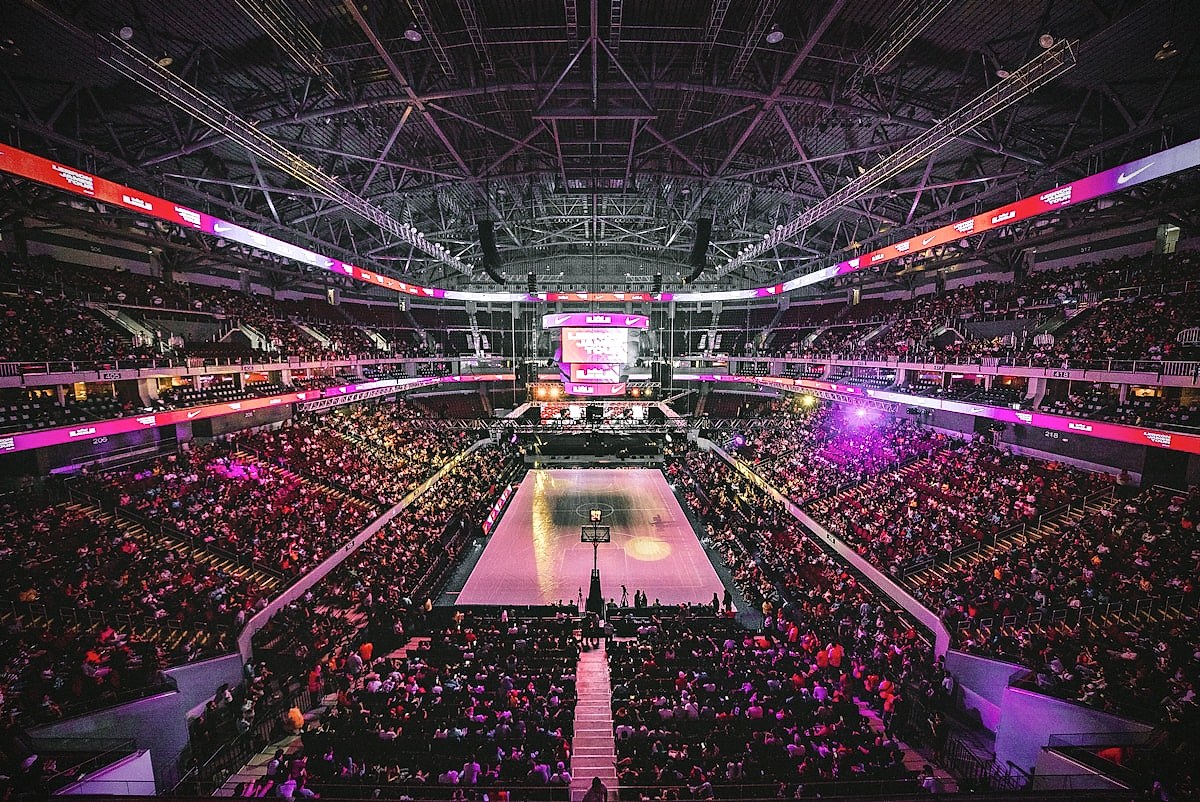
The Israeli-born NBA talent pipeline is short but includes two significant players. Omri Casspi, drafted 23rd overall by the Sacramento Kings in 2009, was the first Israeli-born player to play in the NBA; he played ten NBA seasons across seven franchises. Deni Avdija, drafted 9th overall by the Washington Wizards in 2020, is the second; he signed a four-year contract extension with the Portland Trail Blazers in 2024 and is the highest-drafted Israeli-born player in NBA history.
The inbound pipeline, American players using an Israeli-league season as an NBA-return showcase, is broader and more structurally significant. Anthony Parker is the prototype: an undrafted shooting guard out of Bradley University, Parker signed with Maccabi Tel Aviv in 2002, won three EuroLeague MVP awards, and returned to the NBA with the Toronto Raptors in 2006 at age thirty-one. He played five more seasons in the NBA, all with Toronto or Cleveland.
P. J. Tucker’s 2010 signing with Bnei HaSharon is the other much-cited case. Tucker, who had been out of the NBA since a short 2006–07 stint with Toronto, signed with Bnei HaSharon on a short-term contract in March 2010, then moved through Ukraine, Greece, and Germany (his Brose Bamberg BBL run in 2011–12) before signing with the Phoenix Suns in July 2012. The full Tucker story is here; the Bnei HaSharon chapter was the first step of the five-country journey that returned him to the NBA.
Other American players who used the Israeli league as an NBA return showcase include Carlos Arroyo, Aaron Jackson, Quincy Douby, Ty Lawson (short 2019 stint with Maccabi), and, more recently, Lorenzo Brown and Scottie Wilbekin, both of whom played full Israeli seasons before returning to NBA camps.
The EuroLeague-EuroCup-BCL competitive structure
Israeli clubs compete in European club competition at three levels. Maccabi Tel Aviv has held a fixed EuroLeague “A-license” slot since 2000, meaning it is guaranteed a regular-season place regardless of the previous season’s result. Hapoel Jerusalem, Hapoel Tel Aviv, and, more recently, Hapoel Holon have competed in the EuroCup (Europe’s secondary tournament) and in the Basketball Champions League (the FIBA-organized third tier).
Since the October 2023 outbreak of the Israel-Hamas war, Israeli clubs have played their EuroLeague and EuroCup home games at neutral venues outside Israel, most commonly in Belgrade, Istanbul, and Sofia. The security situation has been a recurring topic of EuroLeague scheduling meetings through the 2023–24 and 2024–25 seasons. The Israeli Basketball Association and the EuroLeague have negotiated specific force-majeure protocols for home-game relocation that will likely remain in place as long as the security situation requires.
League format and current structure
The Israeli Basketball Premier League has twelve clubs in the current season. The regular season runs from October through May in a double round-robin (22 games per club). The top eight finishers enter a playoff bracket in June, with best-of-three quarterfinals, best-of-three semifinals, and a best-of-three final. The bottom two clubs are relegated to the second-tier Liga Leumit, replaced by the top two from Leumit.
Foreign-player roster limits have been a recurring regulatory topic. As of the 2024–25 season, Israeli clubs may roster up to seven foreign (non-Israeli-citizen) players per twelve-man active roster, with five of the seven allowed to dress for any given game. The rule has been adjusted multiple times since 1992 in response to Israeli Basketball Association pressure to protect homegrown player development.
National-team context and the 2024 Olympic qualification
The Israeli senior men’s national team has qualified for the EuroBasket tournament in most cycles since 1953 but has never reached the final. The best recent finishes are a semifinal appearance at EuroBasket 1979, bronze medals at the 1967 and 1973 Mediterranean Games, and a 2013 EuroBasket qualification in which the team reached the second round. The 2020 Tokyo Olympics qualification via Victoria qualifying tournament was the team’s most competitive recent international performance (the team finished the qualifier 3–2, with wins over Germany and the Czech Republic).
The national-team roster is typically 70–80 percent Maccabi Tel Aviv and Hapoel Jerusalem alumni, with the balance filled by European-based Israeli-born players and, since 2009, by the two Israeli NBA players (Casspi, Avdija). The Avdija era, 2020 onward, has shifted the roster balance toward NBA-experience leadership, and the 2025 EuroBasket qualifying cycle reflects that change.
Gear
Grab a card blaster to collect the international players who came through the Israeli Premier League.
Panini NBA card blaster on Amazon →
Sources
- Ligat Ha’Al / Israeli Basketball Premier League, official site (historical champions list, current format)
- Maccabi Tel Aviv B.C. club history (EuroLeague titles 1977, 1981, 2001, 2004, 2005, 2014)
- Hapoel Jerusalem club history (2004 EuroCup title, 2015 and 2017 and 2019 and 2022 domestic titles)
- EuroLeague Basketball, all-time title ledger and A-license roster
- Israel Basketball Association, roster-limit regulations 1992–present
- Anthony Parker career summary, Basketball-Reference (Maccabi 2002–06, NBA return 2006–2011)
- P. J. Tucker / Bnei HaSharon, March 2010 contract announcement (Israeli Basketball Association archive)
Shop NBA Gear at Fanatics
As a Fanatics affiliate, we may earn a commission from qualifying purchases.
Shop on Amazon
As an Amazon Associate, we earn from qualifying purchases.
Shop Basketball Footwear at JD Sports
We may earn a commission from qualifying purchases on JD Sports.