P. J. Tucker
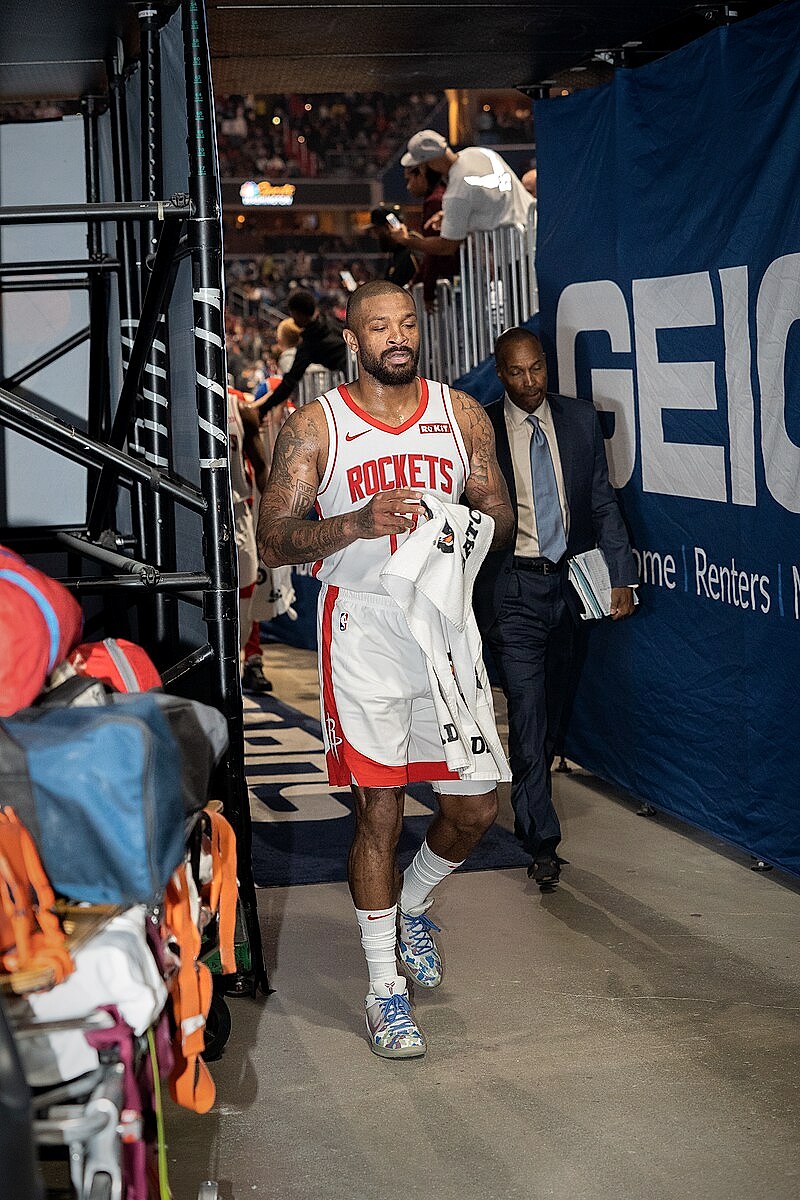
P. J. Tucker’s NBA career is one of the stranger success stories of the last twenty years. Picked thirty-fifth overall by Toronto in 2006, he played seventeen games, got cut, spent the next five seasons playing professional basketball in Israel, Ukraine, Greece, Italy, and Germany, and came back in 2012 on a veteran-minimum deal with the Phoenix Suns. No American player, before or since, has turned that specific five-countries-in-five-years résumé into a long-term NBA contract, let alone into a championship ring. What follows is how he did it, and why the player who showed up in Phoenix at age twenty-seven looked nothing like the one Toronto had waived.
Raleigh, Enloe, and the Texas Longhorns
He was born May 5, 1985 in Raleigh, North Carolina. At Enloe High School he was tall but not obviously college-bound, a decent-scoring forward who rebounded out of his position because there was no one in the program taller to do it. By the time Texas’s Rick Barnes called, he had added five inches of real height and was playing a kind of roving small-five on the AAU circuit. Barnes recruited him as a four.
At Texas he did the undersized-power-forward things the position asks a Big 12 kid to do. Junior year, 2005–06, he averaged 16.1 points and 9.0 rebounds a night for a thirty-win Texas team that went to the Elite Eight, and was named Big 12 Player of the Year ahead of teammate LaMarcus Aldridge, who would go second overall the following June. Tucker, listed at the same six-foot-six and with a similar per-game line, fell thirty-three picks further in the same draft. The scouting gap, and it was not a small one, was on what NBA-position they thought he would play.
Shop P. J. Tucker jersey
As an Amazon Associate we earn from qualifying purchases.
The Toronto Raptors and the 17-game rookie year
Toronto picked him at thirty-five. The fit was almost wrong on the day. The Raptors were rebuilding around Chris Bosh, had just used the first overall pick on Andrea Bargnani, and did not have a clear position-minute bucket for an undersized combo forward on a rookie deal who was not yet a real three-point shooter. He played seventeen games, averaged 1.8 points a night, spent most of the year with the Colorado 14ers of the NBA D-League, and was waived before his second training camp. The rest of the league, offered the chance to pick him up on waivers, passed.
Five seasons, five countries
What happened next is covered in full on his international-journey page, a longer look at the overseas years, but the short version matters here too, because the player who came back was not the one who left.
- Israel, 2007–08, signed with Hapoel Holon of the Israeli Basketball Premier League. Named league MVP as a rookie import.
- Ukraine, 2008–09, BC Donetsk. Rebounded out of his position, averaged in the low teens in points.
- Greece and Italy, 2009–10, Aris B.C. in Thessaloniki, plus a short Lega Basket run with Benetton Treviso.
- Israel again, March 2010, the Bnei HaSharon signing, the contract that finished the Israeli season on a club base north of Tel Aviv and which is the line of his résumé that contemporary English-language sources specifically confirmed.
- Germany, 2011–12, Brose Bamberg of the BBL. Averaged 12.9 / 7.2 / 3.0 and won both the BBL championship and the BBL Most Valuable Player award, the credential that finally dragged NBA general managers back to his tape.
Six years, five leagues, two MVPs in two different countries. That is the package Phoenix signed in July 2012.
Phoenix and the role-player identity (2012–2017)
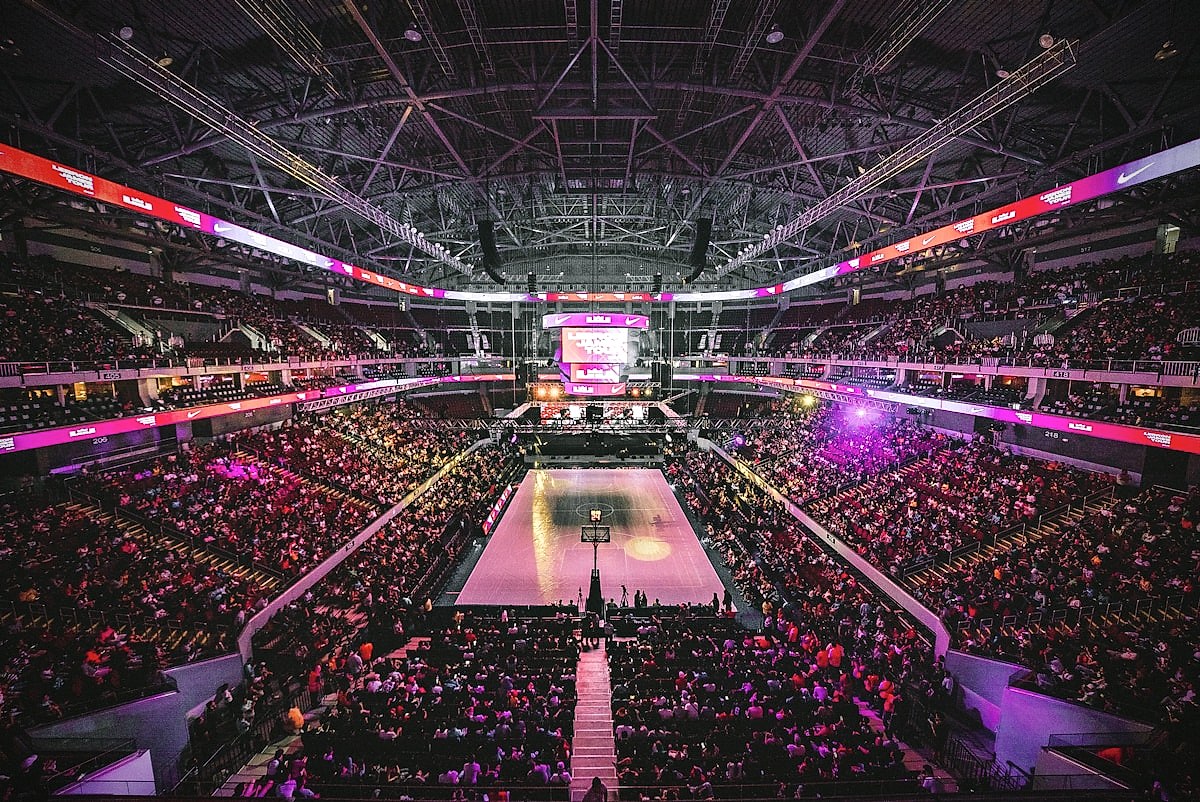
The Suns gave him the veteran minimum. What he gave back over the next five seasons is the reason the rest of the league paid attention. Phoenix played him at three positions and occasionally four, used him as the nominal point of attack against opposing wings, and slowly turned him into a reliable corner shooter, the part of his game no one had bothered to ask about when he was twenty. His second Phoenix season (2013–14), he started seventy-five games for a 48–34 Suns team that missed the playoffs by a single game in what was, at the time, a Western Conference brick wall. He was twenty-nine years old and had the first fully guaranteed NBA contract of his life.
Phoenix traded him back to Toronto in February 2017. Ten years, almost to the week, since the Raptors had waived him the first time.
Houston, the Harden era, and a playoff identity (2017–2021)
Houston signed him in July 2017 on a four-year, $32 million contract, the first substantial NBA deal he ever earned. In four seasons there he was the on-ball defender the James Harden / Chris Paul / Russell Westbrook Rockets could hide no one else on, guarding point guards and bigs over the same forty-eight minutes on a regular basis, living in the left corner on offense, and functioning, not incidentally, as the personality hinge of a locker room that did not always have one. Houston reached the 2018 Western Conference Finals, losing a series to Golden State that is still cited as the closest any team came to that dynasty.
The 2021 Milwaukee championship
Milwaukee traded for him at the March 2021 deadline. The Bucks, who had been a 1-seed the previous two regular seasons but had lost in the second round each time, were specifically looking for a playoff-reliable power forward who could defend up and down positions. Tucker got the job.
Milwaukee’s title run asked him to defend, in sequence, Miami’s Jimmy Butler (first round), Brooklyn’s Kevin Durant in the Kyrie-Irving-less final four games of that series (second round), Atlanta’s Trae Young in a pick-and-roll series where switching was the whole strategy (Eastern Conference Finals), and Phoenix’s Devin Booker and Jae Crowder across a six-game Finals that closed out against his old franchise on July 20, 2021. He played heavy minutes every series. The championship ring he received that fall was the first, and to date only, of his career.
Miami, Philadelphia, and the later years
Miami signed him that summer on a two-year contract. He started seventy-one games for a 53-win Heat team that reached the 2022 Eastern Conference Finals and took a seventh game off Boston. Philadelphia, reuniting him with James Harden, signed him to a three-year deal in the summer of 2022. The Philadelphia run ended with a trade to the Clippers in the winter of 2023–24 and another mid-season move after that. In all three cities the assignment remained the one Houston had written down: guard the opposing team’s best wing scorer, hit the corner three when offered, and set the physical tone.
The sneakers, and a second public identity
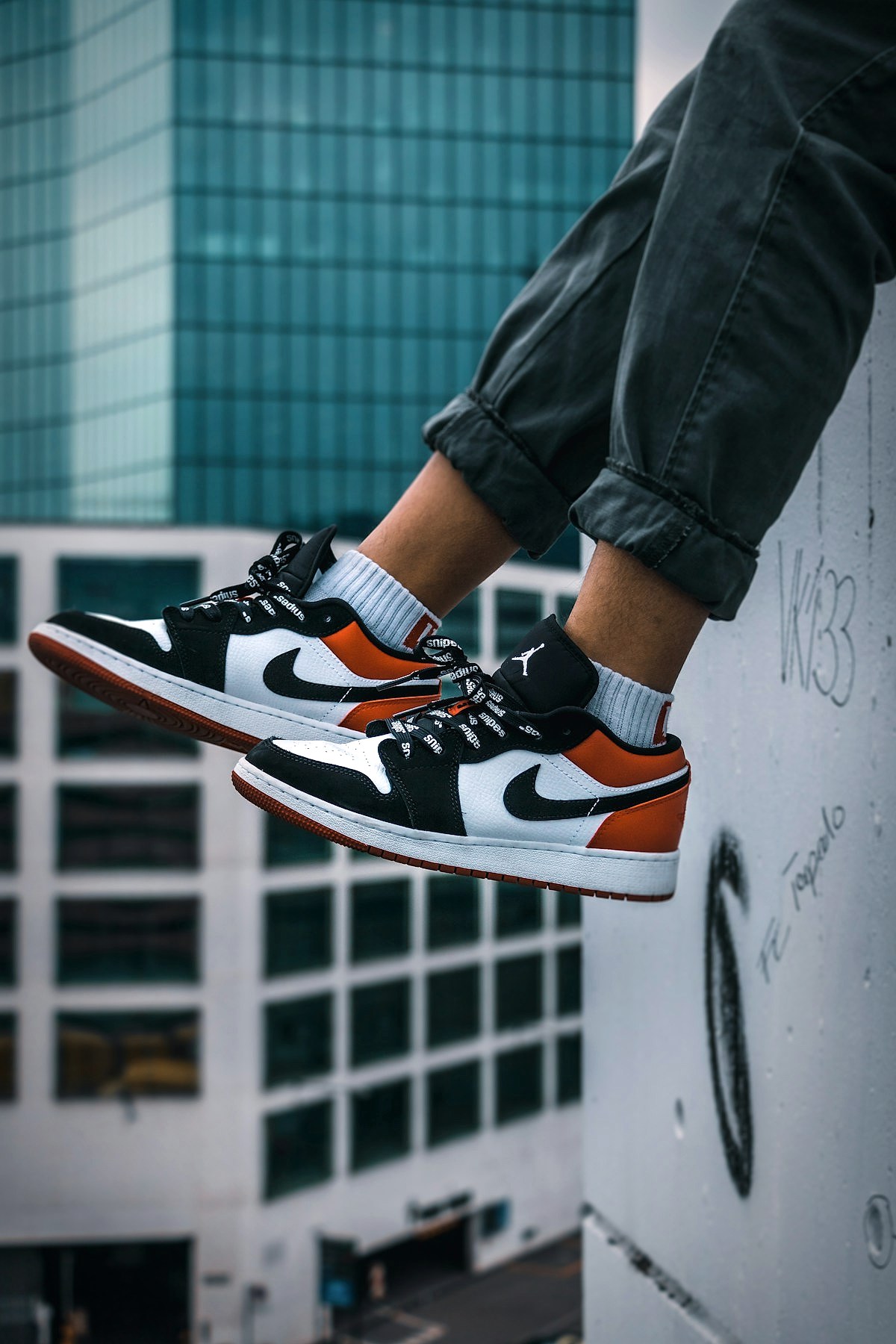
The second public identity, sneakers, is the one American fans tend to learn about before they learn the overseas résumé. He has been the NBA’s most visible sneaker collector for most of the last decade, routinely wearing one-of-one player-exclusive shoes from the 1990s and early 2000s during pregame warm-ups, and has built a meaningful footwear-industry career around the habit: a Nike partnership, a run of Adidas releases, and an ongoing series of collaborations with archival resellers. It is a real business. It is also, by his own account in magazine features, the part of his public life he most wants to talk about; the basketball writers who have sat down with him across the last five years almost universally come away with twice as many minutes of sneaker tape as they do of game-film tape.
Legacy, and why the pathway is rare
Every few years an American second-round pick who has been cut from his first team will cite Tucker’s path as a model. Very few have reproduced it. The reasons are partly structural, FIBA’s calendar has tightened since the late 2000s and fewer European clubs have the cap space to rescue displaced NBA rookies, and partly personal: the five-country overseas career requires a specific temperament and a specific willingness to play without the shot attempts that tend to follow an American player abroad. The skill set that got built in those years, meanwhile, is the exact skill set NBA teams were, by the mid-2010s, willing to pay serious minimum-salary money for. Tucker was the right player in the right era and also, not insignificantly, the only player who was willing to do the five-country job. The championship in Milwaukee is the box the NBA media tends to put at the top of his career. The twenty-nine-year-old who signed the first fully guaranteed NBA deal of his life in Phoenix, a decade after Toronto had waived him, is the one he probably remembers first.
Gear
Grab a card blaster.
Shop Jerseys & Fan Gear at Fanatics
As a Fanatics affiliate, we may earn a commission from qualifying purchases.
Shop on Amazon
As an Amazon Associate, we earn from qualifying purchases.
Shop Sneakers & Gear at JD Sports
We may earn a commission from qualifying purchases on JD Sports.