Jerry West
Jerry West is the single most influential individual figure in NBA history whose influence spans both the on-court and front-office dimensions of the game. He is the only player in league history to win Finals MVP on a losing team (1969). He is the 1972 NBA champion. He is a 14-time NBA All-Star, a 12-time All-NBA selection, and a career 27.0-points-per-game scorer. He is also the general manager who assembled the 1980s Showtime Lakers (five championships) and the early 2000s Kobe-Shaq three-peat Lakers (three championships), and the executive who, as a minority investor and consultant to the Golden State Warriors, influenced the 2015-19 roster construction of a franchise that won three more titles. His silhouette is the official NBA league logo, a status that was conferred by Commissioner J. Walter Kennedy in 1969 and has not been changed in fifty-seven years despite multiple public campaigns to update it. He died on June 12, 2024 in Los Angeles at the age of 86. He is the most decorated three-time Hall of Fame inductee in basketball history (as a player in 1980, as a member of the 1960 U.S. Olympic team in 2010, and as a contributor in 2024, posthumously).

Chelyan and East Bank High School (1938–1956)
He was born May 28, 1938 in Chelyan, West Virginia, a coal-mining town in Kanawha County about 20 miles southeast of Charleston. He was the fifth of six children. His father Howard West was a coal-mine electrician who was, by all accounts in West’s own 2011 memoir West by West, physically abusive to the children. His mother Cecile was a homemaker. His older brother David was killed in action in the Korean War in 1951, when Jerry was thirteen. West has written and spoken publicly about how the brother’s death, and the Chelyan childhood generally, shaped what he has described as a lifelong clinical depression that persisted through his playing career and his executive tenure.
He attended East Bank High School in Kanawha County. As a senior he averaged 32.2 points and was the first West Virginia high-school player ever to score more than 900 points in a single season. He was the 1956 West Virginia high-school player of the year.
Shop Jerry West jersey
As an Amazon Associate we earn from qualifying purchases.
West Virginia University (1956–1960)
He played three varsity seasons for West Virginia under head coach Fred Schaus. The 1958-59 West Virginia Mountaineers reached the NCAA championship game against the Pete Newell-coached California Golden Bears. Cal won 71-70 on a last-second basket. West averaged 28.0 in that tournament and was named NCAA Tournament Most Outstanding Player despite the loss; it was the fourth time in tournament history and the last until Hakeem Olajuwon in 1983 that the award went to a player on a losing team.
He averaged 29.3 points as a senior. He was a first-team All-American in both 1959 and 1960. He co-captained the 1960 U.S. Olympic team in Rome alongside Oscar Robertson (covered on our Oscar Robertson biography). The team won gold.
The 14-season Lakers career (1960–1974)
The Minneapolis Lakers held the second pick of the 1960 NBA Draft. They took West. (Oscar Robertson went first to the Cincinnati Royals.) The Lakers relocated to Los Angeles that same summer. West spent all 14 of his NBA seasons with the franchise.
He averaged 17.6 points as a rookie. By his second year he was averaging 30.8. In 1961-62 he averaged 31.3 points and was named to his first All-NBA First Team. He made the All-Star team in 13 consecutive years, from his rookie season through 1974. His nicknames (“Mr. Clutch,” “Mr. Outside,” and “Zeke from Cabin Creek”) were earned through a decade-long run of late-game scoring. The signature single-game performance is the 63-point game he scored against the New York Knicks on January 17, 1962 at Madison Square Garden.
The Finals heartbreaks and the 1972 championship
The Lakers reached the NBA Finals nine times during West’s career and lost the first eight. Six of those Finals losses were against the Boston Celtics, five of them in seven-game series. The single most-cited individual performance of his Lakers years is Game 3 of the 1962 Finals, in which he hit a game-winning thirty-foot jumper at the buzzer. The Lakers still lost the series in seven.
The 1969 Finals is the famous one. The Lakers, with Wilt Chamberlain, Elgin Baylor, and West, played Bill Russell’s final Celtics championship team. Boston won in seven. West averaged 37.9 points, 4.7 rebounds, and 7.4 assists across the series on 49% shooting. The media panel that selected the Finals MVP announced the winner (West) before knowing the outcome of Game 7; the ballots had been cast based on series performance, and West was the obvious choice. Boston won Game 7, which embarrassed both the NBA and West personally. The NBA has not awarded the Finals MVP to a player on a losing team since and has changed the voting rule to delay the decision until the series is complete.
The 1971-72 Lakers, at 33-3 in November and December, set the longest single-season winning streak in American professional sports history at 33 games. They went 69-13 for the regular season. They beat Milwaukee and New York on the way to the 1972 NBA Finals against the Knicks. The Lakers won in five. West, 33, averaged 19.8 and 8.8 assists in the series. Wilt Chamberlain was the Finals MVP. It was West’s first and only championship. He was unable to deliver his full intended post-championship press remarks because, by his own later account, he was crying too hard.
He retired from playing on September 12, 1974, at 36.
The silhouette
The NBA league logo, the red-white-and-blue silhouette of a single basketball player dribbling, is based on a 1969 photograph of West taken by Wen Roberts. The image was selected by Alan Siegel, then at NBA Commissioner J. Walter Kennedy’s marketing office, as the official league trademark. The logo has been in continuous use since. The league has never officially acknowledged that the silhouette is West (the company-line position is that it “represents basketball” rather than a specific player); West has acknowledged it in every interview since 1990 and has publicly said he would prefer the logo be changed to Michael Jordan or another Black player in deference to the changed demographics of the league. The NBA has declined to change the logo. No other American professional sports league has a logo so thoroughly and identifiably based on a single individual.
The Lakers general manager years (1982–2000)
He was the Lakers’ head coach for three years (1976-79) before moving into the front office as a scout in 1979 and then as general manager in 1982. He drafted Earvin “Magic” Johnson in 1979 (he was still coach), assembled the late-1970s Showtime roster around Kareem Abdul-Jabbar, and built the 1980s Lakers teams that won championships in 1980, 1982, 1985, 1987, and 1988. He traded for Shaquille O’Neal in July 1996 and drafted Kobe Bryant on June 26, 1996 (via a pre-agreed trade with the Charlotte Hornets in exchange for Vlade Divac). The 2000, 2001, and 2002 Lakers championships are, by every reasonable organizational-history accounting, the direct result of those two July 1996 decisions (covered on our Kobe Bryant and our Shaquille O’Neal biographies). He stepped down as Lakers general manager in August 2000.
The Memphis, Warriors, and Clippers consulting years
He served as the Memphis Grizzlies’ general manager from 2002 to 2007, where he built the three-year playoff-contender rosters of Pau Gasol, Mike Miller, and Shane Battier. He joined the Golden State Warriors as a minority owner and consultant in 2011. The 2011-2017 Warriors, under his consulting oversight, drafted Klay Thompson, Draymond Green, and drafted and signed Stephen Curry into his prime-franchise extension. He moved to the Los Angeles Clippers in 2017 in the same consulting role. The Clippers’ 2019 acquisition of Kawhi Leonard and Paul George is widely credited to West’s influence on owner Steve Ballmer (covered on our Kawhi Leonard biography).
Hall of Fame and the Presidential Medal of Freedom
He was inducted into the Naismith Memorial Basketball Hall of Fame three times: as a player in 1980, as a member of the 1960 U.S. Olympic team in 2010, and as a contributor in September 2024 (posthumously). He is the only three-time inductee in basketball history.
President Donald Trump presented him with the Presidential Medal of Freedom on September 5, 2019 at a White House ceremony. He was the fifth basketball figure to receive the honor, after Michael Jordan, Kareem Abdul-Jabbar, Bill Russell, and John Wooden.
Legacy
The basketball-career résumé places him inside the top 15 players of all time on every modern aggregated ranking. The Athletic’s 2022 NBA 75 ranking placed him 13th. Bill Simmons’s Book of Basketball ranked him 11th. The Lakers retired his #44 on November 18, 1983. The NBA logo will, at any reasonable point in the next decade, almost certainly still be him.
The executive-career résumé is, by almost any reasonable measurement, the most successful in professional sports history. The teams he has been directly involved in constructing or consulting on have won twelve NBA championships (five 1980s Lakers, three 2000-02 Lakers, three 2015-2019 Warriors, one 2014 Warriors as advisor). No other basketball executive has been involved in more than eight. He won more NBA championships as an executive (twelve) than most franchises have won in their history.
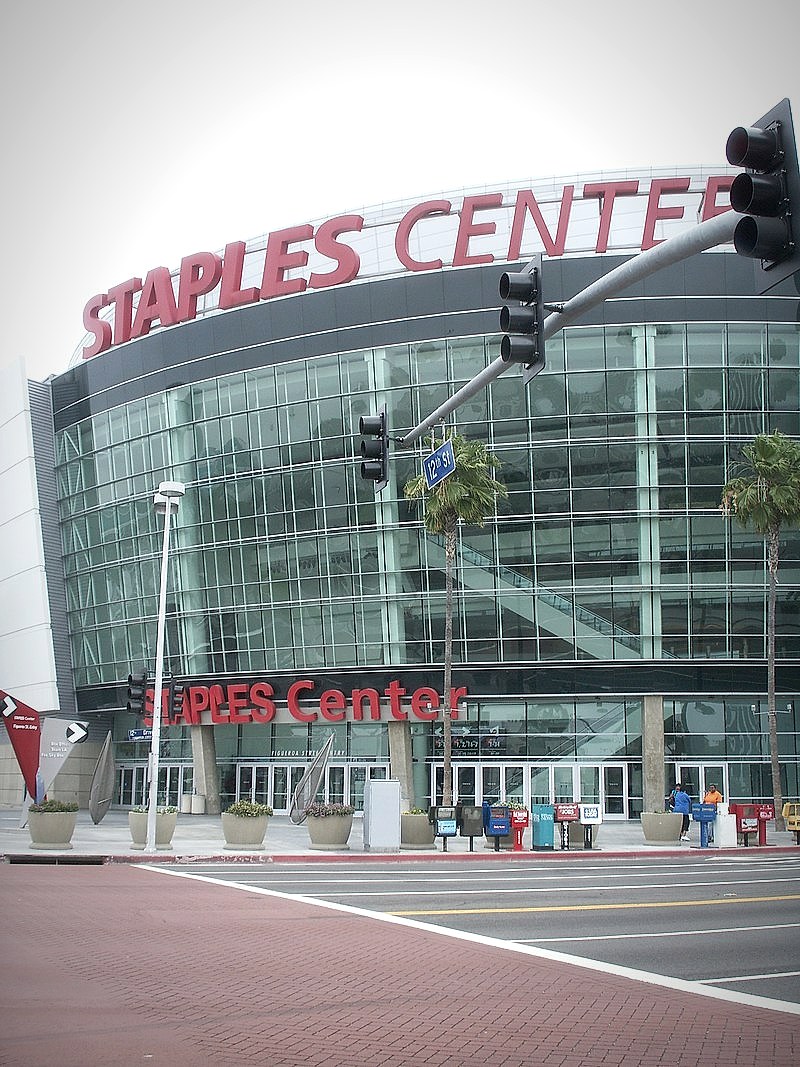
He died on June 12, 2024 in Los Angeles. His passing was covered on the front page of every major American newspaper’s sports section. President Joe Biden issued a statement. Commissioner Adam Silver issued a statement. The Los Angeles Lakers held a tribute ceremony at Crypto.com Arena on October 22, 2024 during the 2024-25 season home opener. Kobe Bryant’s widow Vanessa Bryant attended. Magic Johnson attended. Shaq and Pat Riley attended. The ceremony closed the public chapter on a career that, by almost every conceivable measurement, defined the Los Angeles Lakers organization for six decades.
Gear
Read West by West, his remarkably candid memoir.
Sources
The Chelyan childhood, the 1969 Finals, and the executive-era narrative are documented in West’s 2011 memoir West by West (Little Brown). The NBA logo origin story is sourced from Alan Siegel’s 2010 ESPN The Magazine interview with Chris Palmer. The June 12, 2024 death coverage is from Richard Goldstein’s New York Times obituary of the same day. The Presidential Medal of Freedom ceremony is from the White House press office archive.
Shop Jerseys & Fan Gear at Fanatics
As a Fanatics affiliate, we may earn a commission from qualifying purchases.
Shop on Amazon
As an Amazon Associate, we earn from qualifying purchases.
Shop Sneakers & Gear at JD Sports
- Shop Jerry West sneakers ↗
- Shop Minneapolis Lakers / Los Angeles Lakers jerseys ↗
- Shop NBA basketball shoes ↗
We may earn a commission from qualifying purchases on JD Sports.
Sources
- Basketball-Reference: Jerry West
- Naismith Memorial Basketball Hall of Fame: Jerry West
- Jerry West and Jonathan Coleman, West by West: My Charmed, Tormented Life (Little Brown, 2011)
- The New York Times: "Jerry West, N.B.A. Great and Logo Model, Dies at 86" (Richard Goldstein, June 12, 2024)
- ESPN 30 for 30: Jerry West (2014)