Every player to win MVP and Defensive Player of the Year in the same season

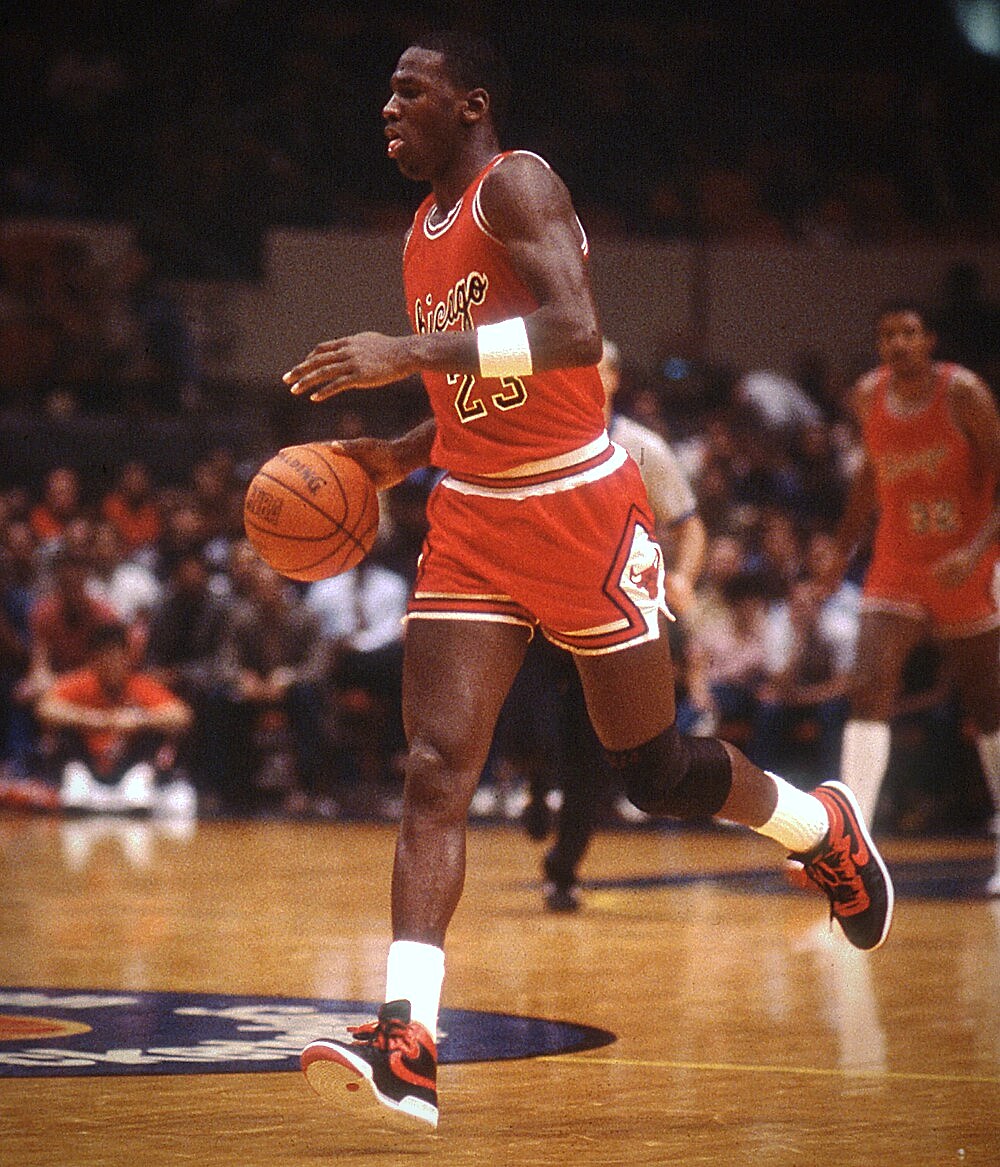
Only three players in NBA history have won the regular-season Most Valuable Player Award and the Defensive Player of the Year Award in the same season. Michael Jordan in 1987–88. Hakeem Olajuwon in 1993–94. Giannis Antetokounmpo in 2019–20. The DPOY has been given since 1982–83, which means there are 43 eligible seasons for this double, and it has been completed three times. Ninety-three percent of the possible seasons produced two different winners for the two awards.
The three seasons, in detail
Michael Jordan, 1987–88
- Regular season line: 35.0 points (led the league), 5.5 rebounds, 5.9 assists, 3.2 steals (led the league), 1.6 blocks per game. Shot 53.5 percent from the floor.
- Team record: Chicago Bulls 50–32, third in the Eastern Conference.
- Playoff result: Lost in the Eastern Conference Semifinals to the Detroit Pistons, 4–1.
Jordan’s 1987–88 season is the only MVP-plus-DPOY season in league history that also included the scoring title. His 35.0 points-per-game mark is the highest scoring average for any MVP since Wilt Chamberlain’s 1967–68 season. He also led the league in steals, a rare combination for the highest-volume scorer on a playoff team. Detroit head coach Chuck Daly, whose Pistons would eliminate Chicago that May and who were constructing the “Jordan Rules” defensive game plan in real time, said in a 1989 Detroit Free Press profile that his DPOY vote that year had been “easy and also ridiculous because no one who scored thirty-five points a night should be able to defend the way he defended.”
Jordan did not win the championship in 1987–88. The double is not a championship guarantee. Chicago was still a year short of the supporting cast it needed: Scottie Pippen’s second season (1988-89) marked the beginning of the Bulls’ run to six titles, but in the spring of 1988, with Horace Grant and John Paxson as the second and third options, the roster behind Jordan had no answer for Detroit’s physicality in the second round.
Shop NBA Gear
As an Amazon Associate we earn from qualifying purchases.
Hakeem Olajuwon, 1993–94
- Regular season line: 27.3 points, 11.9 rebounds, 3.6 assists, 1.6 steals, 3.7 blocks per game.
- Team record: Houston Rockets 58–24, first in the Midwest Division.
- Playoff result: Won the NBA Championship over the New York Knicks in seven games. Hakeem was the Finals MVP.
Olajuwon’s 1993–94 is the only MVP-plus-DPOY-plus-Finals-MVP-plus-championship season in league history. Four individual-award-plus-team-title achievements in a single year. The next year (1994–95) he won the Finals MVP and a second championship but did not repeat the MVP or the DPOY; the one-year window in 1993–94 stands alone.
The statistical specifics that made the Olajuwon season unusual were his defensive volume. The 3.7 blocks per game led the league and were the highest single-season mark for a post-Kareem center. He also averaged 1.6 steals, unusual for a 7-footer, because the Rockets’ defensive scheme under head coach Rudy Tomjanovich deployed him as the help defender on perimeter pick-and-rolls. Basketball-Reference’s defensive win-shares calculation has him as the most valuable defensive player of the 1990s by full-season composite.
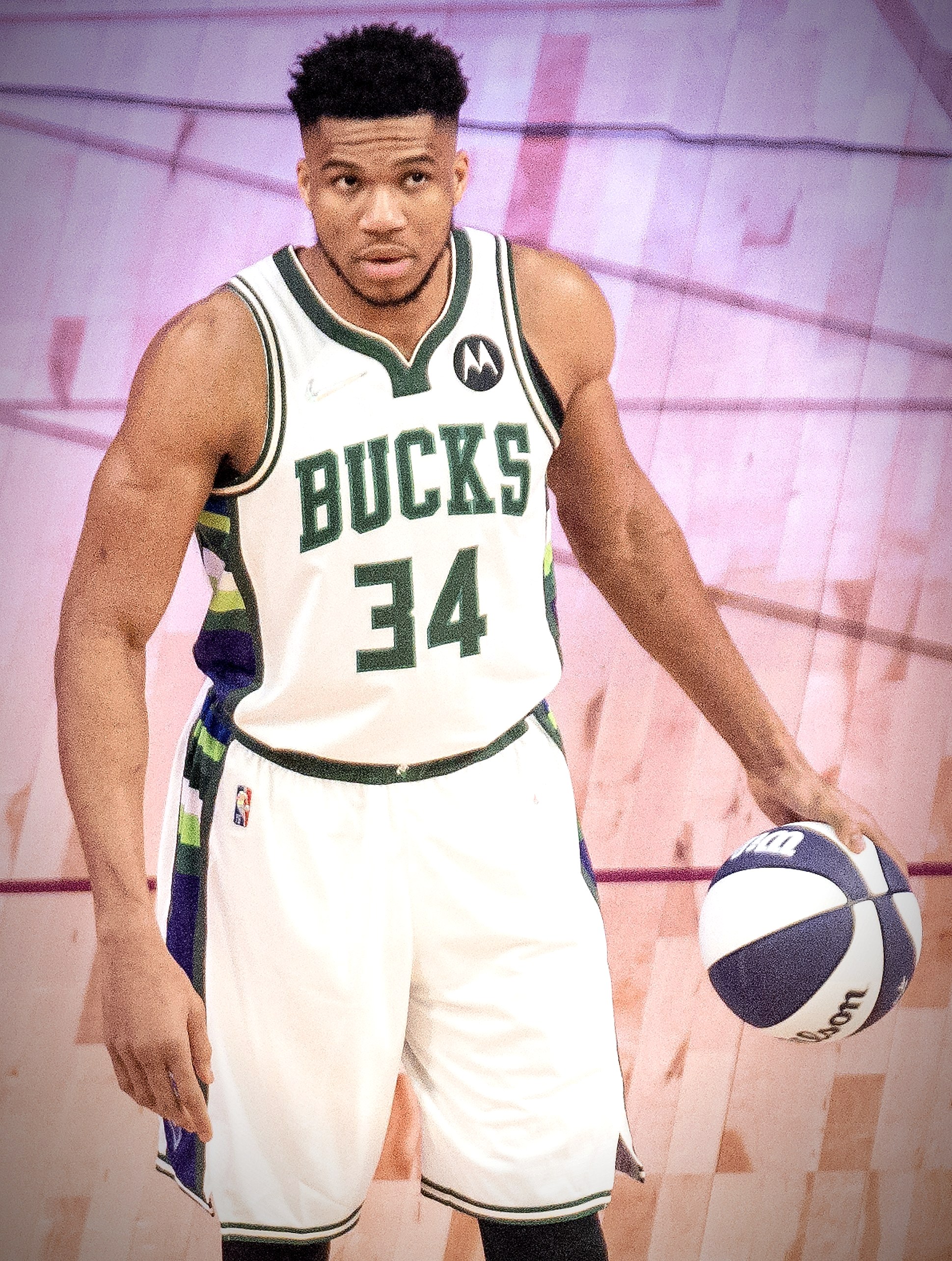
Giannis Antetokounmpo, 2019–20
- Regular season line: 29.5 points, 13.6 rebounds, 5.6 assists, 1.0 steals, 1.0 blocks per game.
- Team record: Milwaukee Bucks 56–17 (the regular season was cut short by the March 2020 COVID shutdown; the Bucks had the league’s best record at suspension).
- Playoff result: Lost in the Eastern Conference Semifinals to the Miami Heat, 4–1.
Giannis was the first player to win DPOY and MVP in the same season in the post-analytics era. His 2019–20 DPOY case was driven less by shot-blocking volume (his 1.0 BPG was lower than any previous DPOY’s) and more by defensive versatility: he was the only player in league history, as of the 2019–20 season, to rank in the top-ten for opponent field-goal percentage against when defending all five positions on the floor. The Bucks’ defensive rating that year (102.9 points per 100 possessions) was the best in the league by three points.
The 2019–20 playoffs were disrupted by the NBA’s bubble restart. Milwaukee’s second-round loss to Miami was, by multiple postgame accounts and the public-record Bucks’ post-playoff review, shaped in part by a timing-of-return issue: the Bucks had been in the bubble for three weeks when the series began, Giannis sprained his ankle in Game 4, and the team’s lack of a Plan B in his absence (Jrue Holiday was traded in after the series, not before) was the decisive factor. He repeated the DPOY runner-up status in 2020–21 and won the championship and Finals MVP.
Near-misses: why the double is harder than it looks
Two categories of near-miss seasons warrant mention.
Single-award with the other in the runner-up slot:
- Dikembe Mutombo won the DPOY four times (1995, 1997, 1998, 2001). He was never an MVP candidate.
- Ben Wallace won the DPOY four times (2002, 2003, 2005, 2006). He was a three-time MVP vote-getter but never won.
- Kevin Garnett won DPOY in 2007–08 and had finished 3rd in MVP voting in 2003–04. Not the same year.
- Rudy Gobert won the DPOY four times (2018, 2019, 2021, 2024) and finished 8th–14th in MVP voting each year.
- Marcus Camby’s 2006–07 DPOY was paired with a 15th-place MVP finish.
MVP-caliber players who missed the DPOY by a margin:
- Shaquille O’Neal never finished higher than 3rd in DPOY voting despite three MVP votes. His defensive-peak 1999–00 season produced an MVP but a 3rd-place DPOY finish behind Alonzo Mourning and David Robinson.
- Tim Duncan finished 2nd in DPOY voting in three separate seasons and was the MVP in two of those (2001–02 and 2002–03). Both times the DPOY voters preferred Ben Wallace.
- LeBron James, across 21 seasons, has never finished higher than 2nd in DPOY voting. His 2012–13 Finals-MVP season had him 2nd in DPOY behind Marc Gasol.
- Nikola Jokić has three MVPs and has never finished higher than 3rd in DPOY voting.
What the structure of voting actually rewards
Looking at the pattern across 43 eligible seasons, the MVP-plus-DPOY double requires three specific statistical conditions to appear simultaneously:
-
The player’s team must have a top-3 defensive rating. Jordan’s 1987–88 Bulls were 4th (close). Hakeem’s 1993–94 Rockets were 1st. Giannis’s 2019–20 Bucks were 1st. Teams outside the top-3 defensive rating almost never produce a DPOY.
-
The player must post statistical anomalies in two different defensive categories. Not just blocks or steals; both. Jordan had 3.2 steals and 1.6 blocks. Hakeem had 3.7 blocks and 1.6 steals. Giannis had the positional-versatility defensive-range anomaly rather than raw volume, but it was measurable across multiple categories.
-
The player must lead the team on offense by a margin. Defensive specialists who split offensive load with a star guard (Wallace, Mutombo, Gobert) do not generate the MVP-voter narrative. The player has to be obviously the team’s best offensive player too.
Those three conditions together are rare. A top-3 defense usually has a specialist anchor plus a high-volume scorer who is not the defensive anchor. The double requires the anchor and the scorer to be the same player.
Why it matters for modern evaluation
The MVP-plus-DPOY double is one of the cleanest individual-greatness markers in the league’s record book specifically because it resists “best player on the best team” inflation. An MVP can be won by the best offensive player on a great team. A DPOY can be won by a defensive specialist on a great team. The combination requires both on the same player. That is why the list is three long instead of twenty long.
The active-player short list of plausible future additions is short. Wembanyama is on a trajectory toward it, his 2023–24 DPOY-level rookie production plus his current MVP-ceiling offensive development path is the most obvious candidate in a decade. Anthony Edwards, Jayson Tatum, and Luka Dončić are not defensive-anchor-caliber and are unlikely to get there. Jokić has never been a top-five DPOY candidate. The double, at current career arcs, may not be repeated until Wemby’s age-25-through-27 window. That means the gap between Giannis (2019–20) and the next one is likely to exceed five years. History suggests this is a ten-seasons-per-double feat over the long run.
Related reading
- Michael Jordan biography
- Giannis Antetokounmpo biography
- Shaquille O’Neal biography, the defensive-peak years that missed the double
- Every NBA MVP in order
Gear
Browse The Book of Basketball for how Simmons ranked the players who achieved this rare double.
The Book of Basketball on Amazon →
Sources
All award-by-award data is cross-referenced against Basketball-Reference’s DPOY list and their MVP list. The 1987–88 Chuck Daly quote is from a Detroit Free Press feature profile by Mitch Albom, dated December 11, 1989. The 2019–20 Bucks’ defensive-positional-range statistic is from Basketball-Reference’s advanced defensive metrics archive. The Hakeem 1993–94 Defensive Win Shares ranking is from Basketball-Reference’s calculated composite.
Shop NBA Gear at Fanatics
As a Fanatics affiliate, we may earn a commission from qualifying purchases.
Shop on Amazon
As an Amazon Associate, we earn from qualifying purchases.
Shop Basketball Shoes at JD Sports
We may earn a commission from qualifying purchases on JD Sports.