Every player to average a triple-double for an NBA season
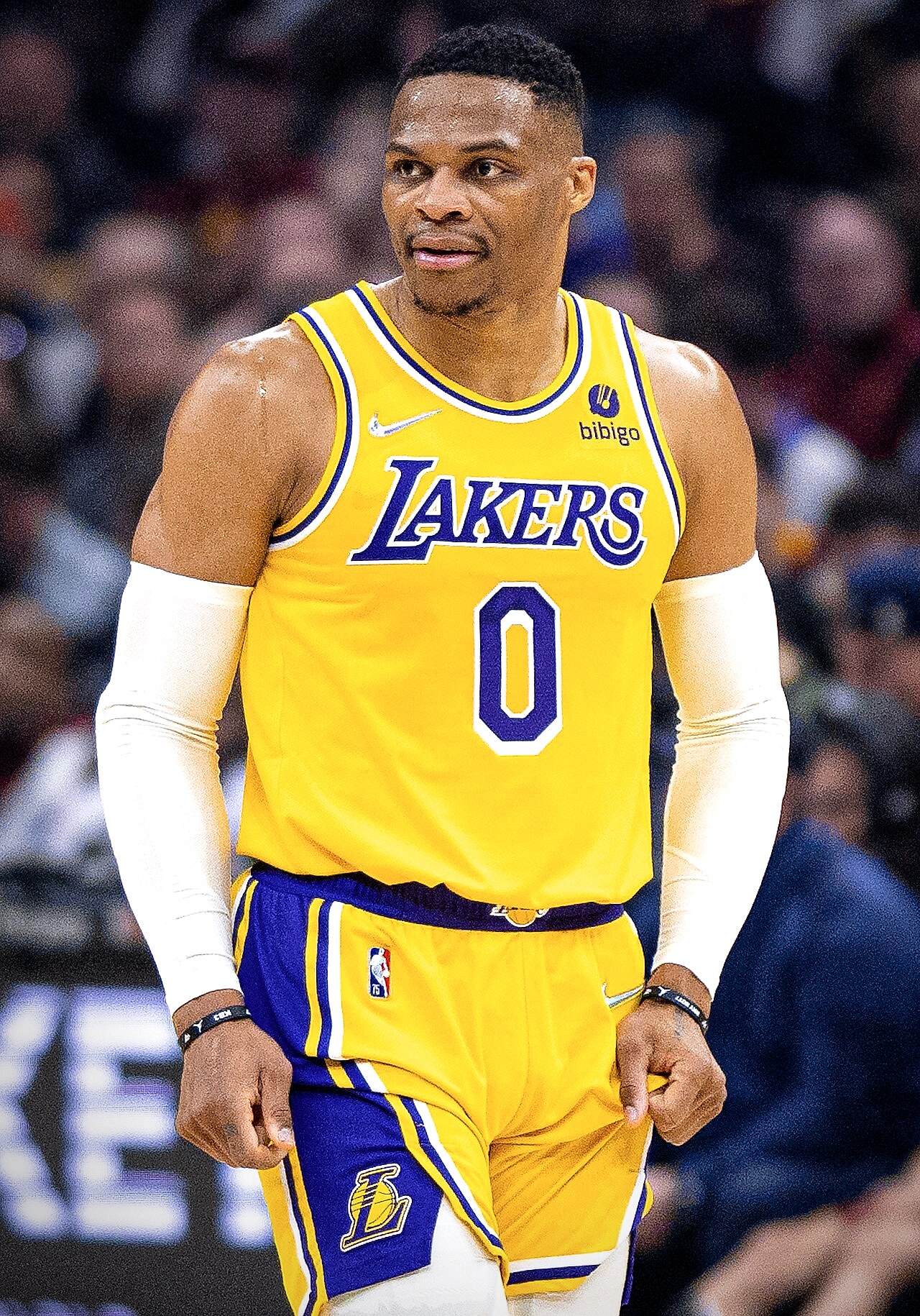
Three players. Six seasons. That is the entire list, through April 2026, of players who have averaged a triple-double across an entire NBA regular season. Oscar Robertson did it once, in 1961–62. Russell Westbrook did it four times between 2016–17 and 2020–21. Nikola Jokić became the third member of the club in 2024–25, and the first non-point-guard in the feat’s history. The arc from Robertson to Jokić tells most of the story of what an NBA offense is expected to look like.
The full list
| Season | Player | Team | Points | Rebounds | Assists | Notes |
|---|---|---|---|---|---|---|
| 1961–62 | Oscar Robertson | Cincinnati Royals | 30.8 | 12.5 | 11.4 | First-ever. Also led the league in assists. |
| 2016–17 | Russell Westbrook | Oklahoma City Thunder | 31.6 | 10.7 | 10.4 | Won MVP. 42 triple-doubles in the regular season, single-season record. |
| 2017–18 | Russell Westbrook | Oklahoma City Thunder | 25.4 | 10.1 | 10.3 | 25 triple-doubles. |
| 2018–19 | Russell Westbrook | Oklahoma City Thunder | 22.9 | 11.1 | 10.7 | 34 triple-doubles. |
| 2020–21 | Russell Westbrook | Washington Wizards | 22.2 | 11.5 | 11.7 | 38 triple-doubles. First and only triple-double season by a Washington player. |
| 2024–25 | Nikola Jokić | Denver Nuggets | 29.6 | 12.7 | 10.2 | First center in league history to do it. Won his third MVP. |
Five of the six entries are from the last nine seasons. The 55-year gap between Robertson’s 1961–62 season and Westbrook’s 2016–17 season is one of the largest statistical-feat gaps in the league’s record book.
Oscar Robertson, 1961–62
Robertson was a second-year guard with the Cincinnati Royals. His full line: 30.8 points, 12.5 rebounds, 11.4 assists across 79 games. He led the league in assists. He played 44.3 minutes a game, which is to say, essentially every minute the Royals played. The league’s average pace that season was 123.9 possessions per 48 minutes, which for modern comparison is roughly 25 percent faster than the 2024–25 NBA.
Shop NBA Gear
As an Amazon Associate we earn from qualifying purchases.
The triple-double average was not announced or marketed as a feat at the time. The term “triple-double” had not yet been coined. Sportswriters of the 1961–62 season wrote about Robertson’s production as an assist record (the 11.4 APG led the league) and as a rebounding feat (12.5 RPG was extraordinary for a six-foot-five guard). The framing as “triple-double average” came decades later, retrospectively, after the statistical category had been named.
The context that Robertson himself has pointed to in his own memoir The Big O: My Life, My Times, My Game (Rodale, 2003) is that the 1961–62 Cincinnati offense ran almost entirely through him. He took 22 shots a game, took more than half the team’s free throws, and was the primary ball-handler and the primary defensive rebounder. The Royals finished 43–37. The team reached the Eastern Division Finals and lost to the eventual-champion Boston Celtics.
Russell Westbrook, 2016–17 and the four-season run
Westbrook’s 2016–17 season is the only triple-double season to be paired with a regular-season MVP (Robertson was not MVP in 1961–62; that went to Bill Russell). The line: 31.6 points, 10.7 rebounds, 10.4 assists. He set the single-season record for triple-doubles with 42, passing Robertson’s 41 from 1961–62. Westbrook’s triple-double total is the single feat that most-cleanly defined the 2010s point-guard era of NBA basketball.
The context here matters. Kevin Durant had left Oklahoma City for Golden State in July 2016. Westbrook, who had shared the Thunder’s offensive load with Durant for eight seasons, absorbed the entirety of OKC’s usage. His usage rate that season (41.7 percent) was the highest recorded in league history since the statistic was first formalized. No NBA player before or since has handled the ball on four out of every ten possessions across a full season.
The subsequent three Westbrook triple-double seasons (2017–18, 2018–19, 2020–21) were produced at lower usage rates as his teams around him became more talented. But Westbrook remained the only player with five career triple-double seasons (2016–17, 2017–18, 2018–19, 2020–21 plus a partial-season 2019–20 COVID-shortened average). No other player other than Robertson has more than one.
Nikola Jokić, 2024–25
Jokić became the third member of the club in April 2025, the final weeks of the 2024–25 season. He averaged 29.6 points, 12.7 rebounds, 10.2 assists across 70 games. His triple-double count for the season was 34.
The structural difference between Jokić’s triple-double season and the two prior Westbrook-dominated versions is significant. Westbrook averaged the rebounds and assists because he was the primary ball-handler and the defensive-rebound-push guard for a guard-dominant offensive system. Jokić averaged the assists because he is a center who operates at the high post as the offense’s hub. His per-game 10.2 assists as a 6’11”, 285-pound center is the only such line in league history. The closest historical analogue is Wilt Chamberlain’s 1967–68 season, when Chamberlain averaged 8.6 APG as a center, though at nowhere near the assist volume Jokić produces.
The broader shift Jokić’s season documents is that the modern NBA offense has, over twelve years, disposed of the position designations that made Robertson’s and Westbrook’s triple-double averages notable in the first place. A center can run an offense; a guard can be the primary offensive rebounder. Jokić’s season closed the loop.
What the gap from 1962 to 2017 is actually about
A 55-year gap in a statistical feat raises the question of why. The usual answer (“the pace of the game slowed”) is right on the surface and wrong underneath. Pace dropped substantially from the early 1960s into the 1970s, from roughly 124 possessions a game down to 103 possessions a game by the late 1970s, but pace alone does not account for five-plus decades of nobody coming close.
The more complete answer is that post-1970s basketball offense was reorganized around specialization. Point guards stopped taking twenty shots a game. Forwards stopped getting 12 rebounds a game except as designated rebounders. Shot-blocking, box-outs, and defensive-rebounding work became center responsibilities. A triple-double average requires a player to cross three positional lanes in a single statistical season, high-volume scorer, high-volume rebounder, high-volume passer, and the 1980s and 1990s offensive structures specifically did not create players who did all three.
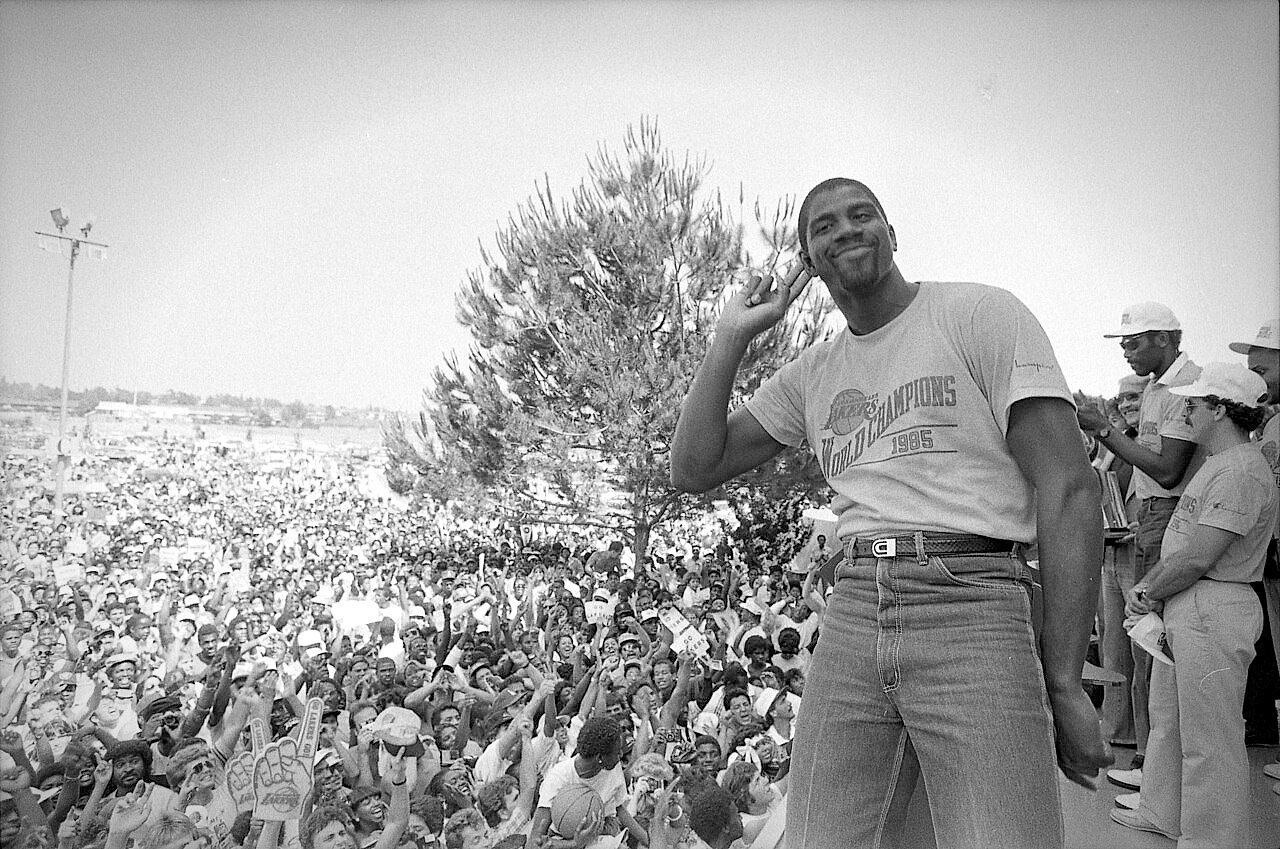
Magic Johnson came the closest of any player in the gap. His 1981–82 Lakers season produced 18.6 points, 9.6 rebounds, 9.5 assists, a hair below triple-double on all three categories. No other 1970–2010 player averaged even 10.0 RPG and 10.0 APG simultaneously, let alone with a scoring volume worth mentioning. The return of the feat in 2016–17 required Westbrook’s unique offensive-dominance context, and Jokić’s 2024–25 required a full redesign of what a center can be.
What the record says about positional evolution
The six triple-double seasons, listed again by primary position:
- Oscar Robertson (1961–62): shooting guard / point guard hybrid
- Russell Westbrook (×4): point guard
- Nikola Jokić (2024–25): center
Five of the six are guards. The sixth, Jokić’s, is the only non-guard entry in league history. The gap between Robertson’s 1961–62 and Westbrook’s 2016–17 was positional (the feat was dormant because the league had moved away from Robertson-type offenses); the gap between Westbrook and Jokić was generational (eight years of Jokić-specific offensive design at the Nuggets) but also structural (no other center had been given this much offensive ball-handling responsibility). Each new entry changes the shape of what the record actually means.
Near-misses worth noting
Magic Johnson 1981–82 (18.6 / 9.6 / 9.5) and Wilt Chamberlain 1967–68 (24.3 / 23.8 / 8.6) are the most obvious near-misses. LeBron James has averaged a triple-double through shortened stretches of multiple seasons but has never finished at the 10 / 10 / 10 line over a full 82 games, his closest full-season line is 2019–20 at 25.3 / 7.8 / 10.2. Ben Simmons, as a rookie in 2017–18, averaged 15.8 / 8.1 / 8.2, a close positional analog to Jokić before Jokić, though never crossing the triple-double threshold.
Luka Dončić’s 2023–24 season (33.9 / 9.2 / 9.8) came within one half-assist of the triple-double average across 70 games. Most of the basketball-reference archive identifies the 2023–24 Dončić season as the closest non-triple-double in league history.
Related reading
- Nikola Jokić biography, the 2024–25 championship-era context
- Luka Dončić biography, the 2023–24 near-miss
- Magic Johnson biography
- Every NBA MVP in order
Gear
Read Oscar Robertson’s memoir The Big O for the player who first averaged a triple-double across a full season, and grab a card blaster.
Sources
Cross-referenced against Basketball-Reference single-season records, the Land of Basketball triple-double archive, and Robertson’s memoir The Big O (Rodale, 2003). The Westbrook usage-rate 41.7 percent figure is from Basketball-Reference’s advanced statistics archive; usage-rate calculation methodology was first formalized by John Hollinger in the 2004 Pro Basketball Forecast. The Jokić assists-as-a-center historical comparison uses Basketball-Reference’s position-filtered career leaders tool.
Shop NBA Gear at Fanatics
As a Fanatics affiliate, we may earn a commission from qualifying purchases.
Shop on Amazon
As an Amazon Associate, we earn from qualifying purchases.
Shop Basketball Shoes at JD Sports
We may earn a commission from qualifying purchases on JD Sports.