Charlotte Hornets
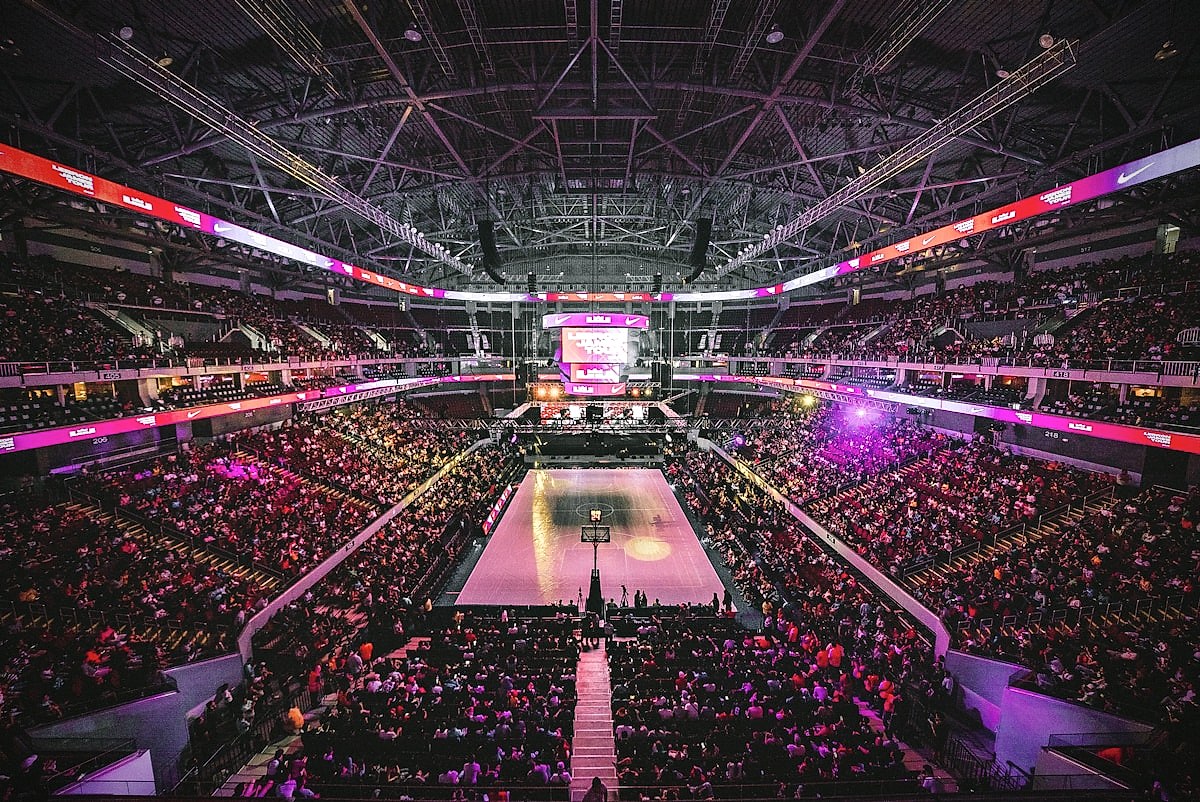
The Charlotte Hornets have never won an NBA championship, never reached the NBA Finals, and never reached the Eastern Conference Finals. The franchise’s history is unusual for its ownership and naming structure: the original Charlotte Hornets franchise, founded as an expansion team in 1988, relocated to New Orleans in 2002. The NBA awarded Charlotte a new expansion franchise in 2004 (the Charlotte Bobcats). Michael Jordan purchased majority ownership in 2010. The Bobcats rebranded back to the Hornets in 2014 after New Orleans released the Hornets name. Jordan sold the franchise in 2023 to a group led by Gabe Plotkin and Rick Schnall. The franchise has made the playoffs twelve times across its thirty-six combined seasons but has not produced a deep playoff run.

The original Hornets (1988–2002)
The NBA awarded four expansion franchises in 1988 and 1989 (Miami, Charlotte, Orlando, Minnesota). The Charlotte ownership group was led by George Shinn, a North Carolina-based businessman. Shinn paid a $32.5 million expansion fee. The team name “Hornets” referenced the nickname given to Charlotte-area Revolutionary War militias by the British commander Lord Cornwallis. The teal-purple-and-white color scheme was designed by Alexander Julian, a North Carolina-born fashion designer.
The first head coach was Dick Harter. The 1988–89 Hornets went 20–62. They made the playoffs for the first time in 1993 under head coach Allan Bristow with Larry Johnson (1991’s first overall pick) and Alonzo Mourning (1992’s second overall pick). The 1992–93 Hornets beat the Boston Celtics in the first round and lost to the Knicks in the second. It was the only Bristow-era Hornets playoff series win.
Shop Charlotte Hornets merchandise
As an Amazon Associate we earn from qualifying purchases.
Mourning was traded to Miami in November 1995 in a multi-player deal that returned Glen Rice to Charlotte along with Matt Geiger and Khalid Reeves. Mourning’s Miami chapter is covered on the Miami Heat page. Rice stepped in and led the team in scoring immediately. Under head coach Dave Cowens, the 1996-97 Hornets assembled what was arguably the franchise’s best roster to that point. They acquired Vlade Divac from the Lakers, giving up the draft rights to a high-school guard named Kobe Bryant (selected 13th overall) in that deal. The 1996-97 Hornets finished 54-28, Rice and Mason leading a roster that also included Muggsy Bogues and Matt Geiger. They reached the playoffs but lost to the Knicks in the first round in three games.
Dell Curry spent ten seasons in Charlotte (1988-1998) and is the franchise’s all-time leader in three-pointers made. Muggsy Bogues, at 5-foot-3 the shortest player in NBA history, played nine seasons with the original Hornets and remains one of the most beloved figures in franchise history. Neither number has been formally retired, which is a recurring frustration among the fanbase.
The 1997-98 Hornets went 51-31 under Paul Silas after Bogues was traded. Bobby Phills and David Wesley formed a reliable backcourt. The team advanced to the second round of the playoffs, losing to the eventual-champion Chicago Bulls. It was the deepest playoff run of the late-1990s era. The Phills-Wesley backcourt gave the Hornets a defensive edge they hadn’t had since the Mourning years.
Phills was killed in a single-car accident on January 12, 2000, while drag racing on a Charlotte highway with Wesley, who survived. He was 30 years old. His number 13 was retired the following season, one of only two numbers the franchise has officially retired. The late-1990s Hornets, under head coach Dave Cowens and later Paul Silas, built around Rice, Anthony Mason, Vlade Divac, and Bobby Phills. The 2000-01 Hornets went 46-36 and reached the playoffs, their final season before the relocation.
The 2002 New Orleans relocation
George Shinn attempted three times between 1997 and 2001 to secure a publicly-financed new Charlotte arena to replace the aging Charlotte Coliseum. The Charlotte city council and voter referendum rejected the proposal. A 2001 sexual-assault civil trial, in which a jury acquitted Shinn of allegations made by a former team attendant, damaged local public support for the franchise. In May 2002, the NBA approved the relocation of the Hornets to New Orleans.
The Bobcats expansion (2004–2014)
The NBA awarded Charlotte a new expansion franchise in December 2002 to begin play for the 2004–05 season. Ownership was granted to Bob Johnson, the founder of Black Entertainment Television, who became the first Black majority owner of a major American professional sports franchise. The team was named the Charlotte Bobcats in reference to Johnson’s first name.
The Bobcats’ ten-year run produced one playoff appearance (2009-10, a first-round sweep by Orlando) and nine lottery seasons. The franchise was an expansion team in the most brutal sense: no legacy players, a waiver-wire roster for year one, and a 18-64 record in 2004-05. Emeka Okafor (2004 first overall pick, won Rookie of the Year) and Raymond Felton (2005 first-round pick) were the foundational pieces. Gerald Wallace became a fan favorite through sheer physical effort, the kind of player who would dive headfirst into the third row for a loose ball.
Jordan became a managing member in 2006 and influenced personnel decisions before his purchase. The 2009-10 Bobcats, Jordan’s last season as a minority investor, finished 44-38 and qualified for the playoffs under head coach Larry Brown. Orlando swept them in four first-round games. It is still the only playoff appearance in the Bobcats identity. Jordan purchased majority ownership from Bob Johnson in March 2010 for approximately $275 million, becoming, by some accountings, the first Black majority owner of an NBA franchise in the post-Johnson era.
The 2011-12 Bobcats went 7-59, the worst winning percentage (.106) in NBA history at the time. It was a perfect storm of bad contracts, injuries, and a lockout-shortened schedule that offered no margin for error. Kemba Walker, drafted ninth overall in 2011, was the one lasting piece from those years. The Jordan-era Bobcats reached the 2013-14 playoffs as the seventh seed before rebranding as the Hornets.
The 2014 rebrand
In December 2013, the NBA and Jordan jointly announced that the Bobcats would rebrand as the Charlotte Hornets for the 2014–15 season, taking over the name, the original teal-purple-white color scheme, and the Hugo mascot of the original franchise (which New Orleans had released when it rebranded to the Pelicans for the 2013–14 season). The rebrand restored the franchise’s original identity. It was the only NBA rebranding to directly reclaim a dormant team name.
The Hornets-era statistical record from 1988 onward is considered continuous for the 2014-forward Charlotte franchise, per the NBA’s 2014 declaration. The 2002–2013 New Orleans-era records (including the 2008 conference finals run and the 2013 lottery win that became Anthony Davis) are attributed to the New Orleans Pelicans.
The LaMelo Ball era (2020–present)
The 2020 NBA Draft produced LaMelo Ball with the third overall pick. Ball was 2020-21 Rookie of the Year in a season where Charlotte finished 33-39. His playmaking at 19 years old — the no-look passes, the behind-the-back feeds in transition — generated genuine enthusiasm for the first time since the original Hornets era. He made the All-Star game in 2022. The 2021-22 Hornets finished 43-39 and qualified for the play-in tournament, the first postseason appearance in the Hornets rebrand era. They lost to Atlanta 132-103 in the play-in, ending the season. It was a promising baseline.
Then the injuries. Ball played 36 games in 2022-23 as the Hornets collapsed to 27-55. He appeared in just 22 games in 2023-24, and Charlotte finished 21-61. The Hornets have had the fifth pick (2023, Brandon Miller), the second pick (2024, Tidjane Salaun), and lottery positioning in consecutive years. The question of whether Ball can stay healthy enough to anchor a contender is the defining uncertainty of the franchise.
Head coach Steve Clifford was fired after 2022-23 and replaced by Charles Lee, the former Boston Celtics assistant, in June 2024. The front office under GM Jeff Peterson began a deliberate rebuild. The 2024-25 Hornets entered the season with the youngest average roster in the league. The team has not made a deep playoff run since the original Hornets’ 2001-02 season.
The 2023 sale
On June 16, 2023, Michael Jordan sold his majority stake in the Charlotte Hornets to Gabe Plotkin and Rick Schnall for approximately $3.0 billion. Plotkin is the founder of Tallwoods Capital and was the founder of Melvin Capital, the hedge fund that lost approximately $6.8 billion in the 2021 GameStop short squeeze and wound down in 2022. Schnall is a co-president of Clayton, Dubilier & Rice, a private-equity firm. Jordan retained a minority stake of approximately 5 percent. Minority owners include Daniel Sundheim (D1 Capital) and the rapper J. Cole.
The franchise’s 2025 Forbes valuation was approximately $2.7 billion.
Retired numbers
Two jersey numbers have been retired:
- Bobby Phills (13), retired 2000 following his death in a January 2000 car accident
- Muggsy Bogues (1) and Dell Curry (30) are widely expected future retirements but have not been formally retired
The 2013 Jersey Retirement Committee’s lack of activity in the early Bobcats era is widely attributed to the franchise’s identity transition. The 2014 Hornets rebrand included a commitment to “fully honor” the franchise’s Larry Johnson, Alonzo Mourning, and original-Hornets history.
Sources
- Basketball-Reference, Charlotte Hornets franchise page
- Charlotte Observer, Hornets and Bobcats beat coverage, 1988–present
- NBA, December 2002 expansion-grant announcement (Charlotte Bobcats)
- Michael Jordan purchase records, March 2010 ($275 million)
- NBA rebranding press release, December 2013 (Bobcats to Hornets)
- Sportico, June 2023 coverage of Jordan-to-Plotkin-Schnall sale
- Forbes NBA Team Valuations, 2025
Shop Official Charlotte Hornets Gear at Fanatics
As a Fanatics affiliate, we may earn a commission from qualifying purchases.
Shop on Amazon
As an Amazon Associate, we earn from qualifying purchases.
Shop NBA Gear at JD Sports
We may earn a commission from qualifying purchases on JD Sports.