Utah Jazz
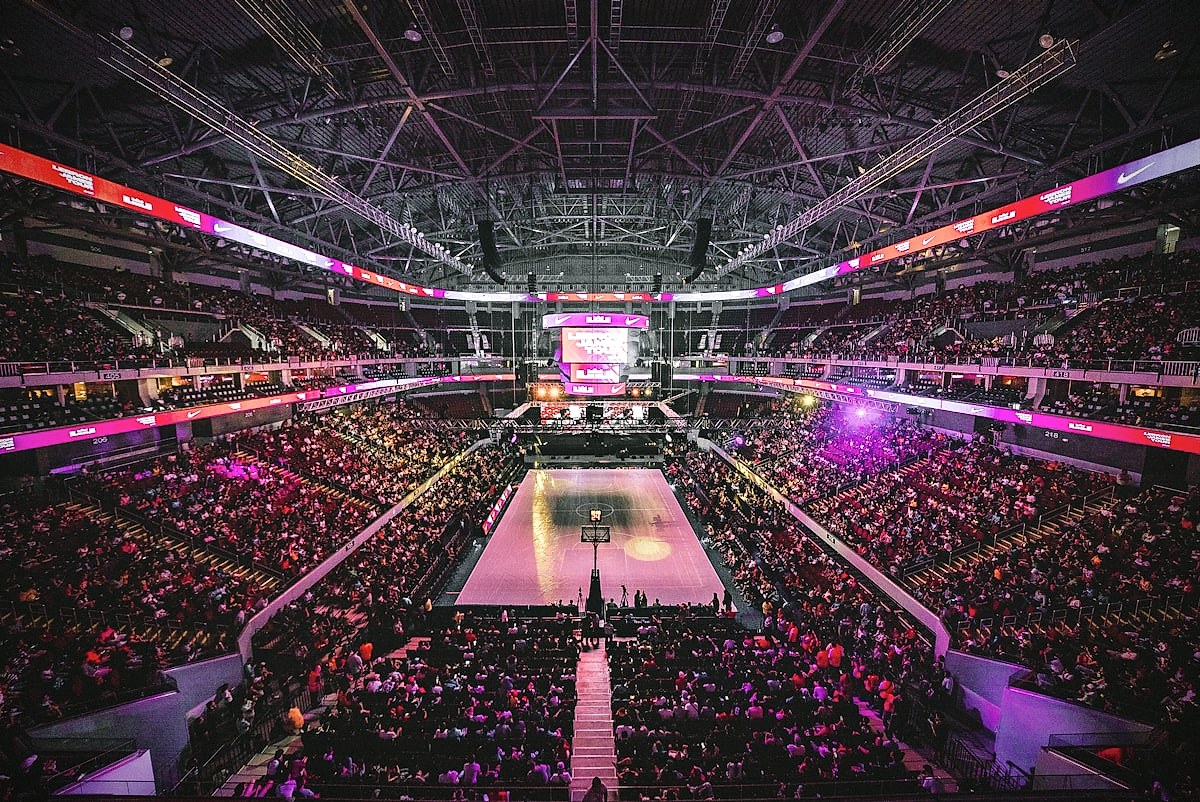
The Utah Jazz have never won an NBA championship. They have reached the NBA Finals twice (1997 and 1998), losing both to Michael Jordan’s Chicago Bulls in six games. The franchise’s defining identity is the eighteen-year partnership of John Stockton and Karl Malone, the longest two-player partnership in NBA history. Jerry Sloan, hired as head coach in December 1988, coached the Jazz for twenty-three seasons. The franchise was founded as the New Orleans Jazz in 1974, moved to Salt Lake City in 1979, and has produced twenty consecutive playoff appearances from 1984 to 2003, the longest streak in NBA history at the time (since surpassed by the Spurs’ twenty-two-year run). Current ownership is Ryan Smith, the co-founder of Qualtrics, who purchased the franchise from Gail Miller in October 2020 for $1.66 billion.

The New Orleans founding (1974) and the Pete Maravich years
The New Orleans Jazz were founded in 1974 as an NBA expansion franchise. The team’s founding owner was Sam Battistone, a Los Angeles-based restaurateur. The team paid a $6.15 million expansion fee and drafted Pete Maravich from the Atlanta Hawks in a pre-expansion trade, sending the Hawks two first-round picks and three second-round picks.
The New Orleans-era Jazz made the playoffs once (1977–78, a first-round exit). They never had a winning record across their five seasons in Louisiana. Maravich averaged 27.7 points per game across his New Orleans tenure (1974–79), including a career-high 31.1 points per game in 1976–77 that earned him the NBA scoring title. The arena situation was a constant problem: in their first season the team split games between the Municipal Auditorium and Loyola Field House, where the court was elevated so high that the NBA Players Association required safety netting around the edges. Later home games at the Louisiana Superdome were also difficult, with “onerous lease terms” and a local amusement tax of 11%, the highest in the nation. New Orleans was simply not a viable NBA market at the time.
Shop Utah Jazz merchandise
As an Amazon Associate we earn from qualifying purchases.
Financial troubles, combined with the New Orleans Saints’ dominance of local sports spending and the failed attempt to secure a publicly-financed arena, led Battistone to move the franchise to Salt Lake City on June 8, 1979. The “Jazz” name, a reference to New Orleans’s musical heritage, was retained despite the relocation. It remains one of the more geographically incongruous nicknames in American professional sports.
The early Utah years (1979–1985)
The Utah Jazz’s first six seasons in Salt Lake City produced three playoff appearances and no deep runs. The team played at the Salt Palace, a 12,616-seat venue that seated just over 12,000 and lacked the luxury suites that were becoming revenue-essential for NBA franchises by the early 1980s.
The team’s first winning season in Utah came in 1983–84, when Adrian Dantley, Mark Eaton, and rookie Thurl Bailey combined to produce a 45–37 record and a Midwest Division championship. Frank Layden, who had built the team from scratch as a coach, guided that breakthrough season. Dantley was the team’s best scorer throughout the early Utah years, a four-time All-Star who averaged over 28 points per game in two of his Utah seasons.
Battistone sold 50% of his controlling interest in April 1985 to Larry H. Miller, a Salt Lake City car dealer, for $8 million. Miller acquired the remaining 50% in 1986 for $14 million. The two-part purchase was motivated in part by competitive offers as high as $28 million from buyers who intended to relocate the franchise to Minneapolis. Miller paid below market to keep the team in Salt Lake City, a decision that cost him in the short term and defined the franchise for thirty-five years. He would own the team until his February 2009 death.
The Stockton-Malone era (1985–2003)
John Stockton was drafted 16th overall in 1984 out of Gonzaga. Karl Malone was drafted 13th overall in 1985 out of Louisiana Tech. The two began their eighteen-season partnership in 1985–86. Full Stockton story here; full Malone story here.
Jerry Sloan, a former Chicago Bulls guard and Jazz assistant coach, was promoted to head coach in December 1988. The Sloan-Stockton-Malone Jazz made the playoffs twenty consecutive seasons (1984–2003). They reached the Western Conference Finals in 1992, 1994, 1996, 1997, and 1998. The 1996–97 and 1997–98 Jazz both reached the NBA Finals. They lost to Chicago 4–2 both times.
The Game 6 of the 1998 Finals, on June 14, 1998 at Chicago’s United Center, ended with Jordan’s jumper over Bryon Russell with 5.2 seconds remaining. Stockton’s eventual game-tying attempt at the other end was short. The Jazz have not been back to the Finals.
Stockton retired in 2003 as the all-time NBA leader in career assists (15,806) and career steals (3,265). Malone, traded to the Lakers for the 2003–04 season, retired in 2004 with the second-highest career points total (36,928) in NBA history (since passed by Kareem Abdul-Jabbar’s career and by LeBron James).
The Deron Williams and Carlos Boozer era (2005–2011)
Deron Williams was drafted third overall in 2005 out of Illinois. Carlos Boozer had been signed as a free agent from Cleveland in 2004. The Williams-Boozer Jazz, coached by Jerry Sloan, reached the Western Conference Finals in 2007, losing to the Spurs in five games.
On February 10, 2011, Jerry Sloan resigned as head coach following a reported dispute with Williams. Williams was traded to the New Jersey Nets eleven days later for Devin Harris, Derrick Favors, two first-round picks, and cash. The Sloan resignation and the Williams trade ended the competitive window of the mid-2000s Jazz.
The Donovan Mitchell-Rudy Gobert era (2017–2022)
The 2017 NBA Draft produced Donovan Mitchell with the 13th overall pick, acquired from Denver in a draft-night trade. Rudy Gobert had been drafted 27th overall in 2013. The Mitchell-Gobert pairing made five consecutive playoff appearances (2018–22). The 2020–21 Jazz went 52–20, the Western Conference’s top seed, and lost to the Clippers in the second round.
In July 2022, the Jazz traded Gobert to Minnesota for Patrick Beverley, Malik Beasley, Walker Kessler, Jarred Vanderbilt, Leandro Bolmaro, and three first-round picks. On September 2, 2022, the Jazz traded Mitchell to Cleveland for Collin Sexton, Lauri Markkanen, Ochai Agbaji, three first-round picks, and two pick swaps. The Mitchell and Gobert trades are the architectural moves of the current Jazz rebuild, managed under team president Danny Ainge.
Current era (2022–present)
The post-Mitchell Jazz have been lottery teams for three consecutive seasons (2022–23 through 2024–25). The 2024 NBA Draft produced Cody Williams (10th overall) and Isaiah Collier (29th overall). Lauri Markkanen was the 2022–23 Most Improved Player, the franchise’s first since the Stockton era. The 2025–26 Jazz are positioned for another lottery appearance.

Ownership
Larry H. Miller acquired full ownership of the Jazz in 1985. He died in February 2009. The Miller family, led by Gail Miller (Larry’s widow), retained majority ownership through October 2020. Miller’s biography, Driven: An Autobiography (Deseret Book, 2010), written with Doug Robinson, covers his ownership of the Jazz alongside his career building a regional car-dealership empire. On October 28, 2020, Ryan Smith purchased the franchise from the Miller family for $1.66 billion. Smith co-founded the customer-experience software company Qualtrics, which sold to SAP for $8 billion in 2018 and spun back out via IPO at a $15 billion valuation in 2021.
Smith’s 2025 Forbes personal net worth was approximately $3.4 billion. Minority owners of the Jazz include Dwyane Wade, Peyton Manning, and tech entrepreneur Aisha Bowe. The franchise’s 2025 Forbes valuation was approximately $2.8 billion.
Smith’s Smith Entertainment Group also owns the Utah Hockey Club, which relocated from Arizona in April 2024 and plays at the Delta Center, sharing the building with the Jazz.
Retired numbers
Six jersey numbers have been retired:
- John Stockton (12)
- Karl Malone (32)
- Pete Maravich (7), honored for his New Orleans Jazz career
- Jeff Hornacek (14)
- Frank Layden (1, coaching banner)
- Larry H. Miller (9, ceremonial for his ownership)
Darrell Griffith (35) and Mark Eaton (53) are also in the Jazz rafters. Rudy Gobert and Donovan Mitchell are presumed future retirement candidates despite their mid-career trades.
Sources
- Basketball-Reference, Utah Jazz franchise page
- The Deseret News, Jazz beat coverage
- Larry H. Miller and Doug Robinson, Driven (Deseret Book, 2010)
- 1997 and 1998 NBA Finals records (Bulls-Jazz series)
- Ryan Smith purchase records, October 2020 ($1.66 billion)
- Utah Hockey Club relocation records, April 2024
- Forbes NBA Team Valuations, 2025
Shop Official Utah Jazz Gear at Fanatics
As a Fanatics affiliate, we may earn a commission from qualifying purchases.
Shop on Amazon
As an Amazon Associate, we earn from qualifying purchases.
Shop NBA Gear at JD Sports
We may earn a commission from qualifying purchases on JD Sports.