The illegal defense rule: history, death in 2001, and the modern defensive three-second violation

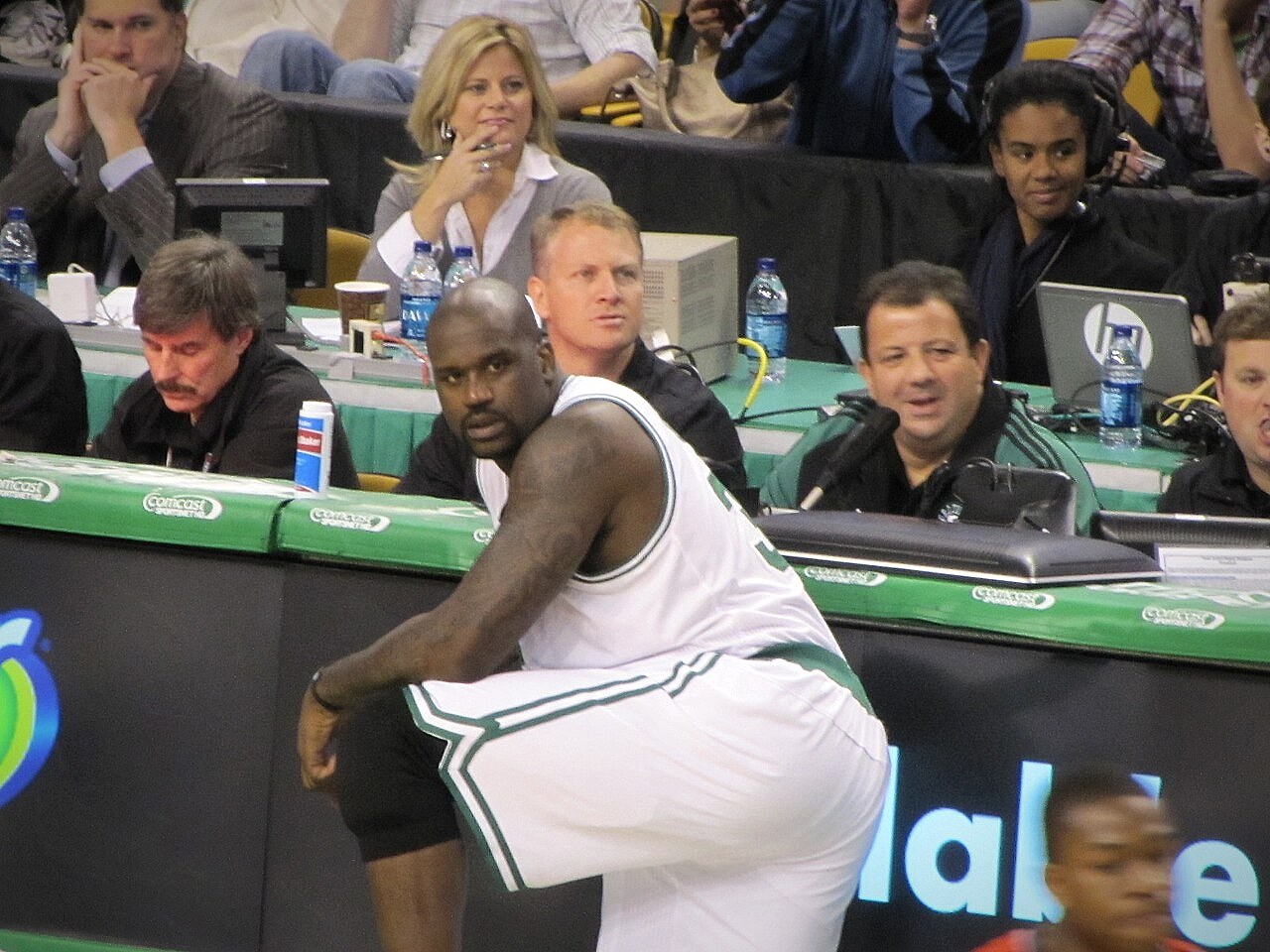
The illegal defense rule is the most-significant rule change in modern NBA history that most casual fans have never heard of. For 54 consecutive seasons (1947 through 2000–01) the league prohibited zone defense through a construction called the “illegal defense” violation. The rule’s purpose was to force man-to-man coverage. Its effect was to reshape NBA offense around one-on-one matchups and mid-range scoring. Its removal in the summer of 2001 made possible almost every strategic change that has defined the league since, including the three-point revolution, the modern help-defense system, and the shortening of Shaquille O’Neal’s dominant peak.
1947–1981: the original zone-defense prohibition
When the Basketball Association of America (the NBA’s predecessor) began play in 1946, the league’s founders wrote the rulebook to prevent zone defense outright. The rationale was competitive: zone was considered at the college level to be the defensive tool of weaker teams, and the BAA wanted a pro league whose defensive style matched the one-on-one athleticism the founders expected to sell to fans.
The rule from 1947 to 1981 was, in summary: defenders had to guard a specific offensive player. Sending two defenders to a player without the ball, i.e., playing zone, drew a technical foul called “illegal defense.” Referees used their judgment in determining whether a defender had left his man long enough to constitute a zone. The rule was enforced inconsistently and was the subject of occasional competition-committee discussion throughout the 1960s and 1970s, but the underlying prohibition held.
Shop NBA Gear
As an Amazon Associate we earn from qualifying purchases.
1981: the modified illegal defense rules
In 1981 the NBA Competition Committee approved a substantial modification to the rule. The modification was drafted by three head coaches: Cotton Fitzsimmons (Kansas City Kings), Don Nelson (Milwaukee Bucks), and Dick Motta (Washington Bullets). The three of them worked from a hotel room in May 1981, over two days, producing a document that is still part of the NBA archival rulebook.
The 1981 rules tried to balance the zone-defense prohibition against the growing use of help defense in the NBA. The short version of the rules:
- A defender could leave his man briefly to help on another player’s drive, as long as he returned to his original man’s vicinity within a defined time (originally 2.9 seconds, later modified).
- Big men defenders in the low post had more positional flexibility than perimeter defenders, who had to be in clear guarding position on their assigned player.
- Zone-style configurations (three defenders in the paint without the ball in the paint, for example) triggered an automatic illegal-defense violation.
The modifications ran to about a dozen clauses. Referees were expected to enforce them in real time, during games, with no TV replay review available until 2002.
1982–2000: two decades of confusion
The 1981 rule immediately became infamous among referees, coaches, and writers. The Deseret News in April 1988 published a reported feature titled “Illegal Defense Rule Is As Confusing As New Tax Laws” in which Utah Jazz head coach Frank Layden said, publicly, that he did not understand the rule and that he did not believe the referees understood the rule either. Jazz broadcaster Rod Hundley told the same reporter: “Only the die-hard NBA fans will understand it. I’d say 80 percent of the people have no idea what it is.”
The on-court effect was that illegal-defense violations were called approximately one to three times per game across the 1980s and 1990s. The calls were unpredictable, two referees in the same officiating crew would often disagree about whether a specific defensive rotation constituted a zone. Coaches built offensive sets that specifically tried to bait defenses into illegal-defense calls, knowing that a successful bait gave the offense a free technical-foul throw plus retained possession.
The structural effect of the rule across two decades was more important. Because help defense was constrained, the most-efficient offensive possessions in the 1980s and 1990s were one-on-one isolation plays against a single defender who could not be doubled. This is the reason the 1990s are remembered as the isolation-scoring era. Michael Jordan’s peak (1987–1993) was possible in part because the illegal-defense rules prevented the Detroit Pistons and other defensive teams from legally running a “Jordan Rules” trap the way that coverage would later be run in the 2000s. Phil Jackson, who coached those Bulls teams, covers the triangle offense’s relationship to the illegal-defense era in 11 Rings: The Soul of Success (Penguin, 2013).
2001: the elimination
The 2000–01 season was the fifth consecutive year of Shaquille O’Neal’s interior dominance in the post-Kareem era. O’Neal averaged 28.7 points and 12.7 rebounds that year, shot 57.2 percent from the field, and the Lakers won their second consecutive championship. The league’s offensive efficiency outside the paint was also declining: three-point shooting percentage was stagnant, mid-range scoring was falling, and team-to-team scoring differentials were widening. The commissioner’s office had been receiving pressure from multiple ownership groups to allow defenses to double-team Shaquille more legally.
On April 12, 2001, the NBA Board of Governors, on recommendation from the Competition Committee, voted to eliminate the illegal-defense rule entirely beginning with the 2001–02 season. Zone defense would be legal. Doubles could be sent from any direction. The Board simultaneously approved a replacement rule: the defensive three-second violation. A defender would be prohibited from staying in the paint for more than three consecutive seconds unless he was within an arm’s length of an offensive player.
The defensive-three-second rule was a compromise. It allowed zone defense. It prevented a 7’1” center from simply camping in the paint all game. It was designed specifically with O’Neal in mind, to prevent teams from stationing a defender in the paint exclusively to help on his post catches, since that defender would be whistled for the three-second violation.
The rule took effect on October 30, 2001. Shaquille O’Neal’s production in the 2001–02 season was essentially unchanged from his 2000–01 peak (27.2 points, 10.7 rebounds, 59.5 percent shooting). The Lakers won the 2002 championship, his third consecutive. The rule change did not dent his peak. But it changed the geometry of what the league’s defense looked like for every player who came after him.
The structural consequences, 2001–2026
The 25 years since the elimination of illegal defense have been the most strategically dynamic period in NBA history, and the rule change is the mechanical precondition for most of the developments:
Help defense became legal and mandatory. The pick-and-roll defensive scheme shifted from single-coverage-with-ice to full help-and-recover with weak-side tagging. Modern defensive ratings of good teams are 8–12 points per 100 possessions better than equivalent teams of the 1990s.
The three-point shot became the efficient offensive counter. With zone defense legalized, interior scoring became harder to produce one-on-one. The three-point shot’s mathematical advantage (three points > two points at equivalent percentages) was finally able to be exploited fully. The shift from 15 three-point attempts per game (2001) to 35+ three-point attempts per game (2024) is downstream from the 2001 rule change.
The mid-range game declined. Mid-range shots had been the highest-efficiency shots in the pre-2001 illegal-defense era because the help rules kept defenders out of rotation to contest them. In the post-2001 era, with legal zone defense, mid-range shots are contested more easily than corner threes. Mid-range attempt rates declined roughly 60 percent league-wide between 2001 and 2024.
Big-man offensive responsibility changed. The 2000s center had to be able to defend the paint without camping in it. The 2010s-2020s center had to be able to shoot or pass from the perimeter. Nikola Jokić, Joel Embiid, and Victor Wembanyama all represent center types that could not have existed under the old illegal-defense rules because the modern center’s skill set is specifically optimized for the zone-defense world the rule created.
The defensive three-second rule today
The current 2025–26 NBA rulebook defines the defensive three-second violation as follows: a defensive player who is not actively guarding an offensive player (i.e., within arm’s length and in a guarding stance) may not remain in the paint for more than three consecutive seconds. Violation results in a technical foul, one free throw plus possession retained by the offensive team. The rule applies only in the frontcourt and only while the ball is on the offensive half of the court.
The rule is called roughly 0.8 times per game per team in the 2024–25 season, according to the NBA’s officiating summary. Referees have become more consistent in its enforcement over the 25 years, though the “arm’s length” requirement remains subject to interpretation.
Why the rule change matters more than people remember
The NBA of 2026 plays a fundamentally different game from the NBA of 2000. The strategic shift is most often credited to analytics, or to Stephen Curry, or to the rise of the Houston Rockets under Daryl Morey. Those are all contributing factors. The precondition, though, is the April 2001 rule vote that legalized zone defense and instituted the defensive three-second rule. Without that rule change, the 2010s-2020s offensive revolution would not have been possible. Analytics would have pointed the offenses toward the corner-three regardless, but the defenses would still have been required to play man-to-man, and the 3x3 chess game of help-and-recover that defines modern NBA basketball would never have developed.
Shaquille O’Neal’s career is the clearest illustration. The rule was written specifically to limit him. It did not limit his peak. But it shaped the league that every center, every forward, and every guard has played in since.
Related reading
- Shaquille O’Neal biography, the dominance that prompted the rule change
- History of the three-point line, the offensive revolution enabled by the 2001 rule change
Gear
The rule-change era in print.
*11 Rings: The Soul of Success* by Phil Jackson (Penguin, 2013) →
*The Book of Basketball* by Bill Simmons (Ballantine, 2009) →
Sources
Linked in the frontmatter. The 1981 Fitzsimmons-Nelson-Motta rules-drafting story is from the NBA’s archived Competition Committee minutes (not publicly published; referenced in Jack McCallum’s Dream Team (Ballantine, 2012) and in George Karl’s Furious George (Harper, 2017)). The 1988 Deseret News coverage is the most-cited contemporary journalistic account of the rule’s unenforceability. The 2001 Board of Governors vote and the defensive-three-second rule implementation are from NBA.com’s archive.
Shop NBA Gear at Fanatics
As a Fanatics affiliate, we may earn a commission from qualifying purchases.
Shop on Amazon
- The illegal defense rule: history, death in 2001, and the modern defensive three-second violation — books ↗
- NBA history books ↗
- Basketball training gear ↗
As an Amazon Associate, we earn from qualifying purchases.
Shop Basketball Shoes & Apparel at JD Sports
We may earn a commission from qualifying purchases on JD Sports.