Magic vs Bird: The Rivalry That Saved the NBA
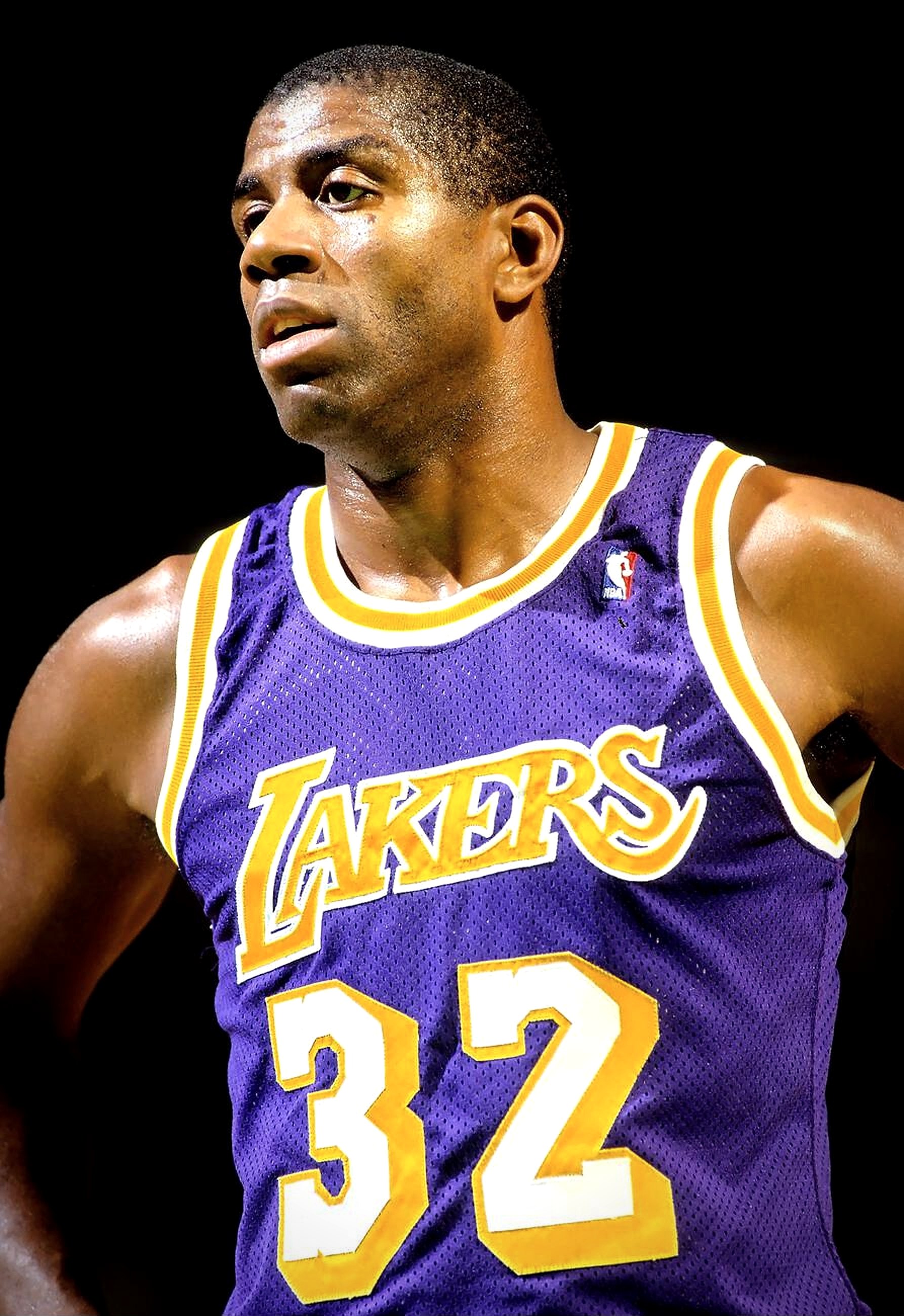
In the 1978–79 NBA season the Finals were tape-delayed on CBS. Games four and five of the championship series aired at 11:30 p.m. Eastern, after the evening news, on the assumption that basketball could not hold a prime-time audience in May. By the 1986–87 Finals the same series was drawing a 15.9 Nielsen rating in prime time with the Lakers and Celtics. The difference, by nearly every subsequent accounting, is what Magic Johnson and Larry Bird did between those two seasons. One came to Los Angeles, one to Boston, both in the fall of 1979, and for the next nine years one of them was in every single NBA Finals. That had not happened before. It has not happened since.
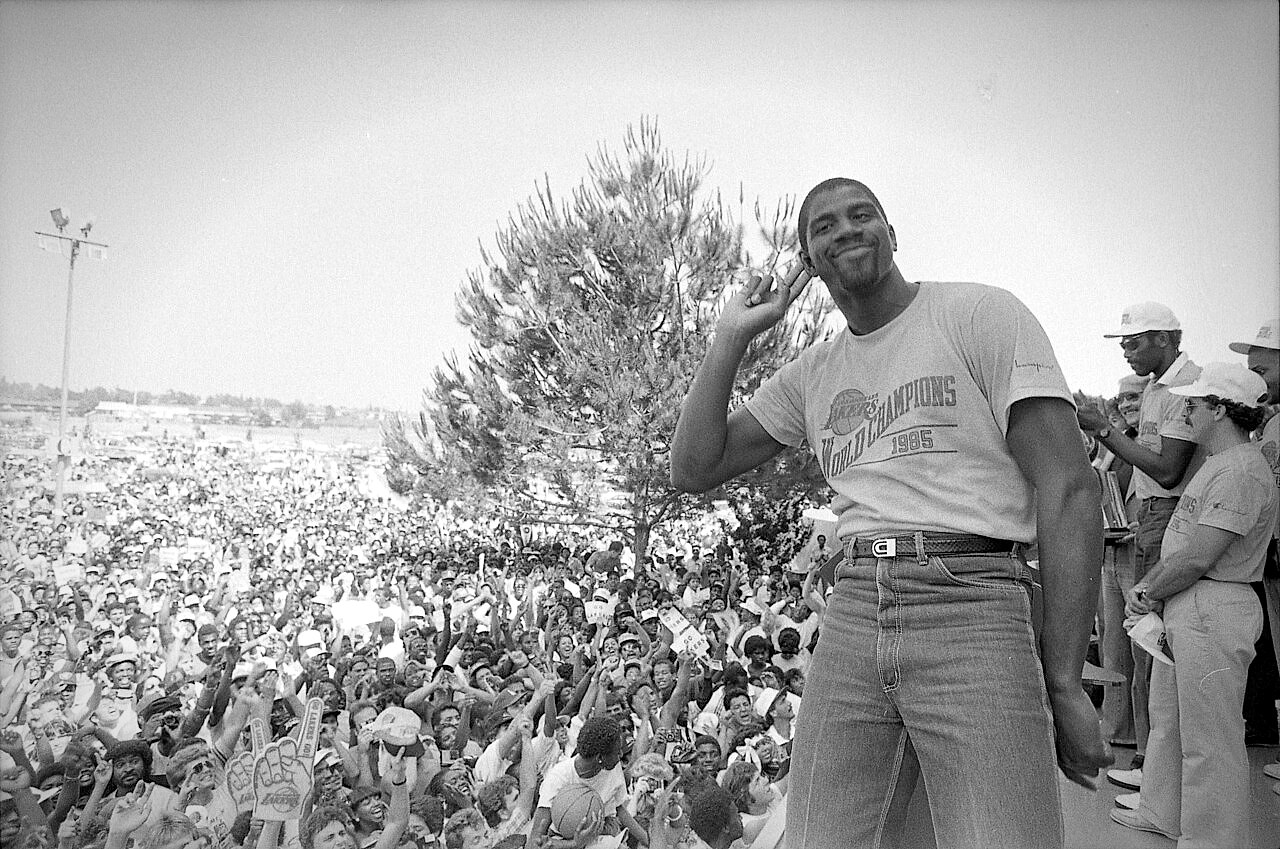
March 26, 1979: the Salt Lake City final
The first time they played each other, they played for the NCAA championship. Michigan State versus Indiana State in Salt Lake City, with Jud Heathcote coaching State and Bill Hodges coaching the Sycamores, was the final of a year in which neither Kentucky nor UCLA made the Final Four and the sport’s national-TV narrative arrived, almost by accident, at a small-school senior from Indiana and a sophomore from Lansing.
The broadcast drew a 24.1 Nielsen rating, which is still the highest-rated college basketball game in American television history. Michigan State won 75–64. Johnson had 24 points, 7 rebounds, 5 assists; Bird had 19 points on 7-of-21 shooting, playing with a broken left thumb he had hidden from his coaching staff for most of the tournament. Heathcote’s defensive plan, a 2-2-1 match-up zone deliberately engineered to force Bird to beat them from the perimeter while double-teaming him on drives, is still the most-studied defensive scheme in Final Four history.
Shop NBA Gear
As an Amazon Associate we earn from qualifying purchases.
Both left college that spring. Johnson was drafted first overall by the Los Angeles Lakers in June 1979. Bird had been drafted sixth overall by the Boston Celtics a year earlier under the NBA’s then-extant “junior-eligibility” provision (a loophole since closed), and had stayed at Indiana State for his senior year. He signed with Boston in the fall of 1979 on what was, at that moment, the largest rookie contract in American professional sport: five years, $3.25 million.
1979–80: the arrival
Johnson’s Lakers went 60–22 in 1979–80 and won the NBA championship in the first year of the Johnson-Kareem pairing. The Game 6 in which a rookie Johnson started at center for the injured Kareem Abdul-Jabbar and scored 42 points, 15 rebounds, and 7 assists on a broken Philadelphia 76ers defense, is still the single most-reproduced rookie Finals performance in the league’s recorded history.
Bird’s Celtics went 61–21 in his rookie year, a 32-win improvement from the previous season’s 29–53. Boston lost in the Eastern Conference Finals to the Philadelphia 76ers. Bird was Rookie of the Year. Johnson was Finals MVP. Both players were twenty-three years old, in their first seasons, and the 32-win Boston improvement was, per Basketball-Reference’s tracking of season-over-season win differentials, the second-largest single-player impact in NBA history.
The 1981 Boston Celtics won the championship. The 1982 Lakers won it. The 1983 Philadelphia 76ers won it, one of only two years between 1980 and 1988 that neither a Bird-Celtics team nor a Magic-Lakers team was in the Finals; the 1979 Seattle team was the other. From 1984 forward, until Bird’s 1988 injuries, one or the other was in every NBA Finals.
1984: the first Finals meeting, seven games
The 1984 NBA Finals is the only one of the three Magic-Bird Finals Boston won. It went seven games. The decisive beats of the series:
- Game 1, Boston Garden. Lakers won 115–109. Johnson had 18 points, 10 assists.
- Game 2, Boston Garden. Gerald Henderson stole a Johnson cross-court pass with seven seconds left in regulation, tied the game, and the Celtics won in overtime. This is the play Johnson has, in multiple subsequent interviews, called the one he most wishes he could take back.
- Game 4, Forum. Kevin McHale’s clothesline takedown of Kurt Rambis in the third quarter, the so-called “takedown that saved the series,” changed the tenor of the physical play. Boston won in overtime.
- Game 7, Boston Garden, with no working air conditioning on a 97-degree day. The temperature on the floor was later measured at 110 degrees. Bird had 20 and 12. Boston won 111–102. Bird was Finals MVP.
Jackie MacMullan’s 2009 reconstructed-history When the Game Was Ours (Houghton Mifflin Harcourt), written with extensive interviews with both players, is the definitive account of the 1984 series. MacMullan makes the case, with interview citation, that the heat-at-Game-7 was the physical turning point of the series and that Lakers head coach Pat Riley knew before tip-off that Los Angeles would lose.
1985: the second Finals meeting, Lakers in six
The 1985 Finals was the rematch and the turn. Los Angeles had added a Finals-MVP-caliber thirty-eight-year-old Kareem (25.7 points per game in the series on 60.4 percent shooting). Boston, defending champion, was the Celtics favored to repeat.
- Game 1, Boston Garden, the “Memorial Day Massacre.” Boston won 148–114. The Celtics scored 79 first-half points. The loss is the one that Riley used, in a closed-door Lakers practice the following day, to recalibrate the defensive scheme for the remainder of the series.
- Games 2 through 6, Los Angeles in five. Kareem was Finals MVP at age thirty-eight, the oldest Finals MVP in the history of the award. Johnson averaged 18.3 points, 14.0 assists, and 6.8 rebounds across the series. Bird averaged 23.8 points on 44.9 percent shooting, a drop that was visibly a result of a sprained right elbow he had suffered in Game 2.
The 1985 championship was the first Finals victory by a visiting team in the Boston Garden in the Celtics’ sixteen NBA Finals appearances to that point. The visiting-team curse was broken. Riley has said, in a 2016 Sports Illustrated oral history, that the Game 6 clinching was the moment his Lakers teams stopped thinking of themselves as challengers.
1987: the third Finals meeting, Lakers in six
The 1987 Finals, Lakers in six, is the one best remembered for Johnson’s running left-handed skyhook over Kevin McHale and Robert Parish to win Game 4 at the Boston Garden with two seconds remaining. The shot, which Johnson had never taken in a game before, is, per Riley’s 1988 Lakers press conference, one he had practiced with Abdul-Jabbar in thirty-minute post-practice sessions throughout the season.
- Game 4 final: Lakers 107, Celtics 106, Johnson hook with 0:02 remaining.
- Game 6 at the Forum: Lakers 106, Celtics 93. Johnson averaged 26.2 points, 13.0 assists, 8.0 rebounds across the series and was Finals MVP.
The 1988 Lakers would win the championship again over the Detroit Pistons; the 1988 Celtics would lose in the Eastern Conference Finals to the Pistons, an injury-hobbled Bird scoring 31 in the Game 7 loss on one healthy achilles. The direct Magic-Bird Finals competition ended in 1987.
The 1985 Converse commercial, and the off-court friendship
In the summer of 1985, after the Lakers had won the Finals, Converse shot a national commercial at Bird’s hometown home in French Lick, Indiana. The commercial, produced by the Converse creative team with McCann-Erickson, was built around the narrative premise of the rivalry (Bird at home on the driveway, Johnson arriving in a limousine). The shoot ran two days.
Bird’s mother Georgia made lunch the first day. That is the detail both players return to in later interviews. Johnson has said, in the 2010 HBO documentary Magic & Bird: A Courtship of Rivals, that the lunch was the first time he had met a Bird family member in person, that Georgia served him a ham sandwich and a can of Coke, and that the conversation at the kitchen table was the first time Bird spoke to him as a person rather than as an opponent. The friendship dates from that meal. Both players, asked about it subsequently, have described the same afternoon, with minor variations in detail, as the end of the adversarial phase of their relationship.
November 7, 1991: Johnson’s HIV announcement
Johnson announced at a press conference at the Forum on November 7, 1991 that he had tested positive for HIV and was retiring from the Lakers effective immediately. Bird was watching the press conference on ESPN at his Boston-area home with his wife Dinah. His reported first reaction, per Dinah Bird in MacMullan’s When the Game Was Ours, was to call Magic’s home phone in Los Angeles. He could not get through. Bird flew to Los Angeles three days later. The two had dinner at Johnson’s home in Beverly Hills.
Bird’s public comments over the following week were unusually emotional for him. He attended the 1992 All-Star Game at Orlando Arena specifically to be on the floor with Johnson; Johnson was voted in as a starter despite being retired, played 29 minutes, scored 25 points, and was MVP. The standing ovation at the end of the game is one of the most-broadcast moments in All-Star history. His subsequent memoir work with MacMullan on Bird Watching would later detail his emotional journey during this period.
The 1992 Dream Team, and mutual induction
Both players were on the 1992 United States Olympic team that won the gold medal at Barcelona. It was the last real competitive basketball of either career. Bird retired at the end of the 1991–92 season with a congenital back injury. Johnson retired for a second time at the end of the 1995–96 season (he had returned briefly for thirty-two games of the 1995–96 season).
Both were inducted into the Naismith Memorial Basketball Hall of Fame in 1998 (Bird) and 2002 (Johnson), and both, in their respective induction speeches, named each other as the defining opponent of their career. Johnson’s 2002 induction speech named Bird first; Bird’s 1998 induction speech named Johnson first. Both were first-ballot inductees. Johnson had documented his career trajectory in his 1992 autobiography My Life (Random House, with William Novak), which captured the trajectory leading to his Hall of Fame moment.
What the rivalry actually did for the league
The pre-Magic-Bird NBA: 1979 Finals tape-delayed, league-wide average attendance 10,822 per game, CBS broadcast rights worth $74 million for four years. The post-Magic-Bird NBA, by the end of the 1988–89 season: Finals broadcast in prime time on CBS with a 15.1 Nielsen rating, league-wide attendance at 15,088 per game, NBC broadcast rights deal (signed after the 1989–90 season) worth $600 million for four years. The broadcast-rights-value multiplier from 1979 to 1990 was a factor of eight. The attendance lift was roughly forty percent.
The players who followed, Michael Jordan through the 1990s, Kobe Bryant and LeBron James in the 2000s and 2010s, inherited a league whose economic base had been tripled or quadrupled by the Magic-Bird era. That is the one thing about the rivalry that is not debatable. It pulled the NBA out of the tape-delay era and into the television era. The basketball itself was the means by which that happened, and the basketball itself was, by any measure, the best basketball either franchise has produced.
Gear
Read When the Game Was Ours, the rivalry told in both voices.
When the Game Was Ours on Amazon →
Sources
- Basketball-Reference, 1979 NCAA championship game box score (Michigan State 75, Indiana State 64, Salt Lake City, March 26, 1979); Nielsen rating verification via Nielsen broadcast archive
- 1984, 1985, and 1987 NBA Finals box scores (Basketball-Reference series pages)
- Jackie MacMullan, When the Game Was Ours (Houghton Mifflin Harcourt, 2009). The Bird-Johnson interviews that anchor most of the off-court friendship material are in Chapters 9 through 12.
- HBO documentary, Magic & Bird: A Courtship of Rivals (2010), directed by Ezra Edelman. The 1985 French Lick luncheon is reconstructed from Johnson’s and Bird’s on-camera accounts.
- Larry Bird and Jackie MacMullan, Bird Watching (Warner Books, 1999)
- Magic Johnson, My Life (Random House, 1992), with William Novak. The November 1991 HIV announcement is covered in the closing chapters.
- Sports Illustrated oral history of the 1985 Lakers, published June 2016
- CBS broadcast ratings, 1979 NBA Finals (tape-delay controversy); NBC contract, 1990 (broadcast-rights value)
- Naismith Memorial Basketball Hall of Fame induction-speech transcripts, Bird (1998) and Johnson (2002)
Shop NBA Gear at Fanatics
As a Fanatics affiliate, we may earn a commission from qualifying purchases.
Shop on Amazon
- Magic vs Bird: The Rivalry That Saved the NBA — books ↗
- NBA history books ↗
- Basketball training gear ↗
As an Amazon Associate, we earn from qualifying purchases.
Shop Basketball Shoes & Apparel at JD Sports
We may earn a commission from qualifying purchases on JD Sports.