NBA Triple-Double Records
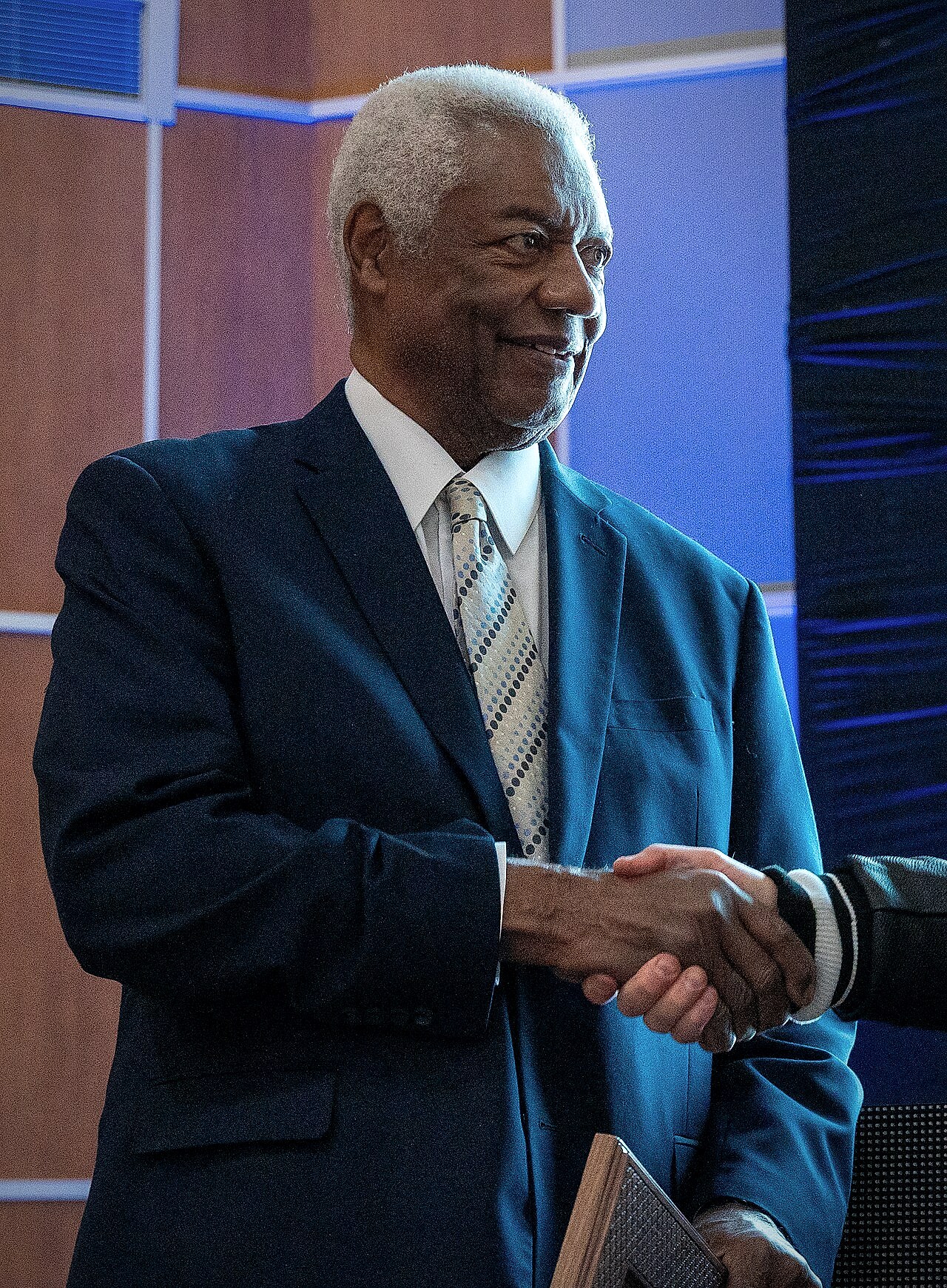
A triple-double, in the NBA’s official record book, is a single game in which a player records double-digit totals in three of the five standard box-score categories: points, rebounds, assists, steals, and blocks. In practice, nearly every triple-double in league history has been points-rebounds-assists; the occasional exception (usually a big man with points, rebounds, and blocks) is rare enough to be separately cataloged. The career triple-double record was held by Oscar Robertson for fifty-two years. Russell Westbrook passed it on May 10, 2021. The single-season triple-double average, held by Robertson from 1961-62 to 2016-17, has been surpassed by Westbrook four times and by Nikola Jokić zero times despite Jokić’s MVP seasons. The statistic has become, in the twenty-first century, a contested measure of ball-dominant guard play, and its cultural weight has risen accordingly.
The reason the statistic carries such weight is straightforward: reaching double digits in points, rebounds, and assists simultaneously means a player made a significant contribution in three completely different ways in the same game. Scoring is what most players do. Rebounding requires positioning, effort, and typically some height. Assists require reading the floor, creating for teammates, and distributing the ball effectively. A player who does all three at double-digit volume on the same night has, by the box score at least, dominated every dimension of a basketball game. That argument is what gave the triple-double its iconic status, and why the career record felt like such a meaningful marker when Robertson held it for five decades.
The complication, as the statistic has become more common, is that not every triple-double reflects the same contribution. A guard who scores 12, grabs 11 rebounds by deliberately boxing out and claiming his own teammates’ missed shots, and dishes 10 assists on a team that runs offense through him by design has met the definition. So has a player who scores 32, pulls down 15 in genuine all-around play, and records 11 assists in a complete, decisive performance. The number looks identical in both cases. The basketball reality behind it does not. That gap is what has produced the ongoing debate about whether career triple-double totals tell a complete story, or whether they have become, in some cases, a function of player agency and team scheme as much as genuine all-around impact.
Shop NBA Gear
As an Amazon Associate we earn from qualifying purchases.
What counts as a triple-double
The five standard box-score categories (points, rebounds, assists, steals, blocks) are the eligible categories. A game with 10 points, 10 rebounds, and 10 assists is a triple-double. A game with 10 points, 10 rebounds, and 10 blocks is also a triple-double, though this combination has been recorded fewer than twenty times in league history. Points-rebounds-assists triple-doubles make up roughly 95 percent of the all-time total.
The official statistical tracking of steals and blocks began in 1973–74, which is why pre-1974 triple-doubles (including most of Oscar Robertson’s career) are exclusively points-rebounds-assists. Basketball-Reference and NBA.com’s historical databases use league-audited box scores going back to 1946 for the first three categories.
The Oscar Robertson standard (1960–1974)
Oscar Robertson finished his fourteen-year NBA career with 181 regular-season triple-doubles. His 1972 autobiography, retold in full in The Big O: My Life, My Times, My Game (Rodale, 2003), covers the Cincinnati Royals era and the context behind those rebound totals in his own words. He averaged 30.8 points, 12.5 rebounds, and 11.4 assists per game across the 1961–62 season, the only full-season triple-double average in NBA history until Westbrook in 2016–17. Robertson’s 41 triple-doubles in a single season (1961–62) was also a single-season record that stood for fifty-five years.
Robertson’s career split: he averaged a triple-double across his first five NBA seasons combined (30.3 points, 10.4 rebounds, 10.6 assists) from 1960–61 to 1964–65, a five-season stretch that no other guard has approached. The rebound totals were not a fluke; Robertson was 6’5”, played on a Cincinnati Royals team that did not produce elite rebounding, and was often assigned defensive rebounding duty to trigger the fast break.
Russell Westbrook passes Robertson
Russell Westbrook’s full biography here. In 2016–17, playing for the Oklahoma City Thunder in the season following Kevin Durant’s departure to Golden State, Westbrook averaged a triple-double (31.6 points, 10.7 rebounds, 10.4 assists) and won the regular-season MVP. He averaged a triple-double again in 2017–18, 2018–19, and 2020–21, the only player to do so in multiple seasons.
On May 10, 2021, playing for the Washington Wizards in a home game against the Atlanta Hawks at Capital One Arena, Westbrook recorded his 182nd career triple-double. Robertson was in attendance and presented the commemorative ball. Westbrook has continued to add to the record since the 2021 milestone; his career total was 201 triple-doubles through the end of the 2023–24 season.
Career triple-double leaderboard
The all-time career triple-double leaderboard, as of the end of the 2023–24 season:
- Russell Westbrook: 201
- Oscar Robertson: 181
- Nikola Jokić: approximately 140 (active, rising)
- Magic Johnson: 138
- LeBron James: 113 (active, rising)
- Jason Kidd: 107
- Wilt Chamberlain: 78
- James Harden: approximately 75 (active, rising)
- Larry Bird: 59
- Draymond Green: 40
Jokić’s rate of triple-doubles per game (approximately 28 percent of his games from 2020 onward) is the highest sustained rate in NBA history.
Single-game and single-season records
- Highest-scoring triple-double: Luka Dončić’s 73-point, 10-rebound, 13-assist game against the Atlanta Hawks on January 26, 2024 is the highest-scoring triple-double in NBA history. Dončić’s story here.
- Quickest triple-double: Nikola Jokić recorded a triple-double in 14 minutes and 33 seconds against the Los Angeles Clippers on February 6, 2018.
- Most triple-doubles in a single season: Russell Westbrook, 42 in 2016–17.
- Youngest player with a triple-double: Markelle Fultz, at age 20 years 317 days, on April 11, 2019.
- First rookie triple-double: Oscar Robertson, in his first NBA game on October 19, 1960.
Playoff triple-doubles
LeBron James holds the NBA career playoff triple-double record. He passed Magic Johnson’s 30 during the 2020 playoffs and has continued to add to the total. The playoff leaderboard’s top five:
- LeBron James: 32 (through 2024)
- Magic Johnson: 30
- Nikola Jokić: approximately 15 (active)
- Russell Westbrook: approximately 12 (active)
- Wilt Chamberlain: 11
Nikola Jokić’s 2023 Finals Game 3, 32 points, 21 rebounds, 10 assists against the Miami Heat, is one of the most-cited Finals triple-doubles. Jerry West’s 1969 Finals triple-double average (30.0 points, 11.3 rebounds, 11.0 assists across the seven-game series against the Celtics) is the only Finals triple-double average in NBA history; West was Finals MVP despite the Lakers losing.
Robertson and Westbrook: a comparison beyond the counting stats
The temptation when looking at the career leaderboard is to treat Westbrook’s 201 as simply more than Robertson’s 181, and therefore better. The comparison is messier than that, and worth examining directly.
Robertson played on Cincinnati Royals teams that were competitive but never championship-caliber in his prime years. He was the primary ball-handler, primary scorer, and primary creator on a roster that required him to do everything. His rebound totals (10-plus per game across his first five seasons) came from genuine two-way engagement: at 6’5” for a guard in that era, he was often matched against smaller players who could not keep up with him on the boards. The Royals did not have an elite rebounding big man, so Robertson filled the role. His triple-doubles were not manufactured to reach a round number; they were the natural output of a player doing what his team required.
Westbrook’s triple-double seasons, particularly the later ones in Oklahoma City after Kevin Durant’s departure, came on teams structured around his usage. The rebound question is the specific point of contention: in seasons where Westbrook led the league in triple-doubles, opponents and analysts noted that OKC teammates would deliberately allow defensive rebounds to skip past them, giving Westbrook the chance to grab them and keep his rebound total climbing. Westbrook has denied this was intentional, and the on-court evidence is mixed. What is true is that his rebound rate jumped significantly after he became the primary focus of statistical attention and declined again in subsequent seasons when he played in different systems.
Neither player’s record is invalid. The record book does not distinguish between a rebound grabbed by position and effort versus one that fell to a player by design. But the comparison says something important about what the statistic actually measures and why context matters as much as the final count.
The historiographical issue
The modern triple-double statistic is complicated by two phenomena. First, usage-rate inflation: high-usage ball-dominant guards in the Westbrook era posted rebound numbers (by deliberately rebounding their own teammates’ available rebounds) that have raised the question of whether a triple-double represents the same kind of all-around contribution it once did. Second, the Jokić center-triple-double era has flipped the statistic’s traditional association; the highest-rate current-era triple-doubler plays center, not point guard.
Jokić’s case is worth considering separately. His triple-doubles come from a player who, by every available measure, actually does dominate multiple dimensions of the game. He is a 7’0” center who leads his team in assists, rebounds, and often scoring simultaneously, without the usage-rate gaming that raised questions about the Westbrook era. His rate of triple-doubles (approximately 28 percent of his games from 2020 onward) is not the product of rebounding strategy; it reflects a player whose court vision, positioning, and scoring volume genuinely produce double digits across all three categories on nearly one in three nights. His rise on the career leaderboard is the statistical record following the basketball reality, not the other way around.
The NBA has, as of 2026, not separated the triple-double statistic into weighted or context-adjusted categories, despite several analytics-committee proposals. The stat remains, for now, a single counting number. The record book shows what happened on the floor. Whether what happened on the floor means the same thing in 1962, 2017, and 2024 is the question that context has to answer.
Gear
Read the man who held the record for 52 years, and collect the era.
*The Big O* by Oscar Robertson (Rodale, 2003) →
Panini NBA Hoops Blaster Box →
Sources
- Basketball-Reference, career triple-double leaderboard (updated through each season)
- NBA.com, official triple-double game-by-game archive
- 2023 NBA Finals Game 3 box score (Jokić 32-21-10, Denver vs Miami)
- January 26, 2024 Dallas vs Atlanta box score (Dončić 73-10-13)
- May 10, 2021 Washington Wizards vs Atlanta Hawks box score (Westbrook 182nd triple-double)
- 1961-62 Oscar Robertson full-season statistics
Shop NBA Gear at Fanatics
As a Fanatics affiliate, we may earn a commission from qualifying purchases.
Shop on Amazon
As an Amazon Associate, we earn from qualifying purchases.
Shop Basketball Shoes at JD Sports
We may earn a commission from qualifying purchases on JD Sports.