The 25 Greatest NBA Players of All Time, Ranked

Michael Jordan is the greatest NBA player of all time. Six trips to the Finals, six championships, six Finals MVPs, a 6-0 Finals record that no other multi-time champion can match. LeBron James is a legitimate second, the league’s all-time leading scorer with four rings won across three different franchises. Kareem Abdul-Jabbar, Bill Russell, and Magic Johnson round out a top five that every serious basketball historian would recognize, even if the exact order gets argued in every barbershop and group chat in America.
This list ranks 25 players using six criteria, weighted in this order: championships won as the best or co-best player on the team, Finals MVP and regular-season MVP totals, peak dominance in a player’s best individual seasons, career-long production and durability, advanced-stat performance relative to the era, and the player’s actual impact on how the sport is played today. No single stat decides a spot. Robert Horry has seven rings and isn’t on this list; Wilt Chamberlain has two and is comfortably in the top six.
How this list is built
Rings matter, but rings alone are a trap. Basketball is the most star-dependent of the major American sports, and a player’s teammates, coach, era, and health luck all shape a championship count in ways an individual can’t fully control. That’s why Bill Russell’s 11 rings and Robert Horry’s 7 mean radically different things: Russell was the best player on every one of his teams, Horry was a role player on three different contenders. This list credits championships heavily when a player was demonstrably the best or second-best player on the floor, and discounts them when a player was along for the ride.
Shop NBA Gear
As an Amazon Associate we earn from qualifying purchases.
Peak matters as much as career totals. A player who was the best in the world for three seasons (Bill Walton, briefly) doesn’t outrank a player who was elite for fifteen. But a player who sustained excellence for two decades (Karl Malone, Dirk Nowitzki) deserves credit that a flashier five-year peak doesn’t automatically erase. Advanced stats (true shooting percentage, box plus-minus, win shares) get consulted but never treated as gospel, since the underlying box-score data for pre-1970s players is incomplete and the stats themselves reward different things depending on role and era.
The top 25, ranked
1. Michael Jordan
Six championships with the Chicago Bulls (1991, 1992, 1993, 1996, 1997, 1998), six Finals MVPs, and a perfect 6-0 record on the sport’s biggest stage. Five regular-season MVPs. A record 10 scoring titles, seven of them in a row from 1987 to 1993. His career scoring average of 30.12 points per game is the highest in NBA history, edging Wilt Chamberlain’s 30.07. He never lost a playoff series he was healthy for after his second season. Full biography and career detail on Michael Jordan’s page.
2. LeBron James
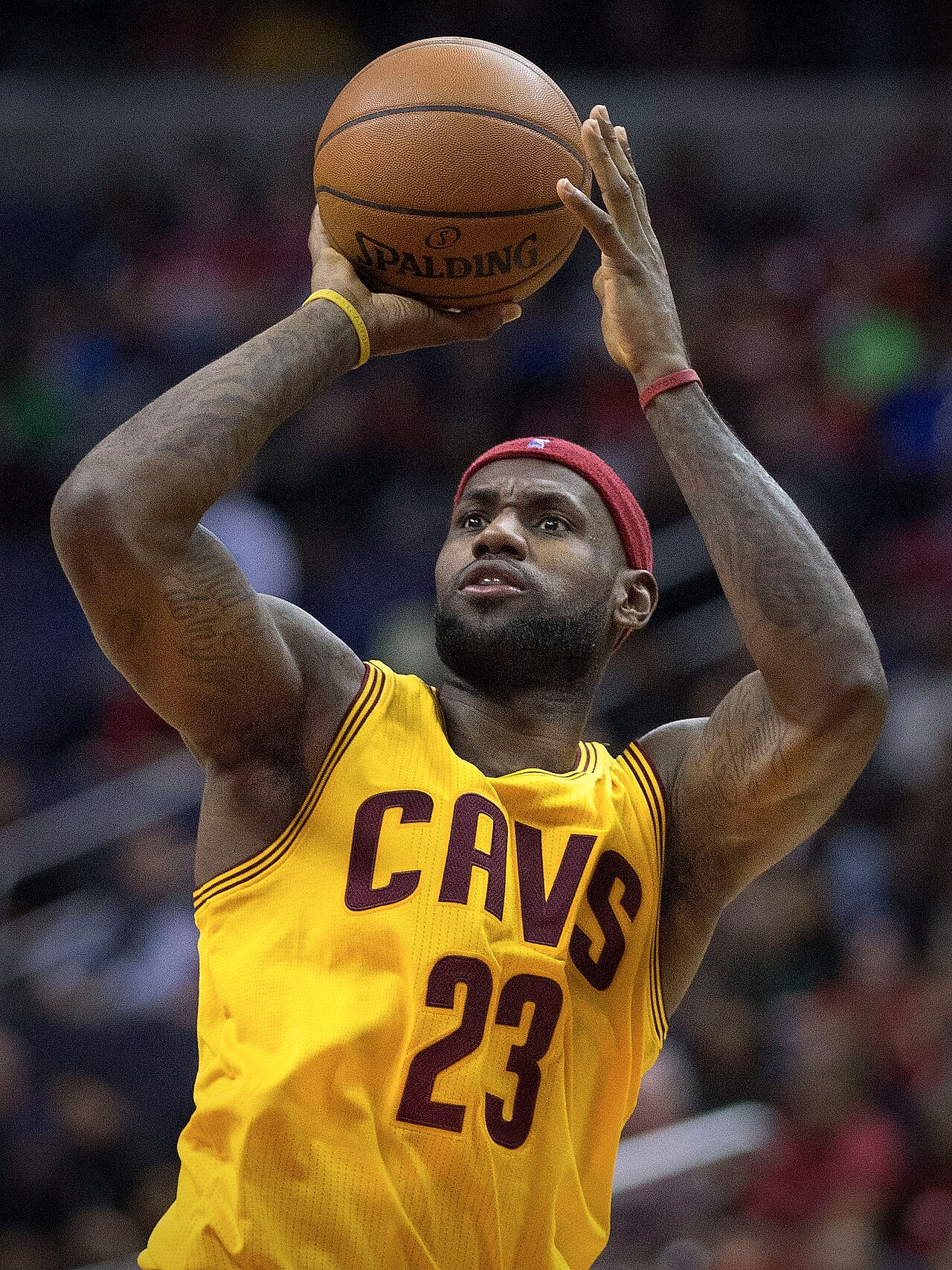
The all-time leading scorer in NBA history, having passed Kareem Abdul-Jabbar’s 38,387-point record on February 7, 2023, and crossed 40,000 points on March 2, 2024, a threshold no other player has reached. Four championships with three different franchises (Miami, Cleveland, and the Los Angeles Lakers), the only player to do that. Four regular-season MVPs, four Finals MVPs, and the all-time career playoff scoring leader. Twenty-two seasons in, his per-game production has barely declined. See LeBron James’s full page for the complete record.
3. Kareem Abdul-Jabbar
Six championships (1971 with Milwaukee, then five with the Lakers from 1980 to 1988), a record six regular-season MVPs, and the scoring record he set in 1984 stood for thirty-eight years until LeBron passed it. His skyhook, launched from either shoulder and essentially unblockable, is the most efficient signature shot the sport has produced. Twenty seasons, still productive at 42. His two Finals MVPs, 1971 and 1985, came fourteen years apart, the longest gap between an individual’s first and second Finals MVP in league history. Full career on Kareem Abdul-Jabbar’s page.
4. Bill Russell
Eleven championships in thirteen seasons, all with the Boston Celtics, the most concentrated dynasty any major American team sport has ever produced. Five regular-season MVPs. He coached the final two of those titles himself as the league’s first Black head coach. His career rebounding average of 22.5 per game is second all-time behind only Chamberlain. The NBA retired his #6 across all 30 franchises in 2022, the only leaguewide number retirement in league history. Read the full Bill Russell biography.
5. Magic Johnson
Five championships with the Lakers, three regular-season MVPs, three Finals MVPs, including a rookie-season Finals MVP in 1980 that remains the only one in league history. He started at center in the deciding Game 6 with Kareem sidelined by injury and put up 42 points, 15 rebounds, and 7 assists. Magic’s Showtime Lakers redefined what a 6’9” point guard could do, and his 1991 HIV diagnosis and subsequent advocacy changed public understanding of the virus more than any athlete before or since. Full page on Magic Johnson.
6. Wilt Chamberlain
Two championships (1967 76ers, 1972 Lakers), four regular-season MVPs, and the single most statistically dominant career in league history. His 100-point game against the Knicks on March 2, 1962, remains untouched. He’s the only player to average 50-plus points across a full season, 50.4 in 1961-62, and he led the league in rebounding 11 times. He was part of the 1972 Lakers title team the season after Elgin Baylor’s retirement kicked off the franchise’s record 33-game winning streak. Full career on Wilt Chamberlain’s page.
7. Larry Bird
Three championships, all with the Boston Celtics, three straight regular-season MVPs from 1984 to 1986, and two Finals MVPs. He was the first player to join the 50-40-90 shooting club (50 percent field goals, 40 percent threes, 90 percent free throws), doing it twice, in 1986-87 and 1987-88, a feat that had never been possible before the three-point line arrived in 1979-80. The Bird-Magic rivalry, dating to the 1979 NCAA title game, is the single biggest reason the NBA’s national television audience tripled through the 1980s. Full biography on Larry Bird’s page.
8. Tim Duncan
Five championships with the San Antonio Spurs across three different rosters spanning three decades, two regular-season MVPs, and three Finals MVPs. The Spurs made the playoffs in all 19 of his seasons. Duncan’s game had almost no flash: a mid-range bank shot, fundamentally sound defense, and total absence of ego. “The Big Fundamental” is the best case for quiet, sustained excellence over highlight-reel dominance in any GOAT argument. Full career detail on Tim Duncan’s page.

9. Shaquille O’Neal
Four championships (a three-peat with the Lakers from 2000 to 2002, then a fourth with Miami in 2006), one regular-season MVP, and three consecutive Finals MVPs during the three-peat, a feat only Jordan and Duncan can also claim in any form. His 28,596 career points came despite a career-worst 52.7 percent career free-throw shooter reputation that opposing coaches built entire defensive schemes around (“Hack-a-Shaq”). No player before or since has combined his size, speed, and post-scoring force. Full biography on Shaquille O’Neal’s page.
10. Kobe Bryant
Five championships with the Lakers, one regular-season MVP, and two Finals MVPs for the two titles he won without Shaq. His 81-point game against Toronto on January 22, 2006, is the second-highest single-game total in NBA history, trailing only Chamberlain’s 100. He finished with 33,643 career points, two Olympic gold medals, and a competitive standard, the “Mamba Mentality,” that shaped an entire generation of players who came after him. He died in a helicopter crash on January 26, 2020, at 41. Full page on Kobe Bryant.
11. Hakeem Olajuwon
Two championships with the Houston Rockets in 1994 and 1995, one regular-season MVP, and two Finals MVPs. His 1993-94 season remains the only time any player has won MVP, Defensive Player of the Year, and Finals MVP in the same year. He’s the NBA’s all-time leader in career blocks with 3,830. His footwork, the “Dream Shake,” a series of pivots and fakes that left defenders guessing, is still taught to NBA big men by name. Full biography on Hakeem Olajuwon’s page.
12. Stephen Curry
Four championships with the Golden State Warriors, two regular-season MVPs, one of them unanimous (2015-16, all 131 first-place votes, the only unanimous MVP in league history), and a 2022 Finals MVP. He passed Ray Allen’s all-time three-pointers-made record on December 14, 2021, against the Knicks at Madison Square Garden, and he’s still adding to it. No single player has changed how the game is played at every level, from youth leagues to the NBA, more than Curry’s volume three-point shooting has. Full page on Stephen Curry.
13. Nikola Jokić
One championship with the Denver Nuggets in 2023, three regular-season MVPs (2021, 2022, 2024), and a unanimous 2023 Finals MVP. A 7-footer who runs an offense like a point guard, averaging close to a triple-double across multiple seasons and routinely leading his team in assists from the center position, something the sport had never seen at his size and skill combination before him. Still active, still climbing this list. Full biography on Nikola Jokić’s page.
14. Giannis Antetokounmpo
One championship with the Milwaukee Bucks in 2021, two regular-season MVPs (2019, 2020), and a Finals MVP earned with a 50-point, 14-rebound, 5-block closeout performance in Game 6, the first 40-point, 10-rebound, 5-block Finals game since blocks became an official stat in 1973-74. His 2019-20 season made him only the third player, after Jordan (1988) and Olajuwon (1994), to win MVP and Defensive Player of the Year in the same year. He grew up selling trinkets on the streets of Athens before his family’s basketball talent got noticed. Full page on Giannis Antetokounmpo.
15. Kevin Durant
Two championships with the Golden State Warriors (2017, 2018), one regular-season MVP (2014), and two Finals MVPs. His 27.3 career scoring average trails only Jordan and Chamberlain all-time, remarkable for a player who’s 6’11” and shoots more like a guard than a traditional big man. No player his size has combined that scale with that shooting touch across an entire career. Full biography on Kevin Durant’s page.
16. Oscar Robertson
One championship with the Milwaukee Bucks in 1971 alongside a young Kareem Abdul-Jabbar, and a regular-season MVP in 1964. His 1961-62 season remains one of the most remarkable in league history: 30.8 points, 12.5 rebounds, and 11.4 assists per game, a full-season triple-double average that no one matched for fifty-five years, until Russell Westbrook in 2016-17. He finished with 26,710 career points and was also the named plaintiff in the antitrust suit that eventually helped establish NBA free agency. Full page on Oscar Robertson.
17. Jerry West
One championship, with the 1972 Lakers, the only ring of a 14-year career defined more by heartbreak than hardware: he lost eight other Finals, mostly to Russell’s Celtics. His 1969 Finals MVP came on the losing team, still the only time that’s happened in the award’s history. His silhouette is widely reported, by the logo’s own designer Alan Siegel, to be the model for the NBA’s logo, though the league has never officially confirmed it. He never won a regular-season MVP despite being one of the two or three best players in basketball for most of the 1960s. Full biography on Jerry West’s page.
18. Moses Malone
One championship with the Philadelphia 76ers in 1983, three regular-season MVPs (1979, 1982, 1983), and the 1983 Finals MVP. Before that playoff run, Malone predicted a clean sweep of all three rounds, “Fo, Fo, Fo,” meaning 4-0 each series. The 76ers actually went 12-1, dropping one game to Milwaukee in the Eastern Conference Finals, and the prediction has been remembered ever since as “Fo, Fi, Fo.” His relentless offensive rebounding redefined what a center could produce from the foul line out. Full page on Moses Malone.
19. Julius Erving
One NBA championship with the 76ers in 1983 and one NBA MVP in 1981, plus three ABA MVPs (1974, 1975, 1976) and two ABA championships with the New York Nets before the 1976 ABA-NBA merger. “Dr. J” won the 1976 ABA Slam Dunk Contest with a dunk launched from the free-throw line, and he’s the single biggest reason the dunk became a mainstream media event rather than a novelty. Full biography on Julius Erving’s page.
20. Karl Malone
Zero championships, having lost two Finals to Jordan’s Bulls in 1997 and 1998, but two regular-season MVPs (1997, 1999) and 36,928 career points, third all-time behind LeBron and Kareem. His durability across 19 seasons with the Utah Jazz, missing only a handful of games before a late-career knee injury, is one of the most underrated feats in league history. Full page on Karl Malone.
21. Dirk Nowitzki
One championship with the Dallas Mavericks in 2011, where he also won Finals MVP by beating a Miami “superteam” built around LeBron James and Dwyane Wade. One regular-season MVP in 2007. His 31,560 career points came almost entirely from a one-legged fadeaway jumper that changed how the sport teaches shooting to seven-footers. He played all 21 seasons of his career with the Mavericks, a loyalty record almost no modern star will match. Full biography on Dirk Nowitzki’s page.
22. Elgin Baylor
Zero championships in a 14-year career that included eight Finals losses, most of them to Russell’s Celtics. He averaged 27.4 points per game for his career, and his aerial, above-the-rim scoring style is the direct ancestor of the game Erving, Jordan, and every high-flying wing since has played. He retired on November 4, 1971, nine games into his final season. The Lakers won an NBA-record 33 straight games starting the very next night and captured the 1972 championship without him on the floor, one of the cruelest footnotes in league history. Full biography on Elgin Baylor’s page.
23. Scottie Pippen
Six championships, all with the Chicago Bulls alongside Jordan, and 10 All-Defensive selections, most of any player on this list. In the 1993-94 season, with Jordan retired to pursue baseball, Pippen carried Chicago to 55 wins on his own, arguably his best individual year. He was widely regarded as the best perimeter defender on the 1992 Dream Team. Full biography on Scottie Pippen’s page.
24. David Robinson
Two championships with the San Antonio Spurs (1999, 2003), the first alongside a young Tim Duncan, and a regular-season MVP in 1995. On the final day of the 1993-94 regular season, “The Admiral” scored 71 points against the Clippers to finish at 29.8 points per game, edging Shaquille O’Neal for the scoring title by half a point. He delayed the start of his NBA career two years to fulfill a Naval Academy service commitment. Full page on David Robinson.
25. Kevin Garnett
One championship with the Boston Celtics in 2008, one regular-season MVP in 2004, and the 2007-08 Defensive Player of the Year award, won the same season he won his ring. His 26,071 career points and roughly 14,700 career rebounds place him among the top 10 all-time rebounders. His intensity, on defense and in constant trash talk, is widely credited with turning Boston’s Big Three into champions in their first year playing together. Full biography on Kevin Garnett’s page.
Quick reference: the top 25
| Rank | Player | Rings | Regular-season MVPs | Finals MVPs |
|---|---|---|---|---|
| 1 | Michael Jordan | 6 | 5 | 6 |
| 2 | LeBron James | 4 | 4 | 4 |
| 3 | Kareem Abdul-Jabbar | 6 | 6 | 2 |
| 4 | Bill Russell | 11 | 5 | 0 (award created after his career) |
| 5 | Magic Johnson | 5 | 3 | 3 |
| 6 | Wilt Chamberlain | 2 | 4 | 1 |
| 7 | Larry Bird | 3 | 3 | 2 |
| 8 | Tim Duncan | 5 | 2 | 3 |
| 9 | Shaquille O’Neal | 4 | 1 | 3 |
| 10 | Kobe Bryant | 5 | 1 | 2 |
| 11 | Hakeem Olajuwon | 2 | 1 | 2 |
| 12 | Stephen Curry | 4 | 2 | 1 |
| 13 | Nikola Jokić | 1 | 3 | 1 |
| 14 | Giannis Antetokounmpo | 1 | 2 | 1 |
| 15 | Kevin Durant | 2 | 1 | 2 |
| 16 | Oscar Robertson | 1 | 1 | 0 (award created after his prime) |
| 17 | Jerry West | 1 | 0 | 1 |
| 18 | Moses Malone | 1 | 3 | 1 |
| 19 | Julius Erving | 1 | 1 | 0 |
| 20 | Karl Malone | 0 | 2 | 0 |
| 21 | Dirk Nowitzki | 1 | 1 | 1 |
| 22 | Elgin Baylor | 0 | 0 | 0 |
| 23 | Scottie Pippen | 6 | 0 | 0 |
| 24 | David Robinson | 2 | 1 | 0 |
| 25 | Kevin Garnett | 1 | 1 | 0 |
Who’s the real GOAT: Jordan or LeBron?
This is the argument that decides most other GOAT rankings, so it’s worth answering directly. Jordan’s case rests on a perfect Finals record (6-0, six Finals MVPs) and the highest scoring average in league history. He never lost in June. LeBron’s case rests on volume and durability: the all-time scoring record, the all-time playoff scoring record, four championships across three franchises that most players would need a time machine and a different supporting cast to replicate, and twenty-two seasons of All-NBA-level production with barely any decline.
Jordan gets the top spot here for one reason: efficiency of legacy over longevity of production. Six Finals trips, six championships, zero losses. LeBron’s résumé is longer and statistically larger, but it also includes four Finals losses (2011, 2014, 2015, 2017, 2018, technically five) that Jordan’s résumé simply doesn’t have a category for. Both cases are legitimate. Most people who watched both play in their primes still land on Jordan, and that consensus, while not proof by itself, reflects something real about how completely he dominated every Finals he reached.
Where does Wilt Chamberlain actually rank, and why is that controversial?
Chamberlain’s raw statistical peak is arguably the greatest anyone has ever produced: a 50.4 points-per-game season, a 100-point game, 55 rebounds in a single game. But he went 2-8 in his ten Finals appearances against a Celtics dynasty that had Bill Russell on it in nine of them. Sixth on this list reflects that split: the individual dominance was as real as any player in history, but the head-to-head record against the era’s best team and best player pulls him below Russell, Kareem, and the modern superstars whose teams actually won more consistently.
What about the ABA years, and does Julius Erving belong higher?
Erving’s full career, three ABA MVPs, two ABA championships, one NBA MVP, and one NBA championship, is a genuinely great résumé that gets discounted here because the ABA folded four teams into the NBA in 1976 and never had the depth of talent the NBA had at the same time. His NBA-only production (one MVP, one ring) is closer to Moses Malone’s or Karl Malone’s tier than to the top ten. Combine both leagues and a reasonable case exists for a spot five or six slots higher; this list ranks primarily on NBA production, with ABA achievement as a tiebreaker rather than a primary credential.
Players who just missed the top 25
The next tier is deep enough to fill another list of its own. John Stockton holds the all-time assists and steals records by margins that will likely never be broken. Allen Iverson won an MVP and carried a flawed 76ers roster to the 2001 Finals almost single-handedly. Steve Nash won back-to-back MVPs running the “Seven Seconds or Less” Suns offense that reshaped how the modern NBA plays pace and space. Charles Barkley won an MVP at 6’6” playing power forward against players half a foot taller. Dwyane Wade won a Finals MVP in 2006 that some retrospective voters argue was the best individual Finals performance not on this top-25 list. Chris Paul and Reggie Miller both belong in any honest conversation about the best players never to win a championship.
Basketball’s GOAT debate never fully settles, and it shouldn’t. New peaks get set every few years, current entries like Jokić and Giannis are still adding to their résumés in real time, and every generation re-litigates the players who came before it with fresh eyes. Check back on this list next season. Somebody in the top 15 is going to have earned a better case by then.
Gear
Read the definitive basketball-nerd case for how these rankings actually get argued.
*The Book of Basketball* by Bill Simmons (Ballantine, 2009) →
*11 Rings: The Soul of Success* by Phil Jackson (Penguin, 2013) →
Panini NBA Hoops trading card blaster box →
As an Amazon Associate, The Basketball Fans earns from qualifying purchases.
Sources
Ring counts, MVP totals, and Finals MVP totals cross-referenced against Basketball-Reference’s awards index and NBA.com’s official MVP and Finals MVP history pages. The Jordan 6-0 Finals record and 10 scoring titles, LeBron’s scoring-record dates (February 7, 2023 and March 2, 2024), Curry’s unanimous 2015-16 MVP vote (131 of 131), his December 14, 2021 three-point record game, Kobe’s January 22, 2006 81-point game, Giannis’s July 20, 2021 Game 6 closeout line, David Robinson’s April 24, 1994 71-point scoring-title game, Moses Malone’s 1983 “Fo, Fi, Fo” playoff run, Julius Erving’s January 27, 1976 ABA dunk contest win, Elgin Baylor’s November 4, 1971 retirement and the Lakers’ subsequent 33-game winning streak, and Oscar Robertson’s 1961-62 season averages are all drawn from NBA.com’s official history archives and cross-checked against ESPN and ABC/CBS Sports retrospective coverage, verified July 2026.
Shop NBA Gear at Fanatics
As a Fanatics affiliate, we may earn a commission from qualifying purchases.
Shop on Amazon
As an Amazon Associate, we earn from qualifying purchases.
Shop Basketball Shoes at JD Sports
We may earn a commission from qualifying purchases on JD Sports.